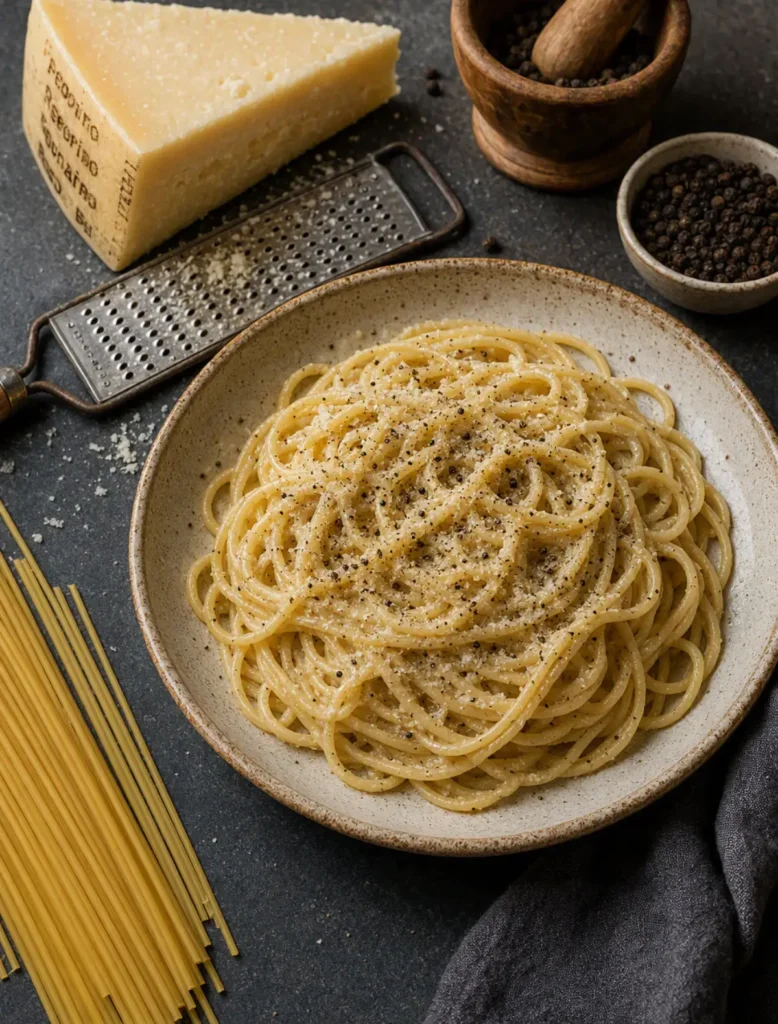
Cacio e Pepe: The History of a Roman Classic
Today, Cacio e Pepe is almost as closely associated with Rome as the trattorias that serve it. Pinning down exactly when pasta, cheese, and pepper became the dish we recognise today is much more difficult.
There is no documented birth date and no known inventor. And the story most often told about its origins — involving shepherds and transhumance — cannot explain the whole history on its own.
Pasta and Cheese Long Before Cacio e Pepe
Serving pasta with cheese was certainly not a Roman invention of the twentieth century. The combination had appeared in Italian cooking for centuries, long before tomato became one of the most common pasta sauces.
Pepper followed a different path. For a long time it was an expensive spice, found mainly on tables that could afford it. As its price gradually fell over the centuries, it became increasingly accessible in popular cooking as well.
It is therefore difficult to imagine Cacio e Pepe appearing fully formed at a single point in time. Pasta, cheese, and pepper already had long histories of their own before coming together in a dish associated with Rome.
What About the Shepherds?
This is the story most often attached to the origins of Cacio e Pepe. During transhumance, the seasonal movement of livestock between different grazing areas, shepherds in central Italy are said to have carried foods that could withstand long journeys: dried pasta, aged pecorino, and pepper.
A shepherd's bag containing, in effect, the whole recipe.
It is a compelling image, perhaps a little too compelling. Aged pecorino and dried pasta certainly travel and keep well, but there is no documentary evidence that allows us to reconstruct the birth of Cacio e Pepe in precisely this way. Pepper also deserves some caution, considering how expensive the spice was for a substantial part of its European history.
The connection with transhumance is therefore better understood as part of the traditional story surrounding Cacio e Pepe rather than a documented point at which the dish was born.
Ada Boni Records the Dish in 1930
With Ada Boni, the historical ground becomes firmer. In 1930, she published La cucina romana, which includes a recipe for “Spaghetti a cacio e pepe.”
The preparation is already recognisable, although reading it today reveals an interesting difference. The spaghetti is dressed with Pecorino and plenty of pepper and should not be drained completely. A little of the cooking water helps melt the cheese and prevents the pasta from sticking together.
What we do not find is the abundant, velvety sauce that many contemporary versions of Cacio e Pepe aim for. The dish could be considerably drier, with the cheese less thoroughly emulsified than in the creamy versions now commonly served.
The recipe gives us a useful documentary point without requiring a legendary origin story: by the early twentieth century, Spaghetti a cacio e pepe was already part of documented Roman cooking.
Cacio e Pepe in Roman Osterias
Then there are the osterias, and one of the more entertaining stories associated with the dish. Roman innkeepers are said to have served Cacio e Pepe particularly dry, salty, and heavily peppered to make their customers thirsty. More thirst meant more wine ordered.
Whether this was really a deliberate and widespread business strategy is much harder to establish. Ada Boni did, however, observe that the peppery character of these spaghetti encouraged plenty of drinking. From there, it was a short step in popular storytelling to the image of the innkeeper deliberately being generous with the cheese and pepper.
The story has remained attached to the dish and says something about its place in Roman food culture. Cacio e Pepe did not live only in cookbooks. For generations it passed through trattorias and osterias, where quantities, textures, and preparation methods could vary from one kitchen to another.
When Cacio e Pepe Became Creamy
Looking at many versions served today, the most obvious difference from older descriptions is the texture of the sauce. The Pecorino cream has become almost a signature of the dish.
No new ingredient appeared. What changed most was the result cooks began to seek.
The drier consistency found in older preparations gradually gave way to a more enveloping Cacio e Pepe. Restaurants and chefs have played a part in this transformation, to the point that creaminess is now one of the characteristics commonly associated with the dish.
The recipe was never completely rewritten along the way: what changed most over time was how it was prepared and served.