

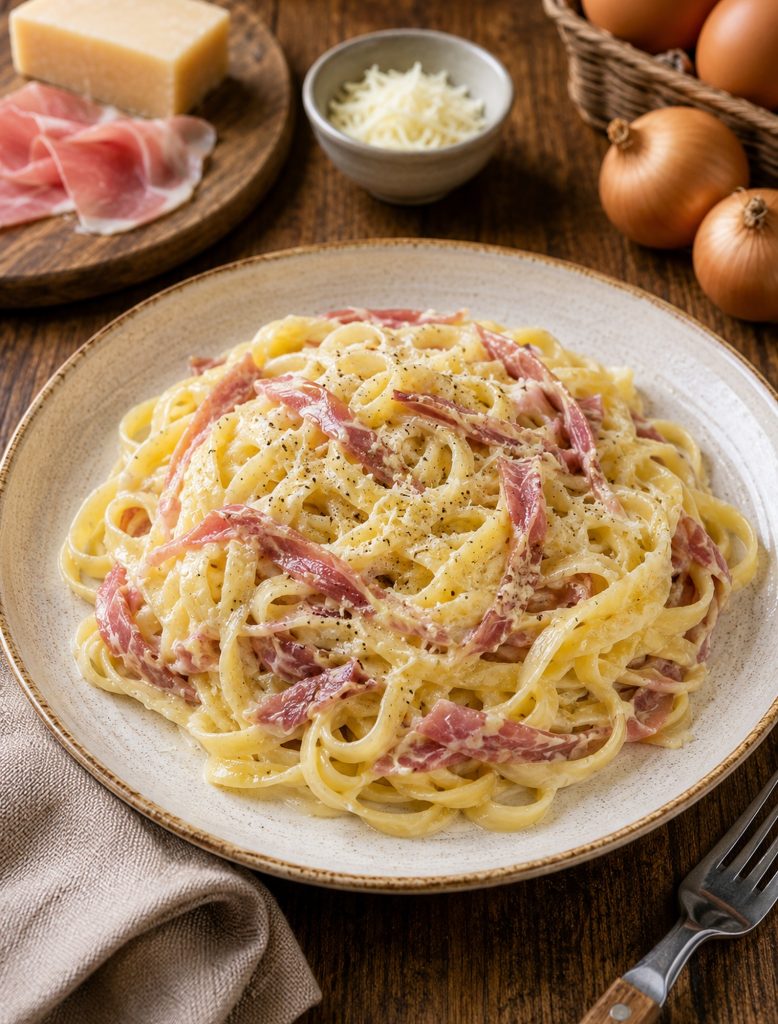
Fettuccine alla Papalina: carbonara’s refined Roman cousin
There’s a Roman pasta dish that brings together the lively streets of Rome and the grandeur of the Vatican. According to tradition, the dish was created in Rome at the request of Eugenio Pacelli, the future Pope Pius XII, who was looking for something more delicate and refined than the classic Roman pasta dishes of the time. The result was a richer, creamier pasta that eventually became known as Fettuccine alla Papalina.
This recipe swaps guanciale for prosciutto and Pecorino Romano for Parmigiano Reggiano, creating a milder flavor that’s still seriously delicious. The real magic comes from the silky egg-and-cream sauce that coats every strand of fettuccine, striking the perfect balance between Roman tradition and a touch of elegance. Let’s make it creamy enough to rival your favorite Italian restaurant!
Fettuccine alla Papalina
Description
The magic of this dish is all about texture. Unlike classic carbonara, the salty prosciutto meets the gentle sweetness of butter and onion, while cream, egg yolks, and Parmigiano Reggiano come together into a smooth, rich sauce that coats every bite.
Ingredienti
Instructions
-
Prepare the Flavor Base 🧅
Cut the prosciutto into thin strips. Melt the butter in a large skillet over low heat, then add the finely chopped onion. Let it cook for about 2 minutes, until soft and translucent, without letting it brown. We're not trying to win a sautéing competition here. If the pan starts to look dry, add a small splash of hot water. Once the onion is soft, add the prosciutto and let it cook for 2 to 3 minutes, still over low heat, so it can soak up all that buttery goodness.
-
The golden bowl ✨
While the prosciutto does its thing, let's get to the serious part. In a bowl, whisk the egg yolks with the cream, then add the grated Parmigiano Reggiano and a generous grind of black pepper. Whisk for about 1 minute, until you have a smooth, well-combined mixture. Once the prosciutto is ready, turn off the heat and leave it right there in the skillet.
-
The secret to getting the seasoning right 🤫
No need to panic here: the prosciutto and Parmigiano already bring plenty of saltiness, so go easy on the salt. Cook the fettuccine in plenty of salted water and drain it al dente, following the package instructions and tasting it about a minute before the suggested cooking time is up. Before draining, reserve at least 1 cup of pasta water.
Transfer the pasta straight into the skillet with the prosciutto and toss for about 1 minute. Add a little pasta water and keep tossing. Those tiny starch molecules may not look like much, but they do some serious heavy lifting.
-
The royal finish 👑
Now for the delicate part. Turn off the heat and wait about 30 seconds, then move the skillet completely away from the heat. Pour in the egg-and-cream mixture and start tossing immediately, continuing for 1 to 2 minutes. The residual heat from the pasta will gently thicken the sauce without turning your eggs into scrambled eggs.
You want a smooth, glossy sauce that's fluid enough to coat every strand of fettuccine. Too thick? No drama. Add another splash of pasta water and keep tossing.
-
The grand finale 🍝
Plate the pasta right away, while the fettuccine is still hot and wonderfully creamy. Finish each plate with a little extra Parmigiano Reggiano and a final grind of black pepper.
Now eat. After all that work, you've earned it. 😄
Nutrition Facts
Servings 4
- Amount Per Serving
- Calories 567kcal
- % Daily Value *
- Total Fat 24.2g38%
- Saturated Fat 12.4g62%
- Sodium 943mg40%
- Total Carbohydrate 66g22%
- Dietary Fiber 2.3g10%
- Sugars 3.2g
- Protein 24.2g49%
* Percent Daily Values are based on a 2,000 calorie diet. Your daily value may be higher or lower depending on your calorie needs.
Note
Cream and butter make this sauce a little more forgiving than classic carbonara, but the eggs still need some attention. Want to play it safe? After tossing the pasta with the prosciutto and pasta water, transfer it to a cool bowl and add the egg-and-cream mixture there, away from direct heat. This gives you much more control over the temperature and helps you achieve a silky sauce without the dreaded scrambled-egg effect.
