
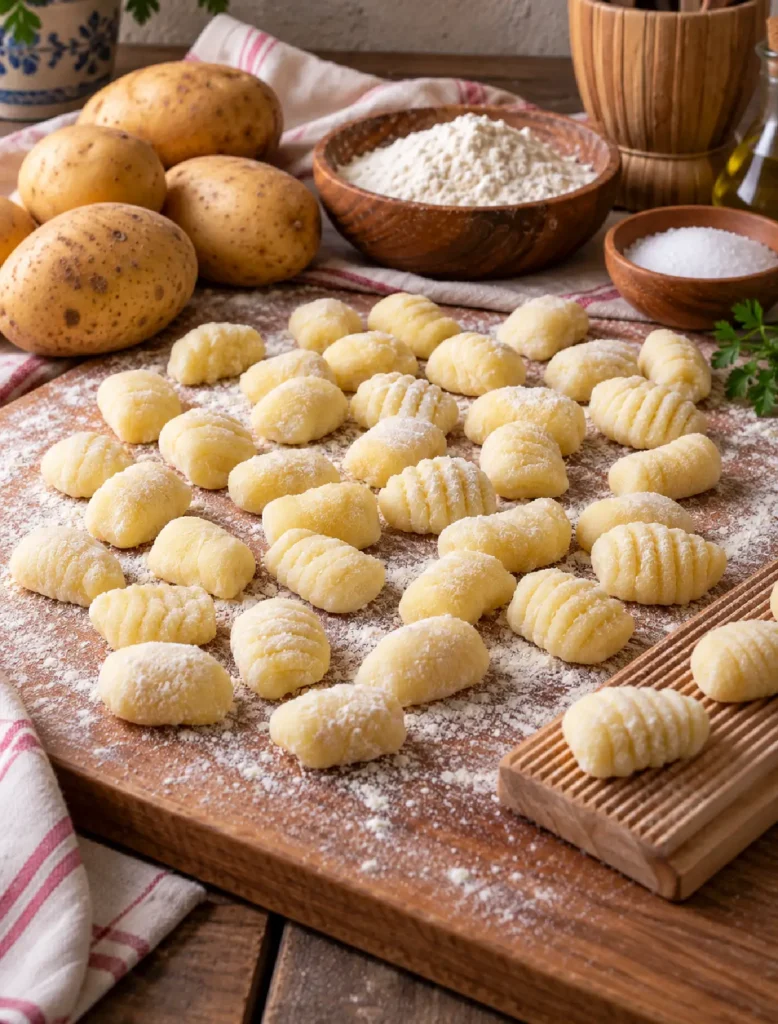
Making Potato Gnocchi at home takes only a few ingredients, but choosing the right potatoes and using the right amount of flour makes all the difference. In this egg-free version, we use floury potatoes and work the dough as little as possible to keep the gnocchi soft.
Wash the potatoes thoroughly without peeling them and place them whole in a large pot. Cover with cold water and bring to a boil. Cook until they are tender all the way through, about 30–40 minutes depending on their size. Check by inserting a fork into the thickest part; it should slide in easily.
Drain the potatoes and pass them through a potato ricer straight away while they are still hot. If your potato ricer retains the skins, you can put the potatoes in without peeling them first; otherwise, peel them carefully while they are still hot.
Spread the riced potatoes over the work surface and let them cool for 5–10 minutes. They should still be warm, but not so hot that they are uncomfortable to work with by hand.
Add the salt and about 200 g of the plain flour. Bring the dough together with your hands, adding more flour a little at a time only if needed. Work it quickly and stop as soon as it is firm enough to form into ropes; the dough should remain soft. You may not need to use all 250 g of flour.
Dust the work surface lightly with fine durum wheat semolina or plain flour. Divide the dough into several pieces and roll each one into a rope about 2 cm thick. Cut into pieces about 2 cm long and leave them smooth or roll them, one at a time, over a gnocchi board or a fork with gentle pressure.
Arrange the gnocchi on a tray lightly dusted with semolina or flour, without overlapping them, and cook them preferably within 30 minutes.
Bring a large pot of water to a boil, add the salt and drop in the gnocchi. If the pot is not very large, cook them in batches. When they rise to the surface, gently lift them out with a slotted spoon and transfer them directly to the sauce.
The amount of flour can vary considerably depending on the potatoes. With floury, mature, low-moisture potatoes, you may not need to use all 250 g. Add the flour gradually and stop as soon as the dough is workable: too much flour will make the gnocchi firmer and less tender.
The potatoes should be weighed raw and with their skins on, then cooked whole without peeling. This helps them absorb less water during cooking. Rice them while they are still hot, but wait a few minutes before adding the flour. They should be warm and comfortable to handle.
Do not work the dough any longer than necessary. As soon as it holds together and can be rolled into ropes, stop. If you are unsure about the consistency, cook one test gnocco before shaping the entire batch. If it holds its shape without becoming hard, you can continue.
The fine durum wheat semolina is only used for dusting the work surface and tray. If you do not have any, use a small amount of plain flour instead, taking care not to coat the shaped gnocchi with too much flour.
Gnocchi are best cooked soon after they are made. Once shaped, arrange them in a single layer on a tray lightly dusted with semolina or flour and try to cook them within 30 minutes. If you need to keep them for longer, freezing is the better option.
To freeze the gnocchi, arrange them well spaced on a tray dusted with semolina and place them in the freezer. Once completely frozen, transfer them to a freezer bag. When you are ready to cook them, do not thaw them: drop them directly into boiling water.