Note
How to substitute Italian pasta di salame
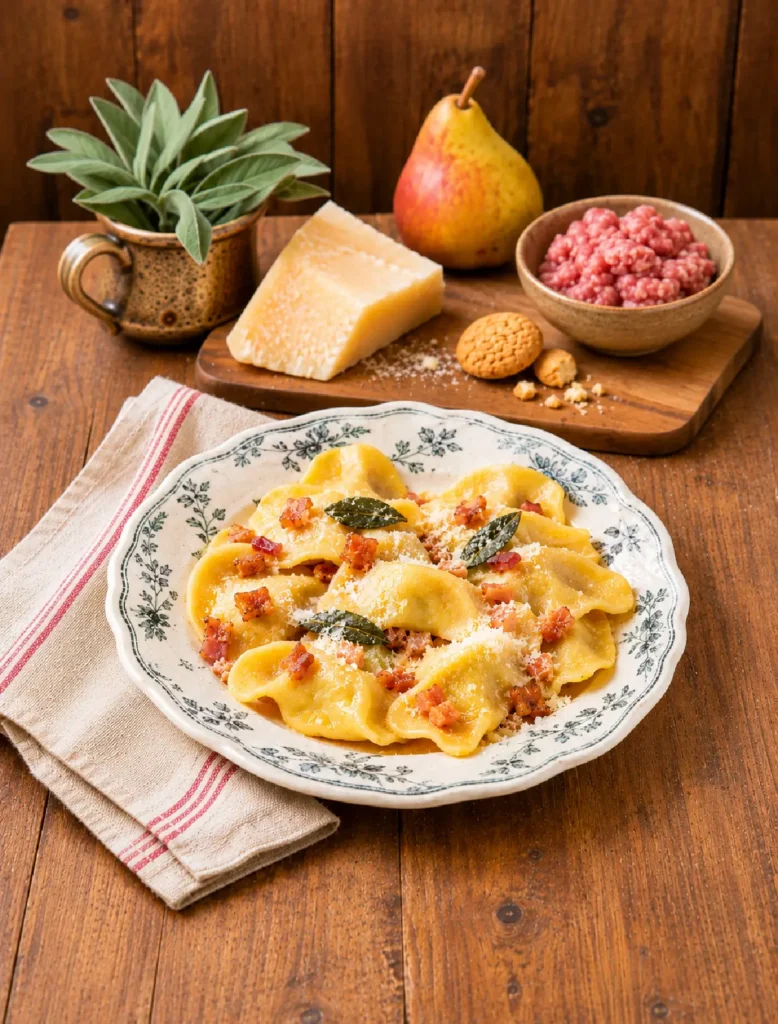
Pasta di salame is a fresh mixture of minced pork and fat traditionally used to make Italian salami before it is stuffed into casings and cured.
If it is unavailable, use an equal amount of fresh pork sausage meat or fresh pork sausages with the casings removed. Choose a variety without fennel, chilli or other particularly strong seasonings.
In the United States, look for fresh pork sausage meat or bulk pork sausage. In the United Kingdom, it is commonly sold as pork sausage meat or pork sausagemeat.
Alternatively, use minced pork with a fat content of approximately 25-30%, lightly seasoned with salt and pepper. Avoid excessively lean minced pork, which could make the filling too dry.
Do not use cured salami, precooked sausages or smoked sausages.
Which cut of beef to use
If leftover roast beef is unavailable, choose a small piece of beef suitable for relatively short cooking.
In the United States, top sirloin or top round are suitable options. In the United Kingdom, rump or topside can be used.
The beef must be completely cool before being incorporated into the filling.
The preparation and cooking times indicated in this recipe assume that the roast beef is already available. If preparing it from scratch, allow additional time for cooking and cooling.
Which pear variety to choose
Abate Fetel and Spadona pears are particularly suitable for this filling. If they are unavailable, Conference or Bosc pears are good alternatives.
Choose a ripe but firm pear. Avoid overly ripe or particularly juicy varieties, as they could make the filling too moist.
Which amaretti biscuits to use
Use dry, crisp Italian amaretti rather than the soft variety known as amaretti morbidi.
Only a small amount is needed to give the filling its characteristic sweet and slightly bitter almond flavour.
Outside Italy, they can usually be found in Italian food shops under the names amaretti biscuits or amaretti cookies.
How to substitute Grana Padano PDO
If Grana Padano PDO is unavailable, use Parmigiano Reggiano PDO or another mature hard cheese suitable for grating.
The flavour will be slightly different from that of the traditional recipe.
How to prevent casoncelli from opening during cooking
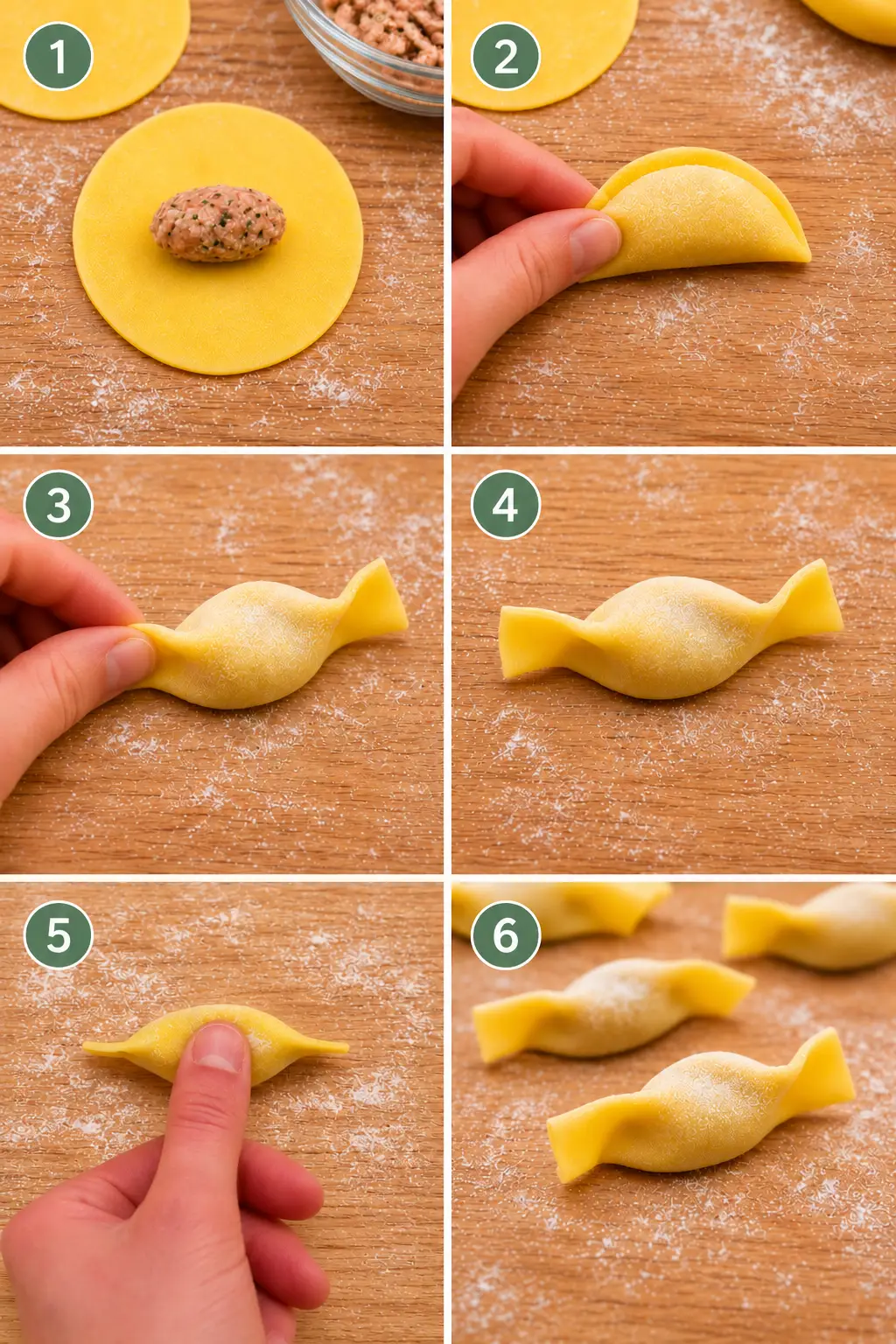
The pasta sheet should be thin but intact, without tears or excessive flour along the edges.
Avoid overfilling the pasta and release any trapped air before sealing. If necessary, lightly moisten the edges to help them stick together.
Maintain a gentle boil during cooking and use a slotted spoon to remove the casoncelli carefully from the water.
Refrigerating casoncelli
Uncooked casoncelli can be refrigerated at a temperature of no more than 4°C (40°F) for up to 24 hours.
Arrange them on a lightly floured tray without overlapping and cover them to prevent them from drying out.
Once cooked and dressed, casoncelli can be refrigerated in an airtight container for up to 2 days. Reheat gently in a pan with a little butter.
How to freeze casoncelli
Casoncelli can be frozen before cooking. Arrange them on a lightly floured tray, leaving enough space between each piece, and place them in the freezer.
Once completely frozen, transfer them to freezer bags or suitable airtight containers. For the best quality, use them within 2 months.
Cook the casoncelli directly from frozen without thawing them first, extending the cooking time as necessary to ensure the filling is fully cooked.
Keywords:
casoncelli alla bergamasca, casoncelli pasta, Italian meat-filled pasta, homemade stuffed pasta, Bergamo pasta, traditional Italian pasta, Lombardy cuisine, casonsei
In May 1386, Bergamo was celebrating. Following the downfall of Bernabò Visconti, the inhabitants welcomed the soldiers of Gian Galeazzo, the city's new ruler, with festivities that continued for several days throughout Bergamo's neighbourhoods. On 13 May, more than two thousand people gathered in the square of the Santo Stefano district. Men and women danced while savoury pies and casoncelli were distributed on three hundred serving platters.
The episode was recorded by the notary Castello Castelli in his chronicle of events in Bergamo. The document provides one of the earliest written references to casoncelli, although it does not establish when the recipe originated or how the pasta was prepared at the time.
Interestingly, the name also appears in letters dating from 1366, addressed by the Doge of Venice, Marco Corner, to the Gonzaga family of Mantua. The correspondence concerns a merchant from Bergamo named Giovanni, nicknamed Casoncello, who had failed to settle a debt for a shipment of textiles. The origin of his nickname remains unknown.
Casoncelli appear again in Castello Castelli's chronicle in 1393, this time in a rather different story. Leonardino Suardi, a member of a noble Bergamo family, arranged the murder of the husband of a woman with whom he had fallen in love. The victim died after eating poisoned casoncelli. One of those responsible was sentenced to death, while Leonardino was banished from Bergamo.
The recipe we know today differs considerably from those recorded in nineteenth-century cookbooks. In the 1853 edition of Giovanni Felice Luraschi's Nuovo cuoco milanese economico, the recipe for «Casonselli alla Bergamasca» contained no meat. Instead, the filling was made with Spadona pears, sweet almonds, candied citron and amaretti. As late as 1873, Antonio Tiraboschi described a version made with herbs, eggs and cheese in his dictionary of the Bergamo dialect. In the Val San Martino area, other names were also used, including pepè and zavatöl.
By 1931, the Touring Club Italiano's Guida gastronomica d'Italia described meat-filled casoncelli that were much closer to the version enjoyed today. The guide identified them as a popular dish at wedding feasts and other important celebrations, a custom also shared in the neighbouring province of Brescia.
Bergamo and Brescia have long disputed the origins of casoncelli. In June 2023, when the two cities shared the title of Italian Capital of Culture, Lucio Piombi, honorary delegate of the Bergamo branch of the Italian Academy of Cuisine, still referred to the rivalry as the «war of the casonsei». Bergamo's medieval records are particularly early, but they are not sufficient to establish exactly where this stuffed pasta was invented.
Casoncelli from Bergamo are now recognised as a Traditional Agri-food Product (PAT) of Lombardy. Their preparation is formally defined by the Bergamo Chamber of Commerce under the local dialect name Casonsèi de la Bergamasca.
In May 2016, 630 years after the celebration described by Castello Castelli, Bergamo marked the anniversary with the first edition of De Casoncello. Musicians, dancers and performers dressed in medieval costumes filled the streets of Città Alta, Bergamo's historic Upper Town, while local restaurants served different versions of casoncelli. Under the porticoes of the Angelo Mai Civic Library, visitors could also discover Luraschi's nineteenth-century preparation, recreated for the occasion.