Note
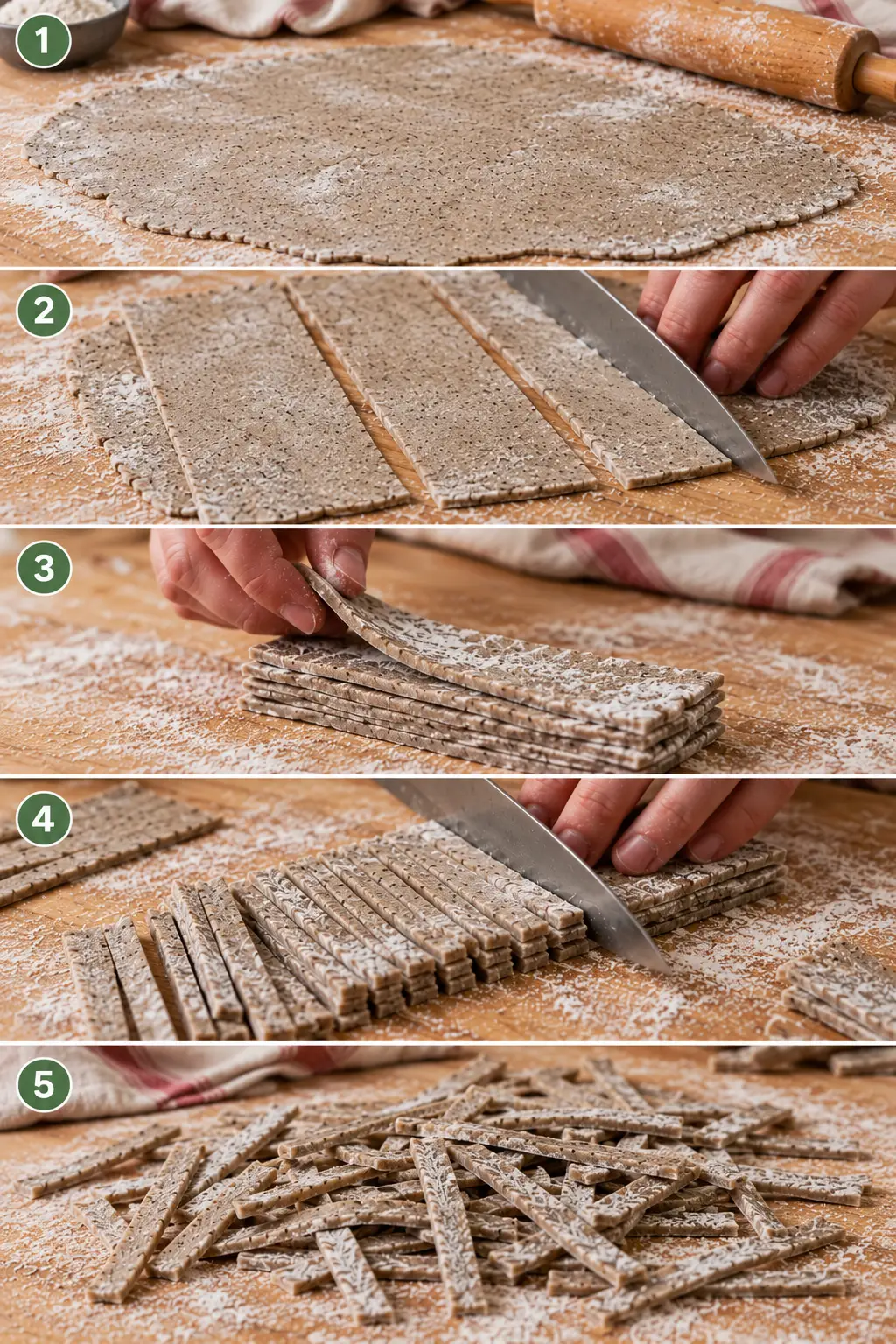
Dough consistency: the amount of water needed may vary slightly depending on the flour. The dough should be firm and easy to handle without becoming sticky. Because buckwheat makes up most of the flour, it will be less elastic than ordinary wheat pasta dough.
Flour for dusting: keep a little extra buckwheat flour on hand for dusting the work surface and separating the freshly cut pizzoccheri.
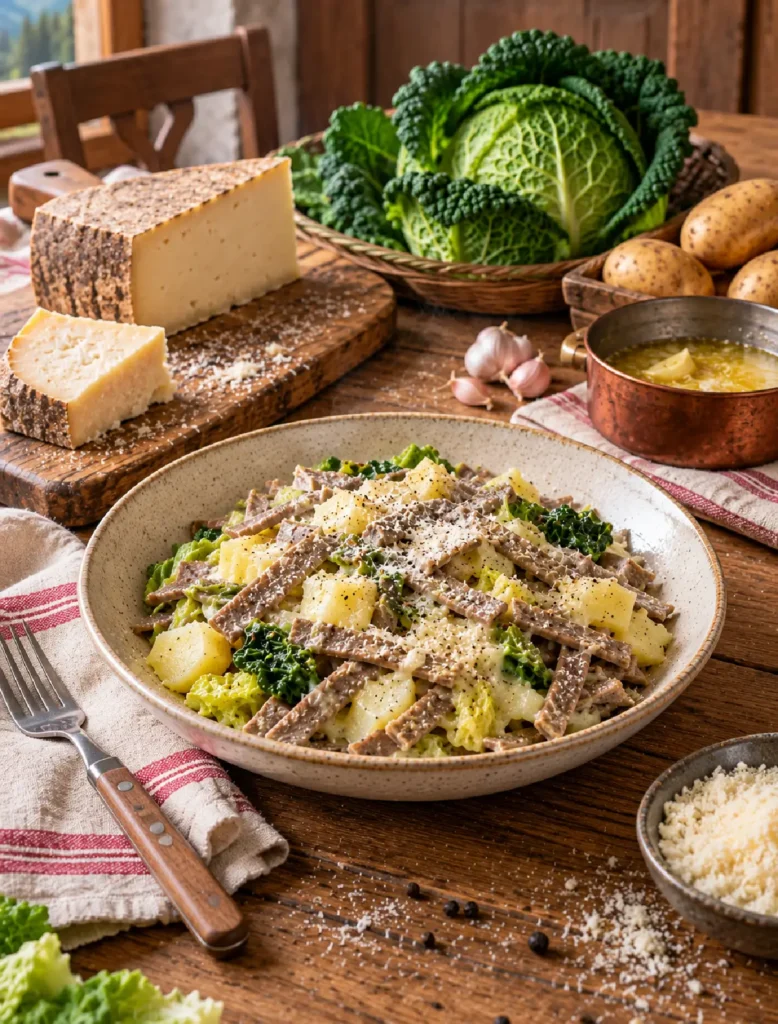
Choosing the vegetables: Savoy cabbage is particularly suitable during the colder months. Swiss chard is also used in Valtellina at other times of year, but this version follows the traditional preparation with cabbage.
Choosing the cheese: Valtellina Casera PDO gives the dish much of its characteristic flavour and texture. Slice it thinly and allow it to come towards room temperature briefly before using it, so it melts more easily.
Brown butter: pay attention to both the colour and aroma. When the butter turns golden brown and develops a nutty fragrance, it is ready. Avoid letting it become too dark, as it may taste bitter.
Storage: pizzoccheri are best enjoyed immediately after cooking. Leftovers can be stored in a covered container in the refrigerator for up to 1–2 days and reheated thoroughly before serving. Uncooked fresh pizzoccheri can be kept briefly in the refrigerator, well dusted with flour and covered, or frozen. To freeze, spread them out on a tray until firm before transferring them to a suitable container.
Keywords:
pizzoccheri della Valtellina, homemade pizzoccheri, Teglio pizzoccheri, pizzoccheri recipe, buckwheat pasta, Valtellina Casera PDO, Lombardy recipes
Buckwheat, the Furmentùn of Valtellina
Long before pizzoccheri became known beyond Lombardy, buckwheat was already a familiar crop in the fields and kitchens of Valtellina. Locally, it is called furmentùn, a name reminiscent of wheat, although the two plants are not botanically related.
Buckwheat was well suited to mountain life. It grew quickly, tolerated challenging climatic conditions and could be cultivated on land where other crops were less productive. Its dark flour found its way into many everyday dishes, often mixed with flour from other grains.
And pizzoccheri were far from the only speciality. Buckwheat was also used to prepare polenta and other dishes that remain part of Valtellina's cooking today. Polenta taragna, with its dark colour and melted cheese, is probably the best-known example. Then there are sciatt, small buckwheat fritters with a centre of melted cheese.
From Teglio to the Earliest Written Records
When discussing the origins of pizzoccheri, one place comes up more often than any other: Teglio, a village in central Valtellina where the dish has particularly deep roots.
One of the most frequently cited historical references dates back to 1834. That year, the physician and naturalist Giuseppe Filippo Massara, while describing the customs and eating habits of the valley, mentioned pizzoccheri among the dishes made with buckwheat flour.
Of course, finding the dish in a nineteenth-century document does not mean it was invented at that time. Everyday recipes were passed down through generations of home cooks long before anyone thought to write them down. And they did not always look quite like the versions we know today.
In rural kitchens, people cooked with whatever the season and their pantry could provide. Even the way pizzoccheri were made could vary from one family to another, without a single recipe that everyone was expected to follow.
A Name with Uncertain Origins
The name pizzoccheri still holds a few mysteries. One of the most common explanations links it to the dialect root piz, associated with a small piece or portion of dough. Other theories trace the name to local expressions describing how the pasta was worked or shaped.
None of these explanations, however, has been conclusively established.
Another interesting detail is that not all Alpine dishes called pizzoccheri resemble the flat pasta ribbons of Valtellina. In places such as Valchiavenna, dishes with the same name can look quite different. Pizzoccheri bianchi della Valchiavenna, for example, are small dumplings made with wheat flour and bread, without the distinctive dark buckwheat dough.
Meanwhile, in Teglio, the tradition remains particularly strong. In 2002, the Accademia del Pizzocchero di Teglio was founded to establish a reference recipe and help preserve the traditional preparation. The village also hosts food events dedicated to pizzoccheri, attracting visitors from across Valtellina and beyond.