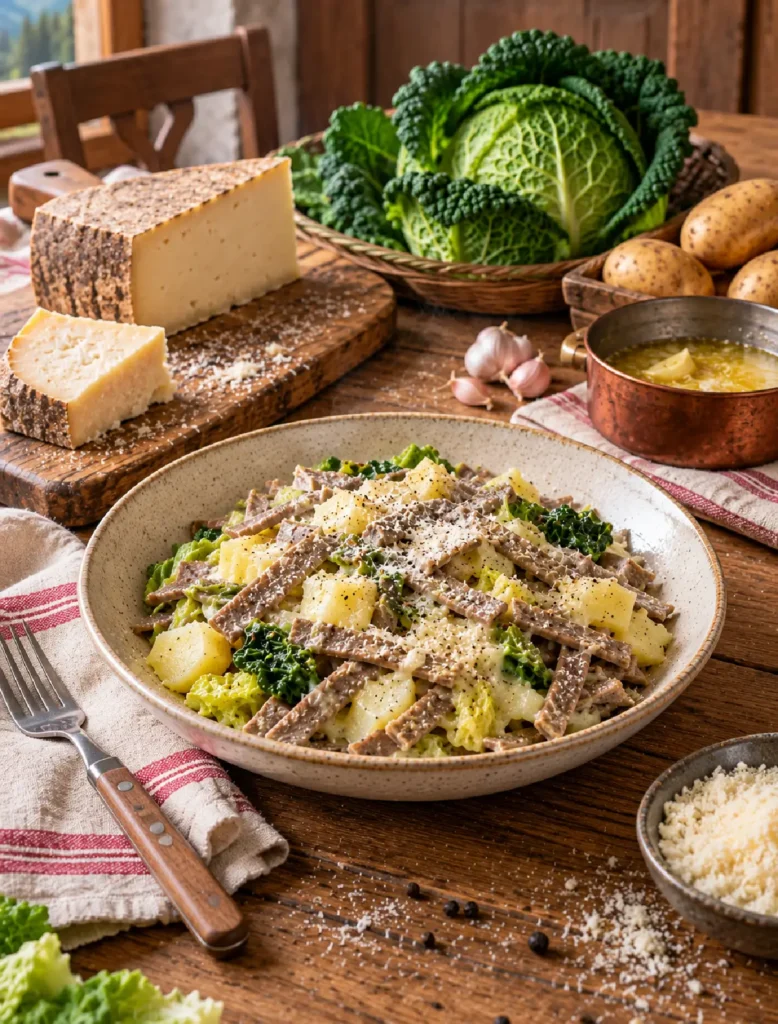
Pizzoccheri della Valtellina is one of those Italian dishes where nobody holds back on the butter or cheese. In Teglio, a village in the province of Sondrio, generations of cooks have been making these dark buckwheat pasta ribbons with potatoes, Savoy cabbage and plenty of cheese.
What makes pizzoccheri particularly interesting is the way everything comes together. Once the pasta and vegetables are cooked, they’re lifted out of the water a little at a time and layered with Valtellina Casera PDO cheese and grated hard cheese. Hot butter infused with garlic is poured over the top, with no need to toss everything in a pan. The heat melts the cheese, allowing it to work its way between the layers of pasta and vegetables.
For our version, we follow the quantities recommended by the Accademia del Pizzocchero di Teglio, starting with homemade pasta, just as it’s traditionally prepared in the area.
Pizzoccheri della Valtellina
Description
Homemade pizzoccheri prepared in the traditional Teglio style, cooked with potatoes and Savoy cabbage, then layered with Casera cheese, grated hard cheese and garlic-infused brown butter.
Ingredients
For the Homemade Pizzoccheri
For the Dressing
Instructions
How to Make Pizzoccheri della Valtellina
-
Prepare the dough 🥣
Place 400 g buckwheat flour and 100 g plain flour in a large bowl. Mix the flours together, then gradually add approximately 250 g water, bringing the mixture together with your hands. Transfer it to a work surface and knead until you have a firm, smooth and fairly stiff dough. If necessary, add a little more water, a small amount at a time.
-
Roll out the dough 🪵
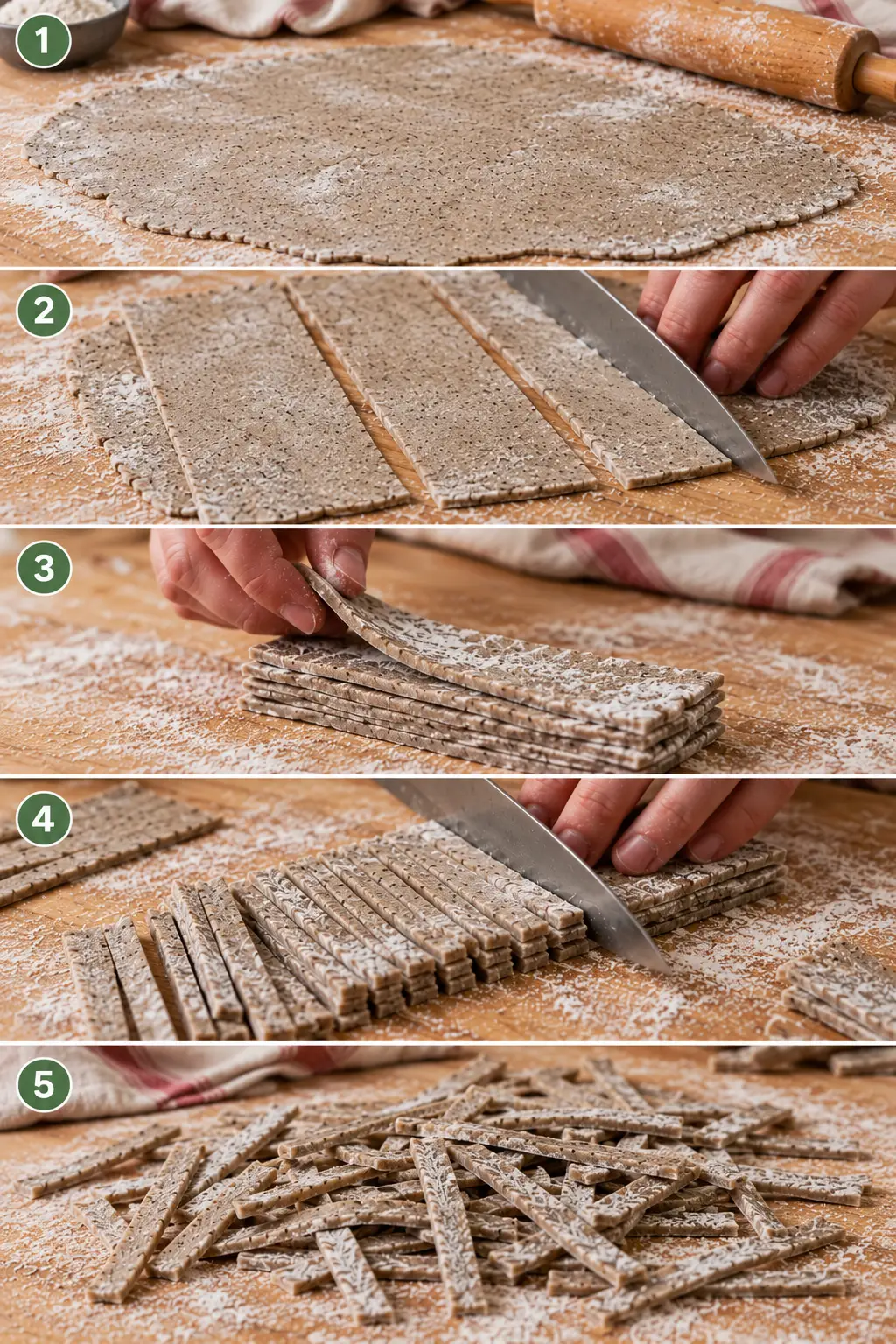
Lightly dust your work surface with buckwheat flour and roll out the dough using a rolling pin. Aim for an even sheet approximately 2–3 mm thick. If the dough begins to stick, dust the surface with a little more flour.
-
Cut the pizzoccheri 🔪
Cut the pasta sheet into strips approximately 7–8 cm wide. Lightly flour them, stack a few strips at a time and cut crosswise into ribbons approximately 5 mm wide. Gently separate the pizzoccheri and arrange them on a floured surface, making sure they do not stick together.
-
Prepare the potatoes and cabbage 🥬
Peel 250 g potatoes and cut them into evenly sized, fairly small pieces. Clean 200 g Savoy cabbage, remove the toughest parts of the stems and slice the leaves into strips. Thinly slice 250 g Valtellina Casera PDO cheese and grate 150 g hard grating cheese. Set everything aside until needed.
-
Cook the vegetables 🥔
Bring a large pot of water to the boil, then add salt. Add the potatoes and Savoy cabbage and cook for approximately 5 minutes. The vegetables should begin to soften but should not be fully cooked, as they will continue cooking with the pasta.
-
Add the pizzoccheri 🍝
Gradually add the pizzoccheri to the boiling water with the vegetables, stirring gently to prevent them from sticking together. Cook for approximately 10 minutes, checking that both the pasta and potatoes are tender. Meanwhile, warm a large serving dish to help keep everything hot while assembling the layers.
-
Prepare the garlic-infused butter 🧄
Place 200 g butter in a small pan with one lightly crushed garlic clove. Heat over medium heat until the butter has completely melted. Once it begins to foam, continue cooking until it develops a golden-brown colour and a nutty aroma, and the garlic turns golden. Watch carefully, as the butter can burn quickly once it starts to brown. Remove the garlic and keep the butter hot, ready to pour over the pizzoccheri.
-
Assemble the layers 🧀
Once the pasta and vegetables are cooked, lift them out using a slotted spoon, allowing the excess water to drain. Transfer a portion to the warmed serving dish and add a layer of Valtellina Casera PDO cheese and grated hard cheese. Continue alternating the pasta, potatoes, cabbage and cheeses until everything has been used. Do not stir at this stage, allowing the heat of the pasta to gradually melt the cheese.
-
Add the hot butter 🧈
Pour the very hot brown butter evenly over the pizzoccheri. The heat from the butter, pasta and vegetables will help the cheeses melt. Leave the dish somewhere warm for a brief moment, just long enough for the Casera to become soft and stretchy. Finish with freshly ground black pepper.
-
Serve the pizzoccheri 🍽️
Gently mix everything together, taking care not to break up the pasta, so the melted cheese and butter are distributed throughout. Divide between plates and serve immediately while piping hot.
Nutrition Facts
Servings 4
- Amount Per Serving
- Calories 1230kcal
- % Daily Value *
- Total Fat 86g133%
- Saturated Fat 53g265%
- Sodium 1050mg44%
- Total Carbohydrate 82g28%
- Dietary Fiber 12g48%
- Sugars 4g
- Protein 41g82%
* Percent Daily Values are based on a 2,000 calorie diet. Your daily value may be higher or lower depending on your calorie needs.
Note
Dough consistency: the amount of water needed may vary slightly depending on the flour. The dough should be firm and easy to handle without becoming sticky. Because buckwheat makes up most of the flour, it will be less elastic than ordinary wheat pasta dough.
Flour for dusting: keep a little extra buckwheat flour on hand for dusting the work surface and separating the freshly cut pizzoccheri.
Choosing the vegetables: Savoy cabbage is particularly suitable during the colder months. Swiss chard is also used in Valtellina at other times of year, but this version follows the traditional preparation with cabbage.
Choosing the cheese: Valtellina Casera PDO gives the dish much of its characteristic flavour and texture. Slice it thinly and allow it to come towards room temperature briefly before using it, so it melts more easily.
Brown butter: pay attention to both the colour and aroma. When the butter turns golden brown and develops a nutty fragrance, it is ready. Avoid letting it become too dark, as it may taste bitter.
Storage: pizzoccheri are best enjoyed immediately after cooking. Leftovers can be stored in a covered container in the refrigerator for up to 1–2 days and reheated thoroughly before serving. Uncooked fresh pizzoccheri can be kept briefly in the refrigerator, well dusted with flour and covered, or frozen. To freeze, spread them out on a tray until firm before transferring them to a suitable container.