Note
What Bread Should You Use?
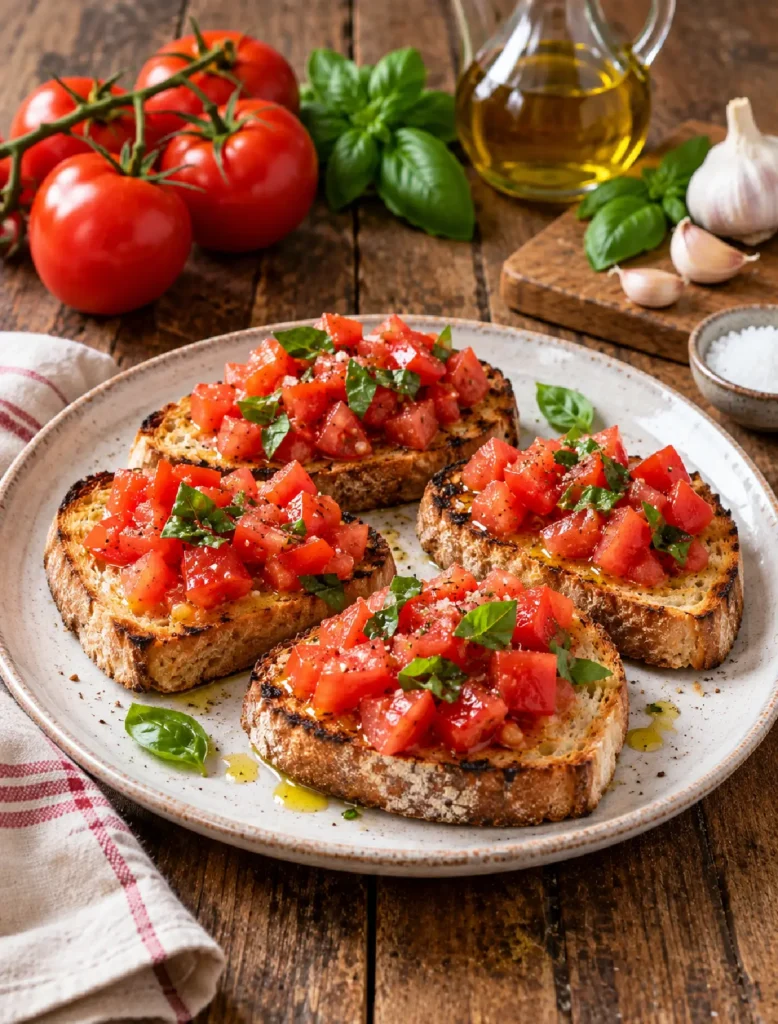
Choose rustic country bread with a sturdy crust and a fairly firm crumb. Naturally leavened sourdough bread also works well.
Avoid very soft sandwich bread, which absorbs the tomato dressing too quickly.
Which Tomatoes Work Best?
Ripe, medium-sized round tomatoes are a good choice, but San Marzano tomatoes also work well.
If your tomatoes are particularly watery, remove some of the seeds and excess liquid before seasoning them.
How to Keep Bruschetta Crispy
Don't pour all the liquid from the bottom of the bowl onto the bread. Spoon on the diced tomatoes and add only a little of their dressing.
This gives the bread plenty of flavour without making it soggy.
Can You Make Bruschetta Without a Grill?
Yes. Toast the bread in a hot frying pan or under the oven grill (broiler), turning the slices as needed.
The bread should become crisp and golden without burning.
Can You Prepare Tomato Bruschetta in Advance?
You can dice and season the tomatoes ahead of time, keeping them refrigerated if you're not using them straight away. Let them return to room temperature before serving.
Toast the bread and add the topping only when you're ready to eat.
Keywords:
tomato bruschetta, bruschetta, Italian bruschetta, bruschetta recipe, tomato and basil bruschetta
Bruschetta Didn't Originally Include Tomatoes
These days, mention bruschetta and most people immediately picture toasted bread piled high with bright red tomatoes. But for a long time, tomatoes had nothing to do with it.
The name is commonly linked to the Roman dialect verb bruscare, meaning to toast or roast. Originally, it was the bread that gave the dish its name, not whatever was placed on top. A slice toasted over a fire, rubbed with garlic and dressed with olive oil could already be called bruschetta.
Tomatoes arrived in Europe from the Americas in the sixteenth century, but it took quite some time for them to become a familiar part of Italian cooking. Nobody knows exactly who first thought of putting chopped tomatoes on toasted bread. What we do know is that the combination became so popular that, for many people today, bruschetta almost automatically means tomato bruschetta.
Bruschetta in Rome, Fettunta in Tuscany
In Roman trattorias, bruschetta might arrive topped with tomatoes, simply dressed with garlic and olive oil, or served with other ingredients. Toasted bread is always the starting point, but the topping varies from one restaurant to another.
Travel into Tuscany and you'll come across fettunta. At first glance, particularly when it's made with nothing more than garlic and olive oil, it looks almost identical.
Its name, however, tells a different story. Fettunta literally means "oiled slice", a direct reference to the olive oil poured over the toasted bread.
While tomato bruschetta has become famous far beyond Italy, fettunta remains especially associated with the season of freshly pressed olive oil. The two preparations have much in common, yet each has kept its own name and place in regional Italian cooking.
Why Do Some People Pronounce It “Brushetta”?
If you've travelled outside Italy, you may have heard someone order brushetta, pronouncing the middle of the word with a sound like the English sh in shoe.
It's a common pronunciation among English speakers, but in Italian the letters ch before e produce a hard k sound.
The correct pronunciation is broo-SKET-tah.
The meaning of the word has also changed as the dish has travelled. On some menus outside Italy, bruschetta refers almost exclusively to the tomato topping. You might even come across dishes called bruschetta chicken or bruschetta pasta.
Sometimes the bread that originally gave the dish its name has disappeared altogether.
To an Italian, seeing the word bruschetta attached to a pasta dish might seem unusual, but it's also an interesting example of how recipe names change when they cross borders.
👉 Discover our Fettunta Toscana recipe, made with toasted bread, garlic and extra virgin olive oil.