Fettunta Toscana has long been a way to taste freshly pressed olive oil. When the olive harvest reaches the milling stage, a slice of toasted bread is all you need to appreciate a good oil: fragrant, slightly bitter, with that peppery sensation at the back of your throat that can surprise anyone used to milder flavors.
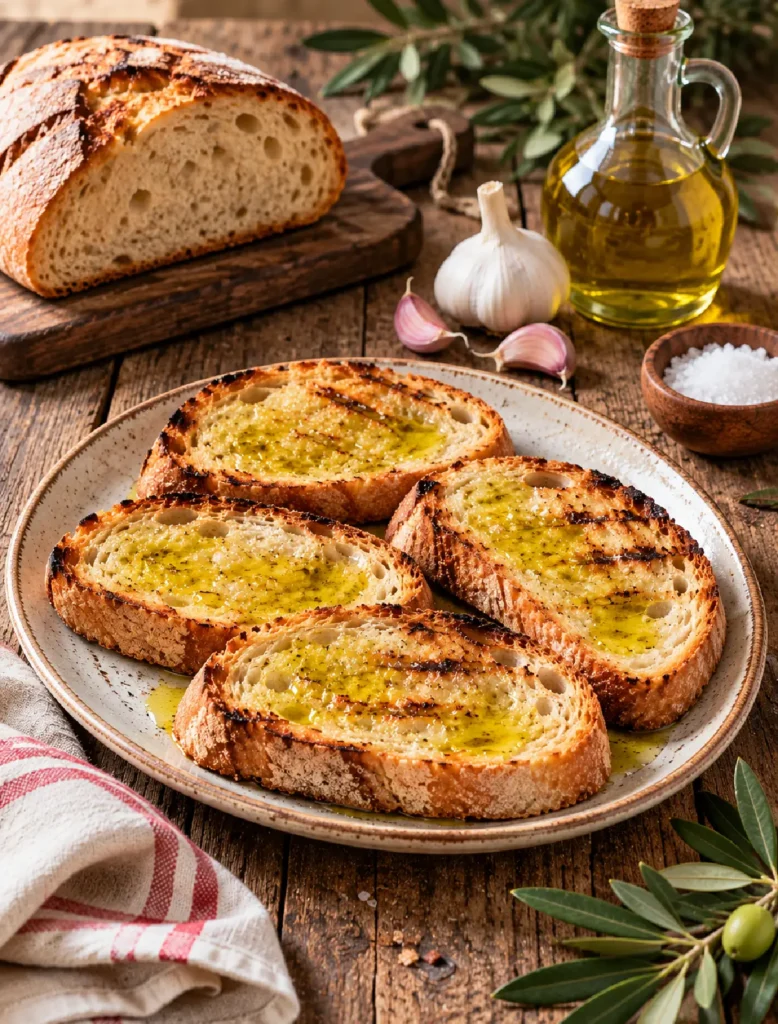
The bread matters just as much. In Tuscany, the traditional choice is pane sciocco, the region’s famously unsalted bread. It’s cut into fairly thick slices and toasted until a crust forms, while the middle stays soft. The warm surface is rubbed with garlic, generously drizzled with olive oil, and finished with a pinch of salt. Fettunta is best eaten immediately, preferably with your hands.
Finding unsalted Tuscan bread isn’t always easy outside Tuscany, especially abroad. A good rustic sourdough loaf will work, provided it has a substantial crust and a firm enough crumb to absorb the oil without falling apart. If the bread already contains salt, go easy on the extra seasoning. But traditional Tuscan bread gives the olive oil room to speak for itself, and that’s what makes fettunta distinctive.
Fettunta Toscana
Description
Fettunta is a Tuscan specialty made with unsalted bread, garlic, and extra virgin olive oil. Served warm, it's especially popular during the freshly pressed olive oil season.
Ingredienti
Instructions
How to Make Fettunta Toscana
-
Slice the bread 🍞
Cut the Tuscan bread into 4 slices about 1.5–2 cm (0.6–0.8 inches) thick. If using an alternative rustic loaf, choose slices from the middle of the loaf so they're large and fairly even.
-
Toast the bread 🔥
Heat a grill or grill pan until hot, then place the bread slices directly on the surface without adding any oil.
Toast for about 2–3 minutes per side, turning once, until golden and crisp on the outside but still slightly soft in the middle. Don't let the bread burn.
If you have a charcoal or wood-fired grill, you can toast the bread over the embers, as is traditionally done in Tuscany.
-
Rub with garlic 🧄
Peel the 2 garlic cloves and cut them in half.
Lightly rub the cut sides over the warm toasted bread. The rough surface picks up the garlic flavor, so a few passes are usually enough. Rub a little more firmly if you prefer a stronger taste.
-
Add salt and olive oil 🫒
Arrange the slices on a serving plate and sprinkle each with a pinch of salt.
Drizzle the 40 g (1.5 fl oz) of extra virgin olive oil evenly over the four slices, allowing it to soak into the bread without making it completely soggy.
-
Serve the fettunta warm 🍽️
Serve immediately, while the bread is still warm and the olive oil is at its most fragrant.
Nutrition Facts
Servings 4
- Amount Per Serving
- Calories 200kcal
- % Daily Value *
- Total Fat 10.2g16%
- Saturated Fat 1.5g8%
- Sodium 28mg2%
- Total Carbohydrate 25.6g9%
- Dietary Fiber 1.2g5%
- Sugars 0.5g
- Protein 3.2g7%
* Percent Daily Values are based on a 2,000 calorie diet. Your daily value may be higher or lower depending on your calorie needs.
Note
Choosing the Right Bread
Traditional fettunta is made with unsalted Tuscan bread. If it's unavailable, use a rustic sourdough loaf with a substantial crust and a fairly firm crumb. Day-old bread also works well, provided it hasn't dried out completely.
If your bread already contains salt, reduce or omit the extra salt.
Toasting Without a Grill
You can toast the slices under the oven broiler or grill setting, watching closely and turning them as needed. The aim is a crisp surface without drying out the center.
How Much Garlic Should You Use?
The 2 garlic cloves are used to rub the four slices, not chopped or spread over the bread. The amount of garlic transferred depends on how firmly you rub.
Choosing the Olive Oil
Freshly pressed olive oil is especially good for fettunta, but it isn't essential. A good-quality extra virgin olive oil will work at any time of year.
Can Fettunta Be Made Ahead?
Fettunta is best prepared just before serving. Once dressed, the bread gradually absorbs the oil and loses some of its crispness.