Note
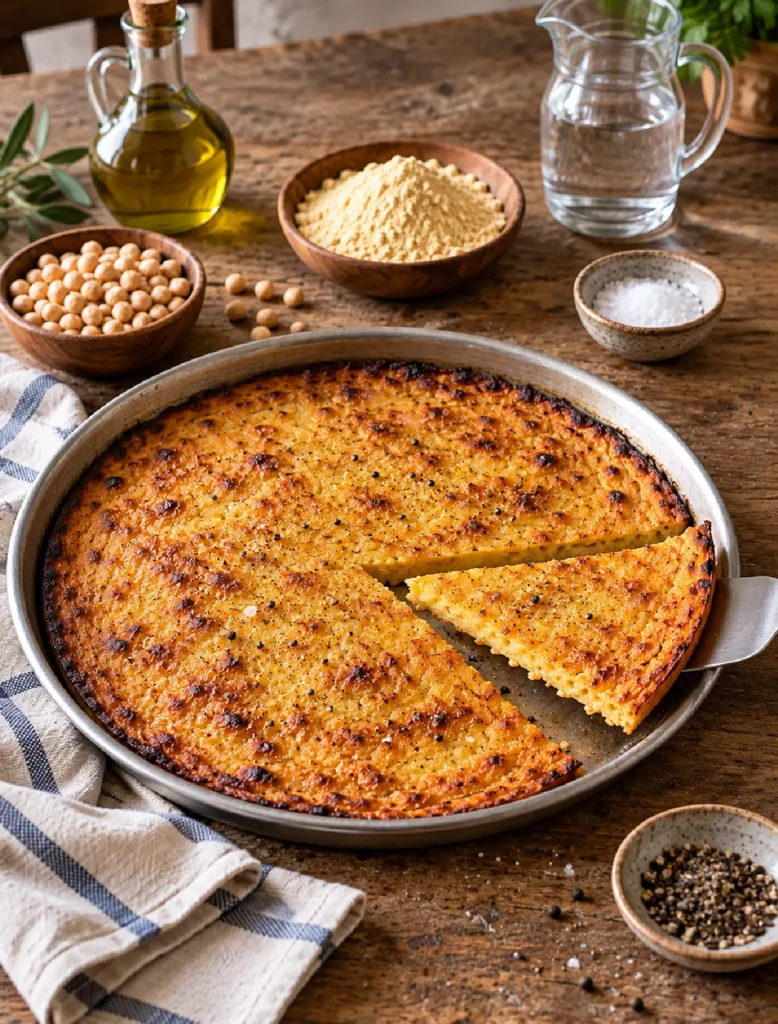
Traditional farinata is baked in a testo, a large round pan made from tinned copper, and benefits from the extremely high temperatures of a wood-fired oven. At home, you can still achieve a good result with a 32 cm / 12.5-inch round pan, preferably metal, by preheating the oven to its maximum temperature before baking.
The batter should form an even layer across the pan. After pouring it over the oil, stir gently so that there are no noticeably thicker areas, which would cook differently from the rest of the farinata.
Use the grill/broiler only if the surface is still too pale after the first stage of baking. Watch it closely, as it can brown very quickly at this temperature.
Rosemary is one of the additions found in some versions of farinata, but we have left it out of this basic recipe. Other ingredients are also traditionally added in different parts of Liguria.
Farinata is at its best freshly baked. Let it settle for only a few minutes after taking it out of the oven, then serve it hot or warm.
Keywords:
farinata genovese, Genoese chickpea farinata, chickpea farinata, fainà, farinata recipe, Genoese street food, Ligurian food, chickpea flour recipe
A Storm After the Battle of Meloria
The best-known story about the origins of farinata begins at sea in 1284, after the Battle of Meloria. Genoese galleys were returning from their victory over Pisa when, according to the story, they were caught in a storm. Seawater, oil and chickpea flour became mixed together in the holds, and with their provisions damaged, the sailors had little choice but to make use of what remained.
The mixture was left to dry in the sun and then eaten. According to tradition, once they returned to Genoa, someone decided to repeat the experiment by baking it in an oven.
The Battle of Meloria certainly took place; the rest of the story does not have the same historical foundation. The legend has nevertheless been associated with farinata for centuries and remains probably the best-known story about its origins.
When Farinata Was Called Scripilita
In fifteenth-century Genoa, the Latin term scripilita appears in connection with a preparation associated with farinata. The name is said to have come from the crackling sound of the batter as it cooked.
At the heart of its preparation was already the testo, the large round tinned copper pan that remains part of the farinata tradition today. A reference dating to 1477 is cited among the historical records of the Genoese preparation.
The old name has disappeared from everyday use, while its Genoese descendant, fainà, has survived to the present day.
Farinata and the Sciamadde
In Genoa's narrow caruggi, farinata found its home in the sciamadde. The name comes from sciammadda, meaning flame, a reference to the fire of the old ovens.
These were popular, often small establishments where people ate farinata, vegetable pies and fried fish. The oven dominated the room, and the large copper testi were placed directly in front of the flames. Farinata arrived at the counter hot and ready to eat.
The sciamadde are not merely a thing of the past. Some still operate in Genoa's historic centre, continuing to prepare the specialties that generations have eaten in the city's narrow streets. Among Genoa's historic shops are businesses associated with savory pies and farinata that date back to the nineteenth century.
Savona's White Farinata
Savona is also home to a very different kind of farinata. Known as farinata bianca, or white farinata, it is prepared with wheat flour instead of chickpea flour.
The difference goes beyond its colour. In Liguria's list of PAT (Prodotti Agroalimentari Tradizionali, Traditional Agri-Food Products), the two preparations are registered separately: Farinata (ligure, di ceci) and Farinata (savonese, bianca).
Outside Liguria, we find preparations related to farinata whose names change from place to place. Tuscany has cecina and torta di ceci, Sardinia has fainè, while in Nice we find socca.