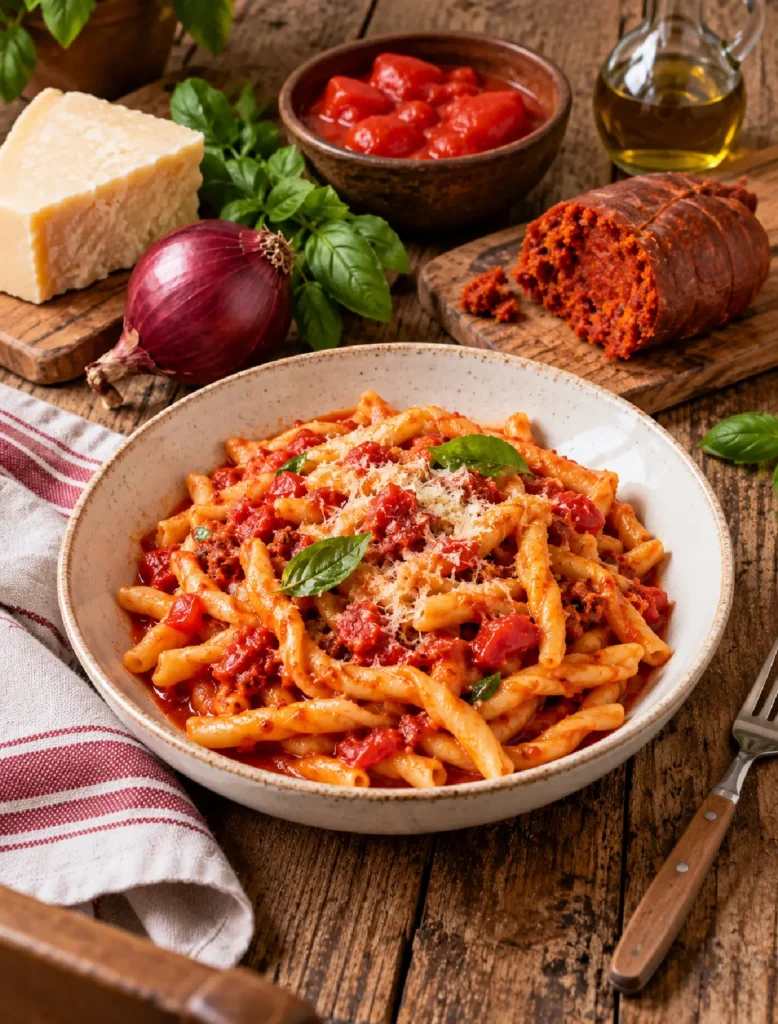
Note
Fresh fileja pasta: You can replace the 400 g of dried fileja with approximately 500 g of fresh fileja. Cooking times will generally be shorter, although they depend on the thickness and preparation of the pasta. Check the texture as it cooks and drain when still al dente.
Adjusting the heat: The 100 g of ’nduja gives the sauce a noticeable chilli kick, but the intensity varies between producers. For a milder version, start with 70–80 g, taste the sauce and add more if desired.
Pecorino: The cheese is optional. Pecorino del Monte Poro, produced in the Vibo Valentia area, is a particularly fitting choice. Sprinkle it over the pasta just before serving.
Storage: Fileja alla ’nduja is best enjoyed freshly made. If you have leftovers, cool them promptly and store them in an airtight container in the refrigerator for 1–2 days. Reheat in a pan with a little water to loosen the sauce.
Keywords:
fileja alla nduja, Calabrian fileja pasta, nduja pasta, nduja from Spilinga, Calabrian pasta recipe, spicy Italian pasta
Pasta Shaped Around a Thin Rod
Making fileja requires a simple dough, but above all, a practised hand. A small piece of dough is rolled into a thin strand, wrapped around a slender rod and rolled under the palm. Once the rod is pulled out, what's left is a slightly irregular, twisted tube of pasta.
This technique has been part of home cooking in the Vibo Valentia area for generations, when making pasta by hand was a familiar household task. Before metal rods became common, people also used stems of rushes, locally known as cannici, or disa grass, a wild Mediterranean plant also called gutamara in local speech. All that was needed was a wooden board, a suitable stem and the patience to repeat the same movement dozens of times.
The shape of fileja depends greatly on the person making them. Some are longer and thinner, others shorter and fairly thick. Even the hollow centre varies slightly according to the diameter of the rod.
Fileja, Filei and Maccarruna aru Ferru
Across Calabria, pasta shaped around a thin rod goes by different names from one town to another. In the Vibo Valentia area, fileja and filei are particularly common, while elsewhere names such as filatiedi and maccarruna aru ferru can be heard.
The differences go beyond dialect. The shape can change too: some cooks roll the dough into longer pieces, others leave it thicker, and the rods themselves may vary. These small differences developed in home kitchens long before such pasta shapes appeared on shop shelves.
Fileja are recognised as a PAT (Traditional Agri-food Product) of Calabria. This recognition applies to the pasta and its traditional preparation, not specifically to the dish made with ’nduja.
When Fileja Meets ’Nduja
Not far from Vibo Valentia, on the slopes of the Monte Poro plateau, lies Spilinga, the town most closely associated with ’nduja production. It's hardly surprising that this spicy cured pork speciality eventually found its way into the sauces served with locally made pasta.
Fileja, however, were never intended to be eaten only with ’nduja. In local cooking, they're also served with tomato sauces, pork ragù and dishes made with goat meat. The combination with ’nduja has become particularly well known, but it's just one part of a much wider tradition of pasta sauces.
Today, fresh fileja can be found in artisan pasta workshops, alongside dried versions made by pasta producers. The technique of shaping the dough around a rod remains their most distinctive feature.
Behind the heat of this dish lies the story of ’nduja from Spilinga, its origins and its uses in Italian cooking, a cured pork speciality that has grown from a local favourite into one of Calabria's best-known foods.