A little ’nduja melting slowly into a pan is enough to transform a simple tomato sauce. The aroma changes, the colour deepens, and that unmistakable chilli heat begins to develop, making Fileja alla ’nduja such a distinctive dish.
With their twisted shape and narrow hollow centre, fileja catch the sauce in every bite. Tropea red onion also goes into the pan, gently softened before the tomatoes and ’nduja are added.
This is the kind of pasta that makes you want to keep some bread close by. Once the pasta is gone, it’s hard to leave any sauce behind.
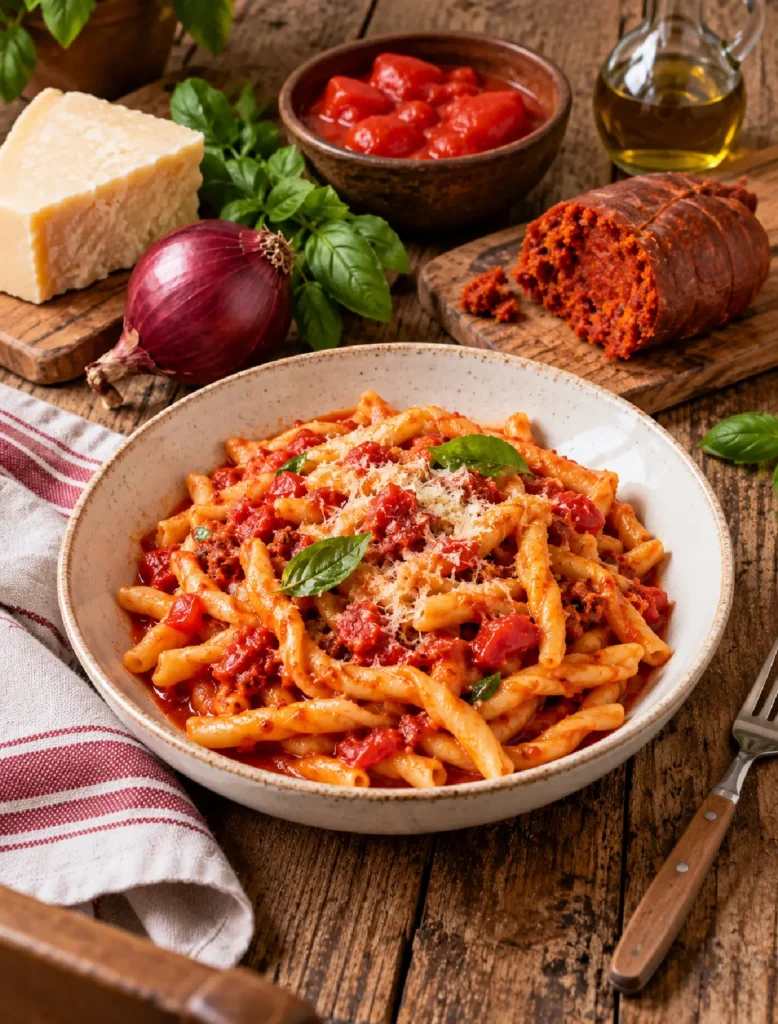
Fileja alla ’nduja – Calabrian Pasta with Spicy ’Nduja Sauce
Description
Traditional Calabrian fileja pasta tossed with peeled tomatoes, Tropea red onion and spicy ’nduja from Spilinga, optionally finished with grated aged pecorino.
Ingredients
Instructions
How to Make Fileja alla ’nduja
-
Prepare the Onion 🧅
Peel the Tropea red onion and finely chop it. Heat the 30 g of extra virgin olive oil in a large pan, add the onion and cook gently over low heat for 8–10 minutes, stirring occasionally. It should become soft without browning. If necessary, add a tablespoon of water to prevent it from sticking.
-
Cook the Tomatoes 🍅
Add the 400 g of canned whole peeled tomatoes, roughly crushing them with a wooden spoon. Stir and simmer over medium-low heat for 15–20 minutes, until the sauce has reduced slightly. If it becomes too thick, add a little water.
-
Add the ’Nduja 🌶️
Remove any casing from the ’nduja and break it into small pieces. Add it to the tomato sauce and stir over low heat for 3–5 minutes, until it has melted and blended into the sauce. Tear the 4 basil leaves by hand, add them to the pan and turn off the heat.
-
Cook the Fileja 🍝
Bring a large pot of water to the boil, then add salt. Add the 400 g of dried fileja pasta and cook according to the package instructions, draining it 1–2 minutes before the recommended time so it can finish cooking in the sauce. Before draining, reserve a cup of the pasta cooking water.
-
Finish the Pasta in the Sauce 🍳
Transfer the fileja to the pan with the ’nduja sauce. Return the pan to medium-low heat and toss gently for 1–2 minutes, adding a little reserved pasta cooking water at a time if needed. The sauce should coat the pasta evenly without becoming watery.
-
Finish and Serve 🧀
Divide the Fileja alla ’nduja between serving plates and serve immediately. If desired, finish with the 40 g of grated aged pecorino, preferably Pecorino del Monte Poro. A little goes a long way, as the ’nduja is already quite savoury.
Nutrition Facts
Servings 4
- Amount Per Serving
- Calories 750kcal
- % Daily Value *
- Total Fat 28g44%
- Saturated Fat 10g50%
- Sodium 1100mg46%
- Total Carbohydrate 83g28%
- Dietary Fiber 6g24%
- Sugars 9g
- Protein 24g48%
* Percent Daily Values are based on a 2,000 calorie diet. Your daily value may be higher or lower depending on your calorie needs.
Note
Fresh fileja pasta: You can replace the 400 g of dried fileja with approximately 500 g of fresh fileja. Cooking times will generally be shorter, although they depend on the thickness and preparation of the pasta. Check the texture as it cooks and drain when still al dente.
Adjusting the heat: The 100 g of ’nduja gives the sauce a noticeable chilli kick, but the intensity varies between producers. For a milder version, start with 70–80 g, taste the sauce and add more if desired.
Pecorino: The cheese is optional. Pecorino del Monte Poro, produced in the Vibo Valentia area, is a particularly fitting choice. Sprinkle it over the pasta just before serving.
Storage: Fileja alla ’nduja is best enjoyed freshly made. If you have leftovers, cool them promptly and store them in an airtight container in the refrigerator for 1–2 days. Reheat in a pan with a little water to loosen the sauce.