Simple, Delicious, and Ready in 20 Minutes
Saltimbocca alla Romana is one of those dishes that doesn’t need many ingredients to make an impression. Thin slices of veal, prosciutto, sage, butter, and a little white wine—that’s it. But put them together, and they really do make a difference.
The veal cooks quickly in the pan with the prosciutto and sage facing up, then the white wine is added to deglaze the pan. The cooking juices reduce into a rich, savoury sauce that is perfect for mopping up with a piece of bread.
And then there’s the part everyone likes: they’re ready in about 20 minutes. They’re perfect for a weeknight dinner, but they also look the part when you have guests and want to serve something typically Roman without spending hours at the stove.
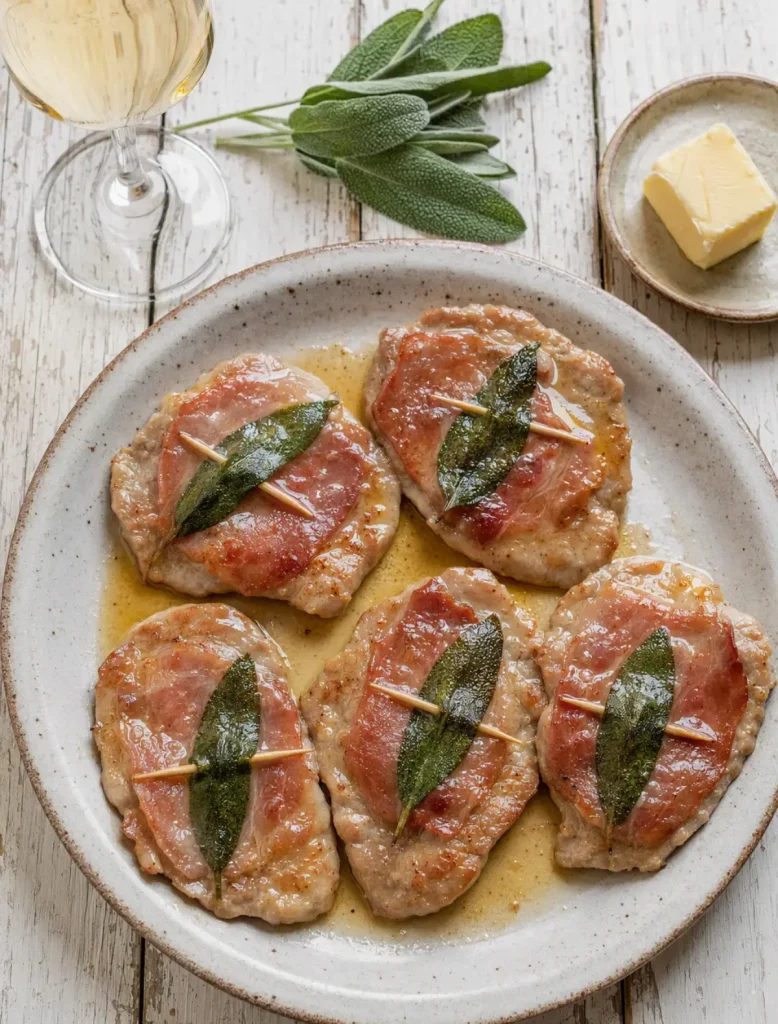
Saltimbocca alla Romana
Description
Tender slices of veal topped with prosciutto and sage, cooked in a pan with butter and white wine. A simple, flavourful Roman classic that’s ready in minutes.
Ingredients
Instructions
How to Make Saltimbocca alla Romana
-
Prepare the Veal 🔨
Place the veal slices on a cutting board. If they are a little thick, gently pound them with a meat mallet until thinner. Don’t overdo it: they should be thin, but not so thin that they become almost transparent.
-
Add the Prosciutto and Sage 🥓
Place a slice of prosciutto on top of each veal slice. If the prosciutto is larger than the meat, simply fold it slightly so it fits. Add a sage leaf and secure everything with a toothpick.
-
Lightly Dust with Flour 🌾
Dust the veal slices with flour only on the meat side, then shake off any excess. The side with the prosciutto and sage should remain flour-free, so the prosciutto stays clearly visible and keeps its texture while cooking.
-
Into the Pan! 🧈
Melt the butter in a large enough pan over medium heat. When it starts to sizzle, place the saltimbocca in the pan floured-side down (prosciutto-side up).
Cook for about 1–2 minutes, until the side touching the pan starts to brown and the veal is almost cooked through. The slices are thin and don’t need much cooking time.
-
Add the Wine 🍷
Pour the white wine into the pan without turning the saltimbocca, keeping the prosciutto and sage facing up. Increase the heat slightly and let the wine cook off for about 1 minute, gently moving the pan to distribute it.
The wine will pick up the flavours from the bottom of the pan and start to form the sauce. Don’t cook the saltimbocca any longer than necessary: the veal should stay tender.
-
Make the Sauce ✨
Remove the saltimbocca from the pan and set them aside briefly. Leave the cooking juices over the heat for a few more seconds, until slightly reduced.
Taste before adding any salt. The prosciutto already brings plenty of flavour. Add a little freshly ground black pepper, and the sauce is ready.
-
Time to Serve 🍽️
Plate the saltimbocca and spoon the sauce over the top. Serve immediately while hot.
This is one of those dishes where waiting really doesn’t help: Saltimbocca alla Romana is best served straight away. And if there’s some bread on the table too, even better.
Nutrition Facts
- Amount Per Serving
- Calories 360kcal
- % Daily Value *
- Total Fat 19g30%
- Saturated Fat 10g50%
- Sodium 700mg30%
- Total Carbohydrate 10g4%
- Dietary Fiber 0.5g2%
- Sugars 1g
- Protein 35g70%
* Percent Daily Values are based on a 2,000 calorie diet. Your daily value may be higher or lower depending on your calorie needs.
Note
If you want to get ahead, you can prepare the veal slices a few hours in advance. Pound them with a meat mallet and, if you want to protect them while working with them, place them between two sheets of parchment paper. Cover and refrigerate.
The flour, however, should be added shortly before cooking. Avoid flouring the saltimbocca in advance and leaving them in the refrigerator for several hours: moisture from the meat will cause the flour to absorb moisture, making it sticky and affecting the final result in the pan.
You can add the prosciutto and sage shortly before cooking, together with the flour.
One thing to watch is the butter. It should not turn brown: it should melt and form a light foam. If the bottom of the pan starts to burn, it’s better to stop, clean the pan, and start again.
Saltimbocca is definitely best when freshly cooked, but if you have leftovers, you can keep them refrigerated until the next day. To reheat them, use very low heat and add a splash of water to help keep the veal tender.