Fry the Shells 🔥
Heat plenty of peanut oil to 175°C / 350°F. If you do not have a thermometer, dip the tip of a wooden skewer or the handle of a wooden spoon into the oil. When plenty of small bubbles immediately form around the wood, the oil is ready. Alternatively, drop in a small piece of dough: it should quickly rise to the surface and begin frying without browning immediately.
Fry a few cannoli at a time, still wrapped around their tubes. When the characteristic bubbles appear and the shells are golden, lift them out and drain on absorbent paper.
Let them cool slightly, then gently twist and remove the tubes. Leave the shells to cool completely before filling.
6 Fill the Cannoli 🍰
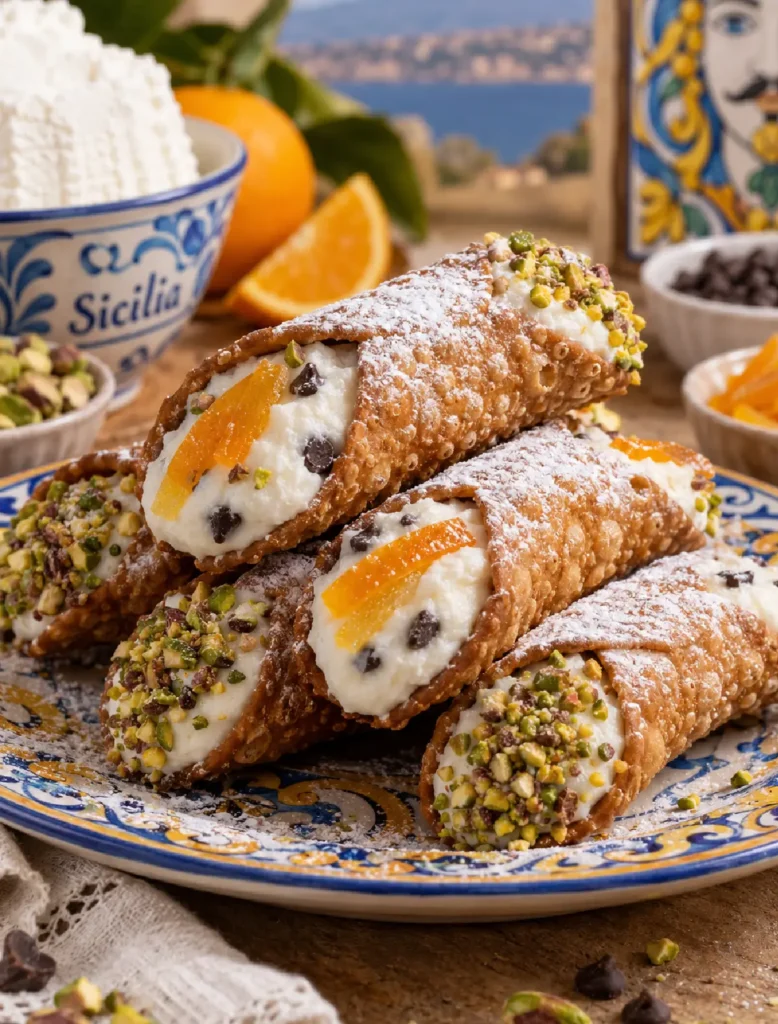
Transfer the ricotta filling to a piping bag fitted with a wide nozzle. Fill the cannoli shortly before serving, piping the filling first from one end and then from the other so that it reaches the centre.
7 Decorate and Serve ✨
Decorate the cannoli with chopped pistachios or candied orange peel, or simply leave them with the ricotta filling. Dust with icing sugar and serve immediately.
Servings 12
- Amount Per Serving
- % Daily Value *
- Total Fat 15g24%
- Saturated Fat 7g35%
- Sodium 60mg3%
- Total Carbohydrate 40g14%
- Dietary Fiber 0.6g3%
- Sugars 23g
- Protein 10g20%
* Percent Daily Values are based on a 2,000 calorie diet. Your daily value may be higher or lower depending on your calorie needs.
Note
The sheep’s milk ricotta needs to be thoroughly drained before preparing the filling. If it contains too much whey, the filling will be softer and will quickly make the shells lose their crispness. Leave it to drain in the refrigerator overnight, then pass it through a sieve before adding the sugar.
For thin, crisp shells, roll the dough to about 1.5 mm / 0.06 in and keep any dough you are not working with covered. If the surface dries out before frying, it will be more difficult to obtain the characteristic bubbles.
Keep the oil at around 175°C / 350°F and fry only a few cannoli at a time so that the temperature does not drop too much. Once the shells have cooled slightly, carefully remove the tubes and leave the shells to cool completely.
You can prepare the shells and ricotta filling in advance, but store them separately. Keep the ricotta filling covered in the refrigerator and the completely cooled shells in an airtight container in a cool, dry place. Fill the cannoli only shortly before serving, as prolonged contact with the ricotta will soften the shells.
The dark chocolate chips, chopped pistachios, and candied orange peel are optional. Use them to finish the cannoli or leave the ricotta filling plain.
Keywords:
Sicilian Cannoli, ricotta cannoli, Sicilian desserts, homemade cannoli
Where Do Sicilian Cannoli Come From?
There are several stories about the origins of Sicilian Cannoli. Some link them to the Arab presence in Sicily, while others point to convents, and Carnival also played a part in the tradition surrounding this dessert.
But how much of these stories can actually be documented? We looked into the history of cannoli to separate what we know from the stories that have accumulated around them over time.
👉 Sicilian Cannoli: History, Origins and Tradition