Flour and Fry the Sardines 🍳
Heat the sunflower oil in a deep frying pan to approximately 170–175°C (340–350°F). Lightly coat the sardines in all-purpose flour, shaking off any excess. Fry in small batches for approximately 2–3 minutes in total, turning carefully, until golden and cooked through. Adjust the cooking time according to the size of the fish. Drain on kitchen paper, season lightly with salt, and leave to cool slightly.
6 Layer the Sardines 🥘
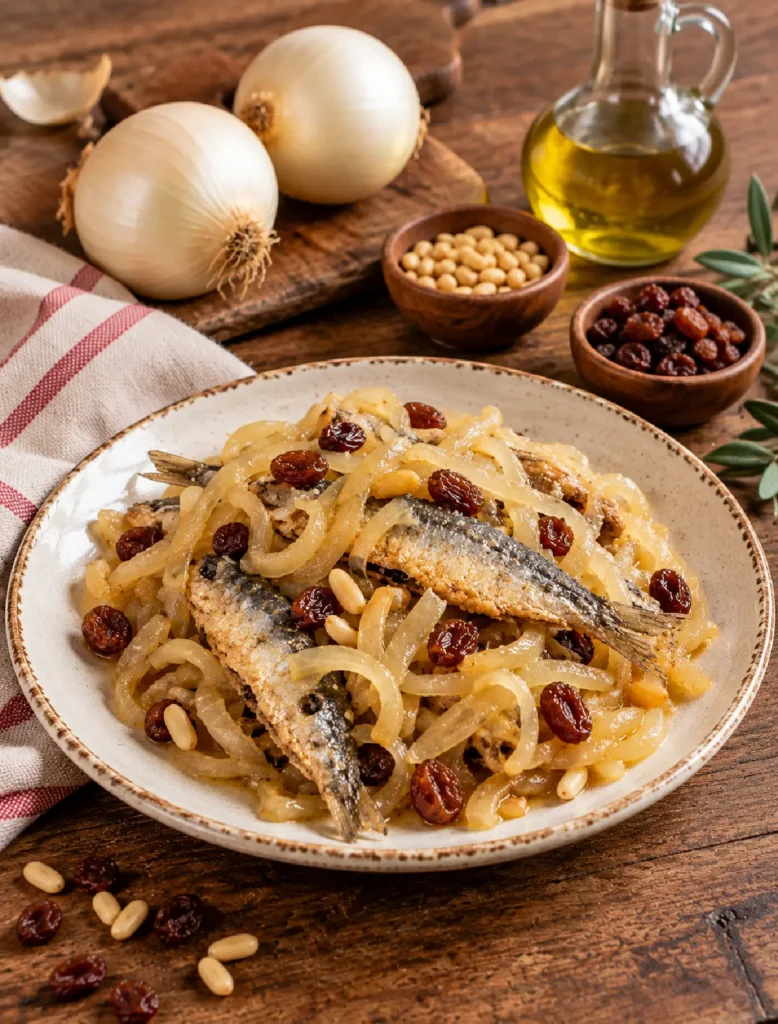
Arrange a first layer of fried sardines in a glass or ceramic dish. Add a pinch of black pepper, cover with some of the onions and their cooking liquid, then scatter over some of the soaked raisins and the 30 g of pine nuts. Continue layering until all the ingredients are used, finishing with a generous layer of onions. Pour over any remaining liquid from the pan so that the sardines are well coated.
7 Refrigerate and Serve 🕒
Allow the dish to cool slightly, cover, and refrigerate for at least 24 hours, preferably 48 hours. Before serving, remove the sardines from the refrigerator for approximately 15–20 minutes, keeping them cool.
Servings 4
- Amount Per Serving
- % Daily Value *
- Total Fat 24g37%
- Saturated Fat 4g20%
- Sodium 280mg12%
- Total Carbohydrate 27g9%
- Dietary Fiber 3g12%
- Sugars 12g
- Protein 22g44%
* Percent Daily Values are based on a 2,000 calorie diet. Your daily value may be higher or lower depending on your calorie needs.
Note
Choosing the sardines: use very fresh sardines, preferably of a similar size so they cook evenly. You can ask your fishmonger to remove the heads and entrails while leaving the fish whole.
The onions: white onions work particularly well because of their mild flavour. If unavailable, yellow onions can be used, although the final flavour will be slightly different.
The vinegar: choose a well-balanced white wine vinegar. The quantity follows the reference recipe, but acidity can vary between brands.
Raisins and pine nuts: we've chosen 40 g of raisins and 30 g of pine nuts for this version. They provide sweetness and texture without overwhelming the fish. The reference preparation does not specify exact quantities for these ingredients. Add the pine nuts without toasting them.
Oil for frying: the litre of sunflower oil ensures there is enough oil in the pan for frying, but it is not all absorbed by the sardines. It should therefore not be included in full when calculating nutritional values.
Serving suggestions: sarde in saor are best served cool, but not necessarily straight from the refrigerator. They pair particularly well with slices of grilled white polenta or bread.
Storage: keep the sardines in a covered container in the refrigerator at 4°C (40°F) or below. Ideally, eat them within three days of preparation, including the 24–48-hour resting period. Do not leave them at room temperature for extended periods: the vinegar does not make the dish safe to store unrefrigerated.
Variations: some Venetian recipes also include bay leaves, sugar, or spices. Our version follows the ingredients in the reference preparation without these additions.
Keywords:
Venetian sweet and sour sardines, sarde in saor, Venetian sardines, sardines with onions
The History of Sarde in Saor
Students from the hospitality school in Chioggia also played a part in getting sarde in saor recognised as a Traditional Agri-Food Product (PAT) of Veneto in 2023. It's an interesting detail: one of Venice's best-known dishes gained official recognition partly thanks to young people researching its history and documenting its connection to the region.
But the history of saor goes back much further.
In Venetian dialect, the word means “flavour”, although in cooking it came to describe something quite specific: a way of preparing fish that made use of vinegar's preserving properties to help it last longer. For fishermen working in the lagoon, this was a practical necessity. Their catch wasn't always eaten or sold on the same day, so they needed ways to keep it.
There's another side of Venice reflected in this dish, too: the city of merchants. For centuries, ships from the Venetian Republic carried spices, sugar, dried fruit, and goods from distant ports. These products circulated through the city's markets and gradually influenced Venetian eating habits.
The cuisine of the Republic of Venice had a particular fondness for contrasts between sweet and sour flavours, combinations that were also highly appreciated in medieval and Renaissance cooking. Saor belongs to this culinary tradition, in which simple local ingredients could sit alongside products brought in through international trade routes.
Sardines, after all, were common and relatively inexpensive fish, far removed from the elaborate dishes served at aristocratic tables. Yet this humble preparation has remained one of Venice's most representative dishes, surviving centuries of changing food traditions.