In Venice, sarde in saor are prepared a little ahead of time. This isn’t a dish you serve straight after cooking: the sardines need to rest between layers of onions, absorb the vinegar, and develop their flavour. They’re even better the next day.
The onions are just as important as the fish. They need to become soft, almost melting, while retaining a sweetness that balances the acidity of the white wine vinegar. The sardines, lightly coated in flour and fried, bring a more pronounced flavour. In our version with raisins and pine nuts, every mouthful is slightly different: sometimes the sweetness of the raisins comes through, while at other times you notice the delicate flavour of the pine nuts. The vinegar should be noticeable, but it shouldn’t overpower everything else.
In Venice’s bacari, the city’s traditional wine bars, sarde in saor are served among the cicchetti, often ready to eat at the counter. The dish originated at a time when preserving fish was a necessity, and perhaps that’s why it has retained a very practical quality in today’s kitchens: you can make it the day before, with nothing left to do at the last minute.
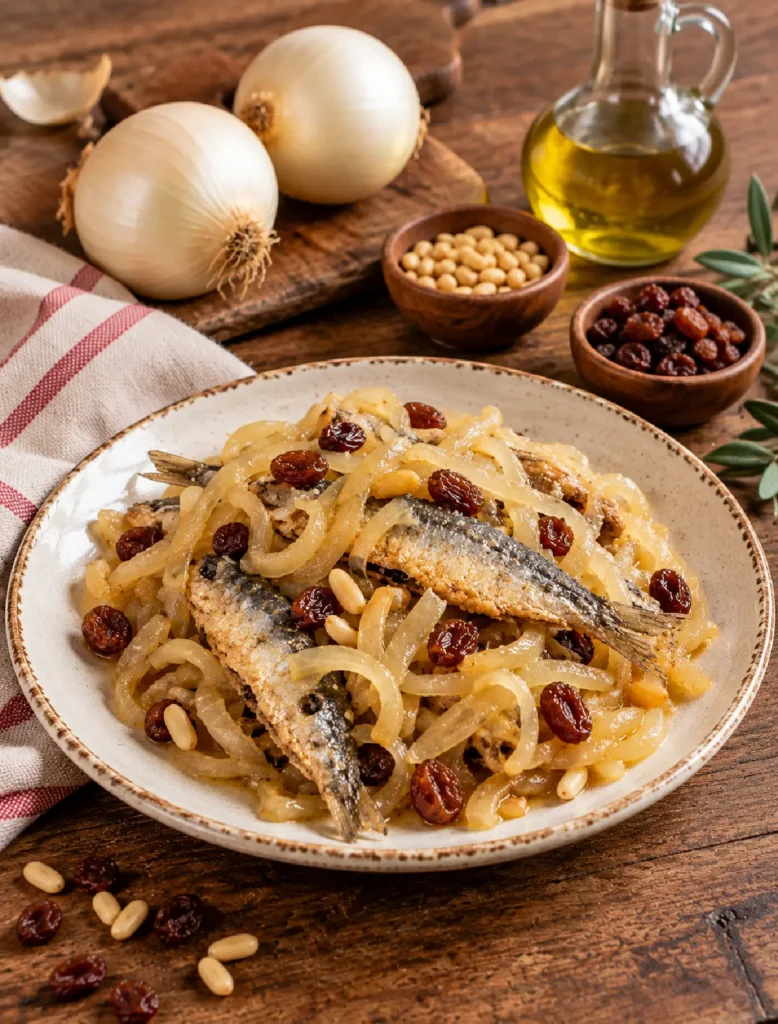
Venetian Sweet and Sour Sardines
Description
Flour-coated fried sardines layered with white onions cooked in vinegar, raisins, and pine nuts. A Venetian appetizer best prepared the day before and served cool.
Ingredients
Instructions
How to Make Venetian Sweet and Sour Sardines
-
Prepare the Onions and Raisins 🧅
Peel the white onions and soak them in cold water for 30 minutes. Meanwhile, place the 40 g of raisins in a small bowl, cover with enough dry white wine to submerge them, and leave to soften for 15–20 minutes. Drain and set aside.
-
Clean the Sardines 🐟
Remove the scales, heads, and entrails from the sardines, making a small incision along each belly. Keep the fish whole, without butterflying them or removing the backbone. Rinse briefly under cold running water and pat thoroughly dry with kitchen paper.
-
Cook the Onions 🧅
Drain the onions and slice them very thinly. Heat a little extra virgin olive oil in a large pan, add the onions, and cook gently over low heat for 20 minutes, stirring occasionally. They should become completely soft without browning significantly. Add a little water if necessary to prevent sticking.
-
Add the Vinegar 🍶
Once the onions are soft, increase the heat slightly and pour in the 200 ml of white wine vinegar. Cook for another 2–3 minutes, stirring gently, then remove from the heat. There should still be enough liquid in the pan to flavour the sardines as they rest.
-
Flour and Fry the Sardines 🍳
Heat the sunflower oil in a deep frying pan to approximately 170–175°C (340–350°F). Lightly coat the sardines in all-purpose flour, shaking off any excess. Fry in small batches for approximately 2–3 minutes in total, turning carefully, until golden and cooked through. Adjust the cooking time according to the size of the fish. Drain on kitchen paper, season lightly with salt, and leave to cool slightly.
-
Layer the Sardines 🥘
Arrange a first layer of fried sardines in a glass or ceramic dish. Add a pinch of black pepper, cover with some of the onions and their cooking liquid, then scatter over some of the soaked raisins and the 30 g of pine nuts. Continue layering until all the ingredients are used, finishing with a generous layer of onions. Pour over any remaining liquid from the pan so that the sardines are well coated.
-
Refrigerate and Serve 🕒
Allow the dish to cool slightly, cover, and refrigerate for at least 24 hours, preferably 48 hours. Before serving, remove the sardines from the refrigerator for approximately 15–20 minutes, keeping them cool.
Nutrition Facts
Servings 4
- Amount Per Serving
- Calories 410kcal
- % Daily Value *
- Total Fat 24g37%
- Saturated Fat 4g20%
- Sodium 280mg12%
- Total Carbohydrate 27g9%
- Dietary Fiber 3g12%
- Sugars 12g
- Protein 22g44%
* Percent Daily Values are based on a 2,000 calorie diet. Your daily value may be higher or lower depending on your calorie needs.
Note
Choosing the sardines: use very fresh sardines, preferably of a similar size so they cook evenly. You can ask your fishmonger to remove the heads and entrails while leaving the fish whole.
The onions: white onions work particularly well because of their mild flavour. If unavailable, yellow onions can be used, although the final flavour will be slightly different.
The vinegar: choose a well-balanced white wine vinegar. The quantity follows the reference recipe, but acidity can vary between brands.
Raisins and pine nuts: we've chosen 40 g of raisins and 30 g of pine nuts for this version. They provide sweetness and texture without overwhelming the fish. The reference preparation does not specify exact quantities for these ingredients. Add the pine nuts without toasting them.
Oil for frying: the litre of sunflower oil ensures there is enough oil in the pan for frying, but it is not all absorbed by the sardines. It should therefore not be included in full when calculating nutritional values.
Serving suggestions: sarde in saor are best served cool, but not necessarily straight from the refrigerator. They pair particularly well with slices of grilled white polenta or bread.
Storage: keep the sardines in a covered container in the refrigerator at 4°C (40°F) or below. Ideally, eat them within three days of preparation, including the 24–48-hour resting period. Do not leave them at room temperature for extended periods: the vinegar does not make the dish safe to store unrefrigerated.
Variations: some Venetian recipes also include bay leaves, sugar, or spices. Our version follows the ingredients in the reference preparation without these additions.