Note
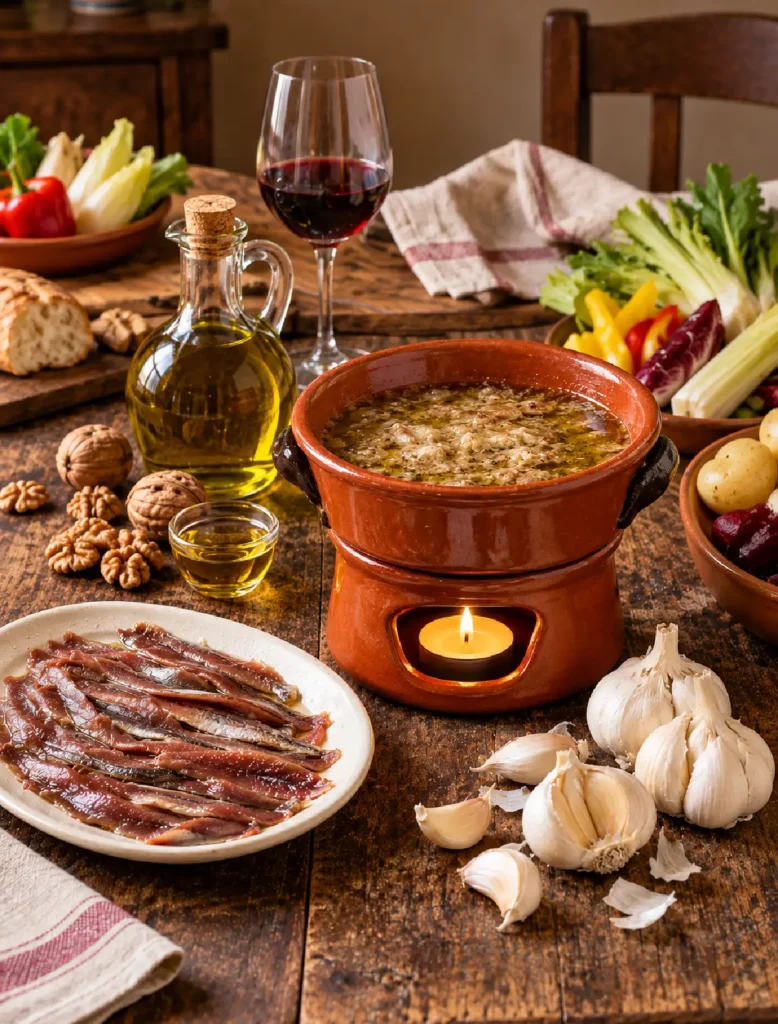
The anchovies: soaking is important to prevent the Bagna càuda from becoming overly salty. Change the water several times and handle the fillets gently when removing the bones. Rinsing them in Barbera wine afterwards follows the procedure of the registered recipe.
Cooking: keep the heat extremely low throughout. The garlic should soften without browning, and the anchovies should gradually dissolve. If using a terracotta pot on the hob, make sure it is suitable for direct heat and use a heat diffuser when necessary.
The vegetables: Bagna càuda can be served with Nizza Monferrato cardoons, Jerusalem artichokes, raw or roasted peppers, boiled potatoes, cooked beetroot and roasted onions. Raw spring onions dipped in Barbera wine are another traditional accompaniment. For more ideas on which vegetables to choose and how to prepare them, read our guide Vegetables for Bagna càuda: Which Ones to Choose?.
Variations: some versions cook the garlic in milk to produce a milder flavour. This recipe follows the preparation registered in 2005, without milk or cream. The original formulation also allows for an optional small piece of fresh butter to be added at the end of cooking.
Storage: allow the sauce to cool quickly, then transfer it to a clean, sealed container. Refrigerate promptly and preferably consume within 24 hours. Because it contains garlic in oil, do not leave it at room temperature or store it for extended periods. Reheat gently before serving.
Keywords:
bagna càuda, bagna cauda recipe, Piedmontese bagna cauda, Italian anchovy dip, garlic and anchovy sauce, traditional Piedmontese recipe, bagna caoda, bagna cauda
Bagna càuda and the End of the Grape Harvest
In the Piedmontese countryside, particularly in the Langhe, Monferrato and Asti areas, Bagna càuda has long been associated with autumn and the end of the grape harvest. After weeks spent working among the vines, gathering around the table was also a way to celebrate the completion of the work.
Nobody knows exactly when this dish first appeared. Its roots lie in rural home cooking, passed down through families without the need for written recipes. Each household had its own habits, and quantities could vary, but its connection with the colder months and agricultural life remained a constant part of Piedmontese tradition.
For a long time, Bagna càuda never enjoyed the prestige of dishes served at aristocratic tables. It was everyday food, with a pungent aroma that hardly suited the conventions of elegant dining. Yet it continued to be prepared in country homes, surviving generations and changing eating habits.
How Did Anchovies Reach Piedmont?
To understand the history of Bagna càuda, we need to follow the old trade routes connecting Piedmont with the Mediterranean coast.
Salt-preserved anchovies could travel long distances without spoiling, reaching villages far from the sea. Their trade gave rise to a distinctive occupation: the anchovy sellers, known in Piedmontese as anciové.
Many came from Valle Maira, an Alpine valley in the province of Cuneo, where selling anchovies door to door became an important source of income. They travelled with their goods through markets, villages and rural communities, often spending long periods away from home.
They were not fishermen but traders. By buying and reselling preserved fish, they helped make anchovies a familiar ingredient in the cooking of a region with no coastline.
Several legends grew around this trade. One of the best known claims that anchovies were used to conceal salt and avoid paying duties on it. It is an intriguing story, often repeated when discussing Piedmontese anchovy sellers, but it should not be treated as an established historical explanation for the origins of their trade.
A Tradition That Found Its Own Festival
Bagna càuda remained largely a family dish for many years before becoming increasingly prominent in Piedmontese restaurants.
In 2013, Bagna Cauda Day was launched in Asti as an event entirely dedicated to the dish. Organised by the magazine Astigiani, it has gradually brought together an increasing number of restaurants, wineries and other venues, eventually spreading beyond Piedmont.
The event brought renewed attention to a tradition that had never really disappeared from Piedmontese homes. It also showed how a dish rooted in rural life could find a place in contemporary food culture without losing its connection to the region.
After all, not many sauces have a festival of their own.