Note
Why This Recipe Uses Olive Oil
Extra virgin olive oil is one of the ingredients included in the official Amatriciana Tradizionale TSG specification. This recipe uses only a small amount, while most of the fat in the sauce comes from the guanciale as it cooks.
Guanciale or Pancetta?
Guanciale is one of the defining ingredients of Amatriciana Tradizionale and should not be replaced with pancetta if you want to remain faithful to the recognized preparation. The official specification specifically calls for Amatrice-style guanciale aged for at least 30 days.
Why White Wine Is Used
White wine is included among the ingredients specified for Amatriciana Tradizionale TSG. It is added while cooking the guanciale and allowed to evaporate before the tomato is introduced.
Fresh or Dried Chili Pepper
The official specification allows fresh or dried chili pepper and/or black pepper. This recipe uses fresh chili pepper, added with the tomato. You can therefore substitute dried chili pepper while keeping the preparation consistent with the specification.
Spaghetti or Bucatini?
Spaghetti have a particularly strong connection with the tradition of Amatrice. Documentation referenced in the TSG specification also includes a recipe for Spaghetti all’Amatriciana published by the Pro Loco of Amatrice.
In Rome, Amatriciana has also become strongly associated with bucatini, but this recipe uses spaghetti to maintain the more direct connection with the Amatrice tradition.
How to Store Spaghetti all’Amatriciana
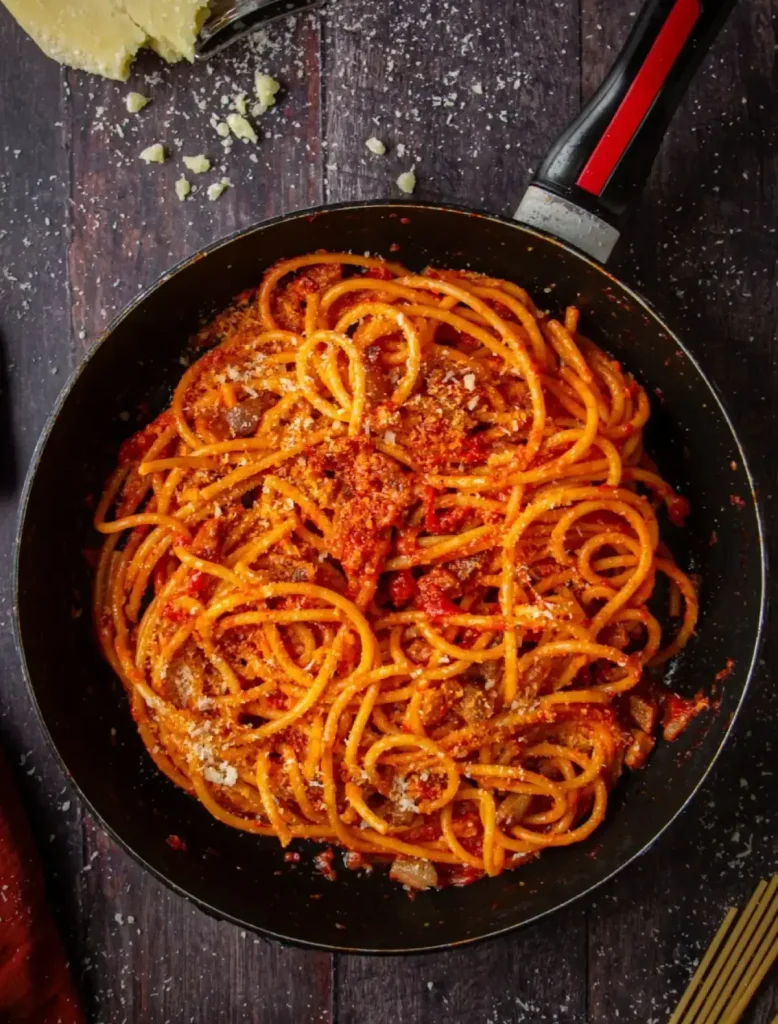
Spaghetti all’Amatriciana are best served immediately, particularly for the texture of the guanciale and Pecorino. If you have leftovers, store them in a tightly sealed container in the refrigerator for up to 1 day.
Once reheated, both the sauce and guanciale will inevitably have a different texture from the freshly prepared dish.
Keywords:
Spaghetti all’Amatriciana, Amatriciana recipe, Pasta all’Amatriciana, traditional Amatriciana, authentic Amatriciana, traditional recipe from Amatrice, pasta with guanciale and tomato, Lazio cuisine, traditional Italian pasta
The History of Spaghetti all’Amatriciana
Spaghetti all’Amatriciana takes its name from Amatrice and has deep roots in the culinary traditions of the Monti della Laga area.
The official Amatriciana Tradizionale TSG specification traces the preparation back to an earlier pastoral food tradition based on ingredients that could be stored for long periods. During seasonal livestock migrations, shepherds from the area carried foods suitable for travel, including guanciale.
This older tomato-free preparation is commonly associated with Pasta alla Gricia. If you would like to explore this earlier version, you can also find the Pasta alla Gricia recipe.
When Tomato Entered the Recipe
The introduction of tomato marked a crucial stage in the development of Amatriciana.
The TSG specification places this development in the early 19th century and connects it with the growing use of tomatoes in southern Italy from the late 18th century onward. At the time, Amatrice belonged to the Kingdom of Naples, a circumstance that helped bring tomato-based cooking into the area.
The introduction of tomato into the earlier guanciale-based preparation is therefore associated with the development of the sauce we now recognize as Amatriciana.
From Amatrice to Rome
During the 19th century, Amatriciana also became increasingly established in Rome. The official specification connects its spread to the presence of people from Amatrice in the capital, many of whom worked in restaurants and the food trade.
The dish eventually became deeply embedded in Roman cuisine and is now widely regarded as one of its best-known pasta dishes. Its origins, however, remain closely connected to Amatrice and the surrounding area.
Spaghetti or Bucatini?
The connection between Amatriciana and spaghetti is also supported by historical sources referenced in the official specification.
A recipe published by the Pro Loco of Amatrice, cited in 1998 by Livio Jannattoni in La cucina romana e del Lazio, called for spaghetti, guanciale, extra virgin olive oil, dry white wine, tomato, chili pepper, Pecorino, and salt.
Bucatini later became strongly associated with Amatriciana, particularly in Roman cuisine. For this version, however, we use spaghetti to maintain the connection with the Amatrice tradition.
Amatriciana Tradizionale TSG
In 2020, “Amatriciana Tradizionale” was registered in the European Union as a Traditional Speciality Guaranteed (TSG).
The official specification defines the ingredients and preparation method for the sauce. Required ingredients include Amatrice-style guanciale, extra virgin olive oil, tomato, salt, white wine, and chili pepper and/or black pepper.
When the sauce is served with pasta, the specification also recommends Amatrice-style Pecorino or grated Pecorino Romano PDO from Lazio.
Ingredients such as garlic, onion, and pancetta are excluded from the recognized traditional preparation.