Assemble the Baking Dish 🧀
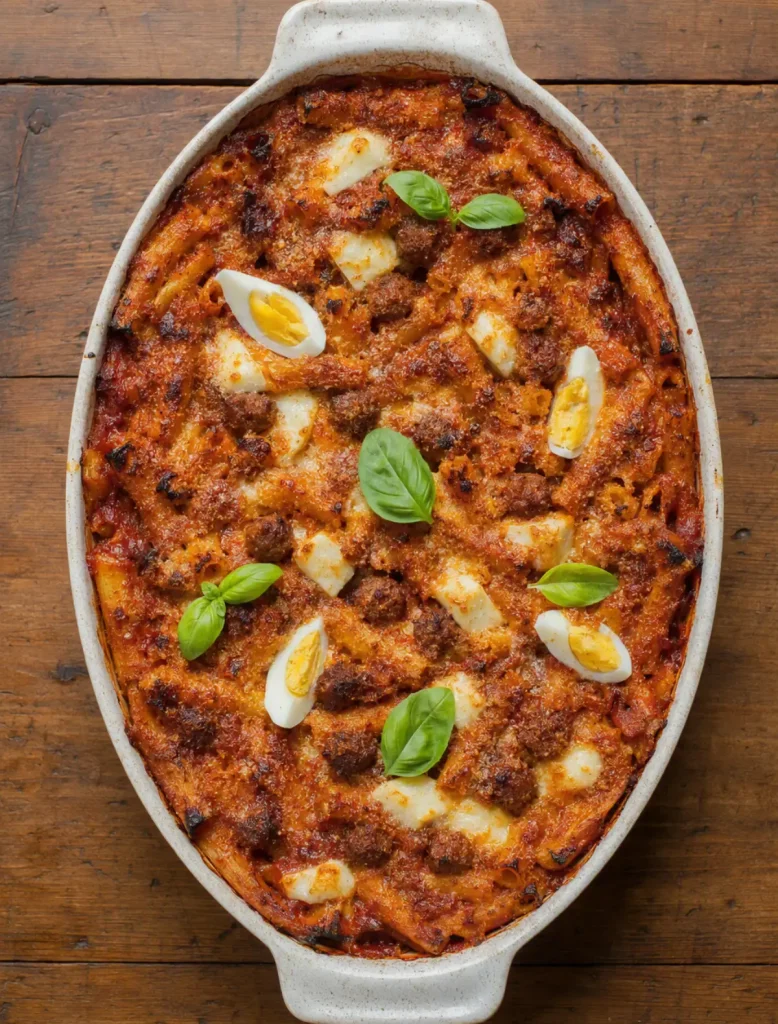
Spread a thin layer of ragù over the bottom of the baking dish, then add a layer of ziti. Scatter over some of the tiny meatballs, hard-boiled egg, provola, and Parmigiano. Continue layering until all the ingredients have been used, finishing with ragù, provola, and a generous sprinkling of grated Parmigiano.
9 Bake Until Golden 🔥
Bake in a preheated 200°C / 400°F conventional oven for about 25–30 minutes. The ziti are ready when everything is piping hot, the cheese has melted, and the top is golden and lightly crisp. If you'd like a little more browning, switch on the broiler/grill for the last few minutes, keeping a close eye on the surface.
10 Rest Before Serving 🍽️
Remove the ziti from the oven and let them rest for about 10 minutes before serving. This gives the sauce and layers time to settle, making it much easier to serve neat portions.
Servings 4
- Amount Per Serving
- % Daily Value *
- Total Fat 50g77%
- Saturated Fat 20g100%
- Sodium 1000mg42%
- Total Carbohydrate 83g28%
- Dietary Fiber 7.5g30%
- Sugars 16g
- Protein 49g98%
* Percent Daily Values are based on a 2,000 calorie diet. Your daily value may be higher or lower depending on your calorie needs.
Note
For the right texture, cook the ziti until very al dente. They'll continue cooking in the oven, so fully cooking them beforehand can leave the finished pasta too soft.
If you're using fiordilatte instead of provola, cut it ahead of time and let it drain thoroughly. Mozzarella that still contains too much whey can release excess liquid into the baking dish and make the bottom watery.
The ragù can be made a day ahead. Let it cool before refrigerating it, then reheat it when you're ready to assemble the dish. Besides making the recipe easier to manage, an overnight rest gives the flavors even more time to develop.
The meat used to make the ragù doesn't go into the baked ziti. Once cooked, set it aside and serve it separately as a main course, as is traditional with Neapolitan ragù.
Leftover baked ziti can be kept, well covered, in the refrigerator for 2–3 days. Reheat in the oven until piping hot all the way through.
Keywords:
ziti al forno alla napoletana, Neapolitan baked ziti, baked ziti, Neapolitan baked pasta, baked pasta with ragù, baked ziti with meatballs, Neapolitan recipes, Campanian cuisine, Italian Sunday lunch
Ziti: From Long Pasta to the Baking Dish
Ziti are deeply rooted in the food traditions of Southern Italy and are particularly associated with Neapolitan cooking. Made from durum wheat semolina, traditional ziti are long—around 25 centimeters (10 inches)—smooth, hollow tubes. They look a little like bucatini at first glance, but are noticeably wider.
In Naples and other parts of Southern Italy, it's common to buy ziti long and break them into shorter pieces by hand before cooking. A few pieces are snapped at a time, inevitably leaving behind some smaller shards of pasta as they break.
One of the best-known stories surrounding ziti comes from this simple kitchen ritual. According to local tradition, on Sunday mornings the sound of ziti being snapped by hand could once be heard coming from homes along the streets and alleyways of Naples as families began preparing lunch. It's more a piece of culinary folklore than a documented historical fact, but it captures just how closely this pasta became associated with cooking at home and the Sunday family meal.
Why Are They Called “Ziti”?
The name itself comes from Neapolitan. “Zito” and “zita” mean boyfriend and girlfriend and can also refer specifically to a bridegroom and bride-to-be.
Tradition links the name of the pasta to wedding feasts, where ziti were once served to guests. This association with ziti—the betrothed couple—is said to be how the pasta got its name.
Ziti were also well suited to the rich dishes served for special occasions. Their hollow shape catches the thick, full-bodied sauces of Neapolitan cooking, especially ragù. When baked, the sauce works its way inside and around the pasta while the other ingredients settle between the layers, creating one of the most substantial dishes of Neapolitan home cooking.