Ziti al Forno alla Napoletana is the kind of generous dish made when there are plenty of people around the table. The ziti start out long and are broken into shorter pieces by hand before cooking, leaving behind the little shards of pasta that inevitably snap off along the way.
Once cooked, the pasta is combined with ragù, tiny meatballs, hard-boiled eggs, and cheese, then layered in a baking dish. In the oven, the sauce works its way into the hollow ziti, the cheese melts between the layers, and the top becomes lightly browned, with slightly crispier, more flavorful edges.
This is a hearty baked pasta made for a large baking dish and brought straight to the table. It belongs to the kind of family lunch where there is time to cook properly—and no particular hurry to leave the table afterward.
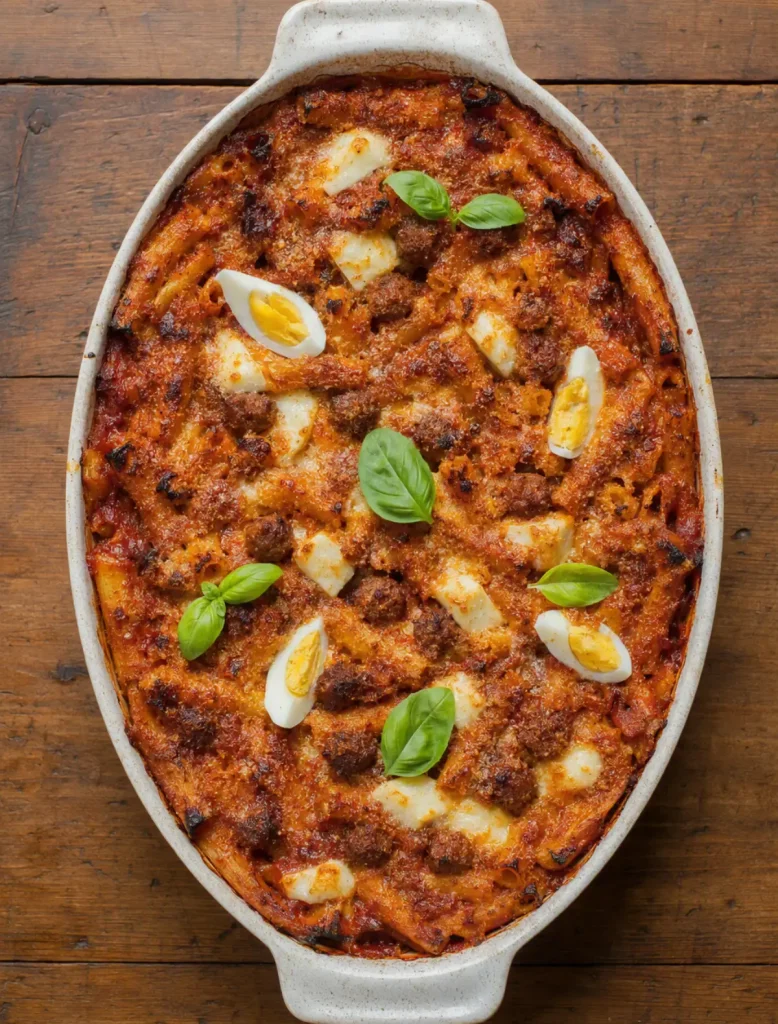
Ziti al Forno alla Napoletana: Traditional Neapolitan Baked Ziti
Description
A classic of Neapolitan cooking, made with hand-broken ziti, a rich sauce, and generations of tradition behind it. Baking brings the pasta, ragù, and cheese together in a hearty dish made to be placed in the middle of the table and shared.
Ingredienti
For the Neapolitan Ragù
For the Tiny Meatballs
For the Baked Ziti
Instructions
Come preparare gli ziti napoletani
-
Brown the Onion and Meat for the Ragù 🍅
Finely chop the onion and cook it gently in a large, heavy-bottomed pot with the extra virgin olive oil and lard until softened. Add the beef and pork ribs and brown them slowly, turning until nicely colored on all sides. Pour in the red wine and let the alcohol cook off.
-
Let the Ragù Cook Slowly 🥘
Add the tomato paste and cook for a couple of minutes, stirring it into the meat and onions. Pour in the passata and add a few basil leaves. Bring the sauce just to a simmer, then turn the heat down as low as possible and cook for about 3–4 hours, with the lid slightly ajar.
The ragù should barely bubble. In Naples, this slow, gentle simmer is known as “pippiare”: you want to see only the occasional small bubble breaking the surface, never a vigorous boil. Check the sauce from time to time and add a little hot water as needed if it begins to reduce too much. By the end, the ragù should be rich and concentrated while still leaving you with plenty of sauce for both coating the pasta and layering the dish.
-
Make the Meatballs 🥩
Soak the bread in a little water, then squeeze it thoroughly and place it in a bowl with the ground meat, egg, Parmigiano, chopped parsley, salt, and black pepper. Mix gently with your hands just until combined; overworking the mixture can make the meatballs firm rather than tender.
-
Fry the Meatballs 🍳
Shape the mixture into tiny meatballs, roughly the size of a hazelnut. Heat the frying oil and cook them in batches, turning as needed until evenly golden. Transfer them to paper towels to drain and set aside.
-
Hard-Boil the Eggs and Cut the Provola 🥚
Hard-boil the 2 eggs, cool them in water, peel them, and cut them into wedges or smaller pieces. Cut the provola into cubes. If you're using fiordilatte mozzarella instead, drain it well ahead of time so it releases as much excess moisture as possible before going into the pasta.
-
Break and Cook the Ziti 🍝
Take the long ziti and break them by hand into shorter pieces. Cook them in a large pot of well-salted boiling water and drain them very al dente, a few minutes before the cooking time given on the package. They'll finish cooking in the oven.
-
Dress the Pasta 🥄
Once the ragù is ready, remove the pieces of meat and set them aside. Spoon some of the sauce over the drained ziti, add a little Parmigiano, and toss well. Be generous with the sauce, but don't use all of it—you'll need the rest for layering the pasta.
-
Assemble the Baking Dish 🧀
Spread a thin layer of ragù over the bottom of the baking dish, then add a layer of ziti. Scatter over some of the tiny meatballs, hard-boiled egg, provola, and Parmigiano. Continue layering until all the ingredients have been used, finishing with ragù, provola, and a generous sprinkling of grated Parmigiano.
-
Bake Until Golden 🔥
Bake in a preheated 200°C / 400°F conventional oven for about 25–30 minutes. The ziti are ready when everything is piping hot, the cheese has melted, and the top is golden and lightly crisp. If you'd like a little more browning, switch on the broiler/grill for the last few minutes, keeping a close eye on the surface.
-
Rest Before Serving 🍽️
Remove the ziti from the oven and let them rest for about 10 minutes before serving. This gives the sauce and layers time to settle, making it much easier to serve neat portions.
Nutrition Facts
Servings 4
- Amount Per Serving
- Calories 1000kcal
- % Daily Value *
- Total Fat 50g77%
- Saturated Fat 20g100%
- Sodium 1000mg42%
- Total Carbohydrate 83g28%
- Dietary Fiber 7.5g30%
- Sugars 16g
- Protein 49g98%
* Percent Daily Values are based on a 2,000 calorie diet. Your daily value may be higher or lower depending on your calorie needs.
Note
For the right texture, cook the ziti until very al dente. They'll continue cooking in the oven, so fully cooking them beforehand can leave the finished pasta too soft.
If you're using fiordilatte instead of provola, cut it ahead of time and let it drain thoroughly. Mozzarella that still contains too much whey can release excess liquid into the baking dish and make the bottom watery.
The ragù can be made a day ahead. Let it cool before refrigerating it, then reheat it when you're ready to assemble the dish. Besides making the recipe easier to manage, an overnight rest gives the flavors even more time to develop.
The meat used to make the ragù doesn't go into the baked ziti. Once cooked, set it aside and serve it separately as a main course, as is traditional with Neapolitan ragù.
Leftover baked ziti can be kept, well covered, in the refrigerator for 2–3 days. Reheat in the oven until piping hot all the way through.