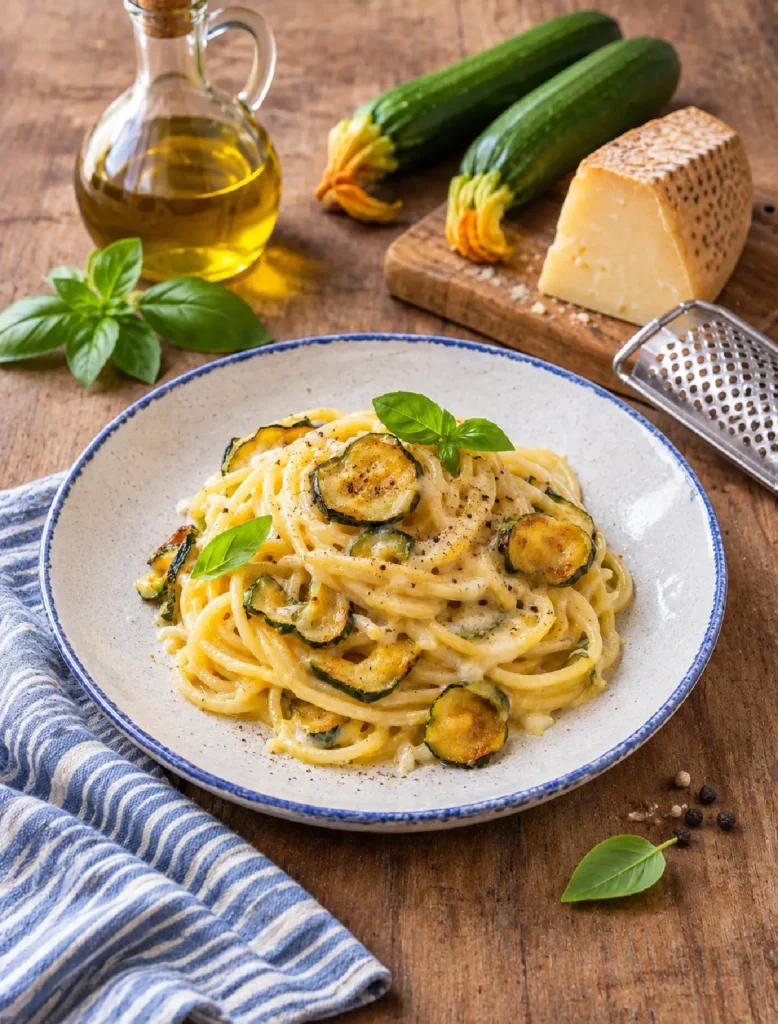
In Spaghetti alla Nerano, the zucchini slices are still clearly visible among the strands of pasta. Some have almost broken down, while others remain whole, with golden edges from frying. Provolone del Monaco PDO leaves a slightly sharp flavour that varies according to its age, while fresh basil brings to mind the aromas of summer cooking on the Sorrento Peninsula.
In Marina del Cantone, where the recipe originated, the fried zucchini is traditionally left to rest. It is worth preparing it at least half a day in advance and keeping it refrigerated until it is time to cook the spaghetti.
The most delicate part is adding the cheese. It is best to turn off the heat before incorporating it and keep some pasta cooking water close at hand. There is no need to blend the zucchini to achieve a creamy consistency, as the softer slices naturally break down while the pasta is being tossed. A few fried slices are worth saving for serving, along with fresh basil and freshly ground black pepper.
Spaghetti alla Nerano with Zucchini and Provolone
Description
Spaghetti alla Nerano is prepared with thinly sliced zucchini that is fried and left to rest with fresh basil. The pasta is then tossed off the heat with Provolone del Monaco PDO and pasta cooking water until the sauce becomes creamy.
Ingredients
Instructions
How to Make Spaghetti alla Nerano
-
Prepare the Zucchini 🔪
Choose small, light green, firm zucchini with compact flesh whenever possible. Wash them, dry them thoroughly and trim the ends. Using a mandoline or a sharp knife, cut them into even slices approximately 2-3 mm (about 1/8 inch) thick so that they cook evenly during frying.
-
Fry the Zucchini 🍳
Heat plenty of extra virgin olive oil in a large frying pan until it reaches 160-170°C (320-338°F). If you do not have a thermometer, drop a slice of zucchini into the oil. Small, steady bubbles should immediately form around it without the surface darkening too quickly.
Fry the zucchini in small batches to prevent the oil temperature from dropping too much. Cook each batch for approximately 5-6 minutes, adjusting the time according to its colour. The slices should be golden but still soft, rather than dark or excessively crisp.
Remove them with a slotted spoon and transfer them to a tray lined with paper towels. Reserve some of the frying oil to use later in the pasta sauce.
-
Add the Basil and Rest the Zucchini 🌿
Scatter plenty of fresh basil leaves, torn by hand, over the fried zucchini. Allow the zucchini to cool slightly, then transfer them to a covered container and refrigerate for at least 6 hours.
During this resting period, the zucchini softens and absorbs the aroma of the basil.
-
Prepare the Cheese 🧀
Grate the Provolone del Monaco PDO using the large holes of a grater and set it aside. Remove the cheese from the refrigerator a little in advance so that it is not too cold when added to the pasta.
-
Cook the Spaghetti 🍝
Bring a large pot of water to a boil and salt it moderately, bearing in mind the saltiness of the cheese.
Cook the spaghetti and drain them 1-2 minutes before the cooking time indicated on the package, reserving at least three ladlefuls of pasta cooking water.
-
Prepare the Sauce 🧄
Pour 3-4 tablespoons of the reserved zucchini frying oil into a large pan and add the lightly crushed, unpeeled garlic clove.
Allow the garlic to flavour the oil over low heat without letting it brown too much, then remove it. Add two-thirds of the fried zucchini, a few torn basil leaves and a ladleful of pasta cooking water.
Allow the zucchini to warm through and soften further.
-
Toss the Spaghetti with the Zucchini 🥄
Transfer the spaghetti to the pan and finish cooking them in the sauce, tossing gently and adding a little more pasta cooking water if necessary.
Some zucchini slices will naturally break down during this step, while others will remain whole. The starch released by the pasta will help bind the sauce.
-
Add the Provolone del Monaco 🧀
Turn off the heat and remove the pan from the hob. Wait a few moments until the liquid in the pan stops bubbling.
Add the grated Provolone del Monaco in two or three batches, tossing continuously and gradually adding more pasta cooking water as needed.
Allow the cheese to melt using the residual heat of the pasta, without turning the heat back on. This helps prevent the cheese from clumping together or forming a rubbery mass.
If the sauce becomes too thick, add a little more pasta cooking water. Finish with a generous grinding of black pepper.
-
Plate and Serve 🍽️
Divide the spaghetti among serving plates and finish with the reserved fried zucchini slices and a few fresh basil leaves.
Serve immediately, before the cheese cools and the sauce loses its creamy consistency.
Nutrition Facts
Servings 4
- Amount Per Serving
- Calories 690kcal
- % Daily Value *
- Total Fat 36g56%
- Saturated Fat 13g65%
- Sodium 650mg28%
- Total Carbohydrate 64g22%
- Dietary Fiber 4g16%
- Sugars 6g
- Protein 27g54%
* Percent Daily Values are based on a 2,000 calorie diet. Your daily value may be higher or lower depending on your calorie needs.
Note
How to Store Spaghetti alla Nerano
Spaghetti alla Nerano is best enjoyed immediately after cooking. As the pasta cools, the cheese tends to firm up and the sauce loses some of its creamy consistency.
Leftovers can be refrigerated in an airtight container for up to one day and gently reheated in a pan with a little water.
Freezing is not recommended.
Preparing the Zucchini in Advance
The zucchini can also be fried the evening before. Once slightly cooled, transfer them to a covered container, refrigerate promptly and preferably use within 24 hours.
Substitutes for Provolone del Monaco PDO
If Provolone del Monaco PDO is unavailable, Italian provolone or moderately aged caciocavallo are suitable alternatives. Choose a cheese with a firm but not excessively dry texture that can melt when tossed with the pasta.
Avoid smoked cheeses, as they would significantly alter the flavour of the dish.
Which Oil to Use for Frying
The reference recipe calls for extra virgin olive oil. If you prefer a more neutral flavour, you can fry the zucchini in peanut oil and use extra virgin olive oil to prepare the pasta sauce.
Which Pasta Shape to Use
Thick spaghetti works particularly well in this recipe because it retains its texture while being tossed with the sauce. Spaghettoni or Italian durum wheat vermicelli are also suitable alternatives.
Why Does the Cheese Clump Together?
Excessive heat when adding the cheese is the most common cause. Very mature cheese or insufficient pasta cooking water can also make it more difficult to achieve a smooth sauce.
If the cheese starts to thicken excessively, try adding a little warm pasta cooking water while tossing the pasta off the heat. Avoid returning the pan to high heat.