Aglio, Olio e Peperoncino starts with a handful of ingredients that were already in the kitchen. Olive oil, garlic, chili, and spaghetti. It is particularly associated with Neapolitan and Campanian cooking, but has long been prepared throughout Italy.
The oil goes into the pan, followed by the garlic and chili, and from that point it pays to keep an eye on things. The garlic should color slowly without turning dark. It only takes a moment.
The spaghetti goes into the pan while still al dente, along with a splash of its cooking water. A quick toss, and it is ready for the table.
It is probably one of the most improvised pasta dishes in Italian kitchens. It is also one of those dishes where you can immediately tell when something has gone wrong.
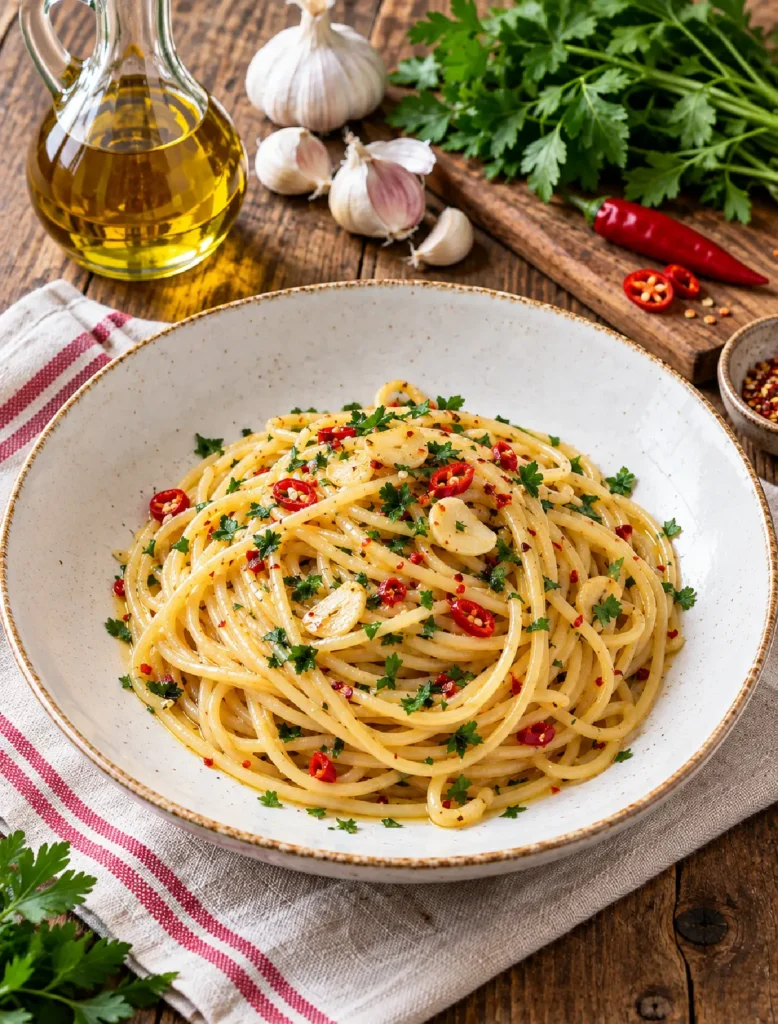
Aglio, Olio e Peperoncino: Easy and Quick Pasta Recipe
Description
Spaghetti with garlic, extra virgin olive oil, and fresh chili, briefly finished in the pan with a little pasta cooking water.
Ingredients
Instructions
How to Make Aglio, Olio e Peperoncino
-
Prepare the Garlic and Chili 🔪
Peel the 3 garlic cloves and cut them into slices. Slice the fresh chili into rounds. If using parsley, wash it, dry it thoroughly, and finely chop it.
-
Infuse the Oil Without Burning the Garlic 🌶️
Pour the 70 g extra virgin olive oil into a large pan and add the garlic and chili. Place over low heat and cook gently for a few minutes. The garlic should become lightly golden, never dark.
-
Cook the Spaghetti 🍝
Meanwhile, bring a large pot of water to a boil, season with salt, and cook the 320 g spaghetti. Drain while still well al dente, reserving a cup of the pasta cooking water.
-
Finish Cooking in the Pan 🥘
Transfer the spaghetti to the pan with the garlic, oil, and chili. Add a little pasta cooking water and toss for 1–2 minutes, until the pasta is cooked and evenly coated. Add a little more cooking water only if needed.
-
Finish and Serve 🌿
Turn off the heat. If using it, add the chopped parsley and toss once more. Serve immediately.
Nutrition Facts
Servings 4
- Amount Per Serving
- Calories 455kcal
- % Daily Value *
- Total Fat 18.7g29%
- Saturated Fat 2.7g14%
- Sodium 300mg13%
- Total Carbohydrate 60.8g21%
- Dietary Fiber 2.7g11%
- Sugars 2.3g
- Protein 10.6g22%
* Percent Daily Values are based on a 2,000 calorie diet. Your daily value may be higher or lower depending on your calorie needs.
Note
The garlic should cook over low heat and take on just a little color. If it becomes too dark, it will give the oil a bitter flavor that carries through the entire dish. If you prefer a milder garlic flavor, leave the cloves whole or lightly crushed and remove them before adding the spaghetti.
The heat of a chili can vary considerably. With fresh chili, you can remove some of the seeds and inner membranes for a milder result. If using dried chili, add it directly to the oil with the garlic and adjust the amount according to its heat.
The parsley is optional. If you choose to use it, add it after turning off the heat so that it stays fresh rather than cooking in the oil.
With so few ingredients, the quality of the extra virgin olive oil is easy to taste. Choose a good one with a balanced flavor that is not excessively bitter or peppery, since there is no sauce here to mask it.
Add the pasta cooking water a little at a time. You only need enough to finish the spaghetti briefly in the pan and distribute the dressing evenly. There is no need to create a thick or particularly creamy sauce.
Aglio, Olio e Peperoncino is best served immediately. As it sits, the pasta continues to absorb the dressing and quickly loses the texture it had when first served. If you have leftovers, keep them in a sealed container in the refrigerator and eat them the following day, bearing in mind that the texture will be different.