Pasta alla Gricia is one of the great classics of Lazio cuisine. The recipe is built around just a few ingredients: pasta, guanciale, Pecorino Romano, and black pepper, with no tomato.
The guanciale is cooked slowly to render its fat and turn golden. The pasta then finishes cooking in the same pan, where starchy pasta water combines with the rendered guanciale fat. Pecorino Romano is added off the heat to finish the sauce, creating a creamy coating without the need for cream or any additional fat.
Gricia is deeply rooted in the culinary traditions of Lazio and is often associated with the history of Amatriciana, with which it shares two essential ingredients: guanciale and Pecorino Romano.
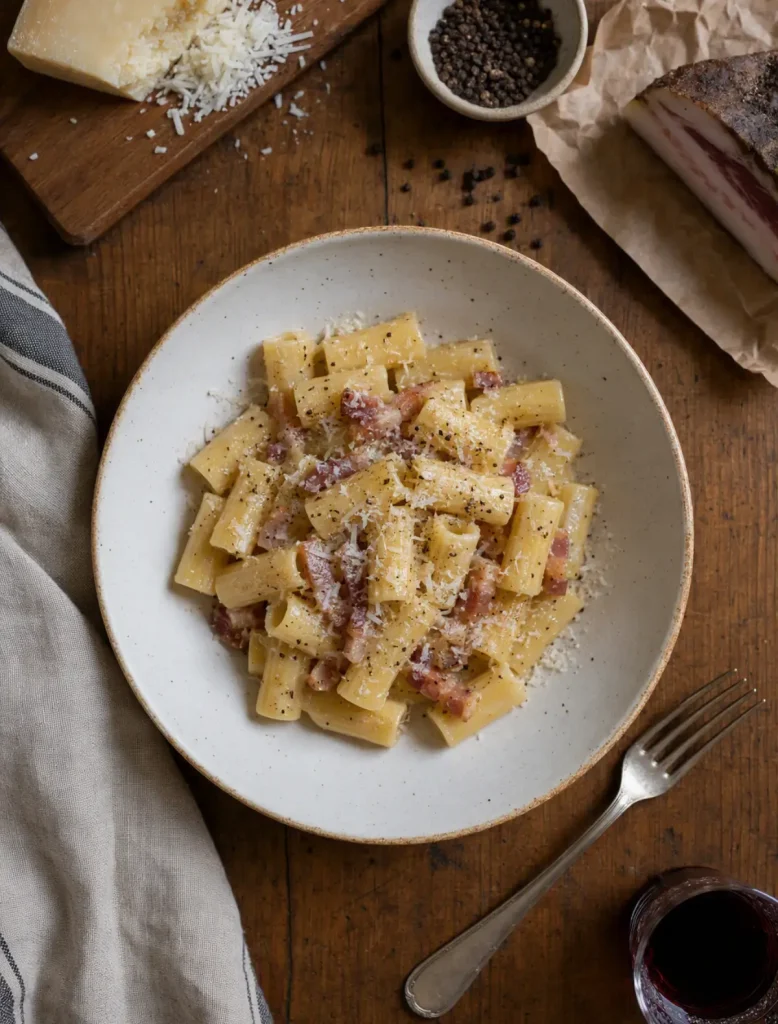
Pasta alla Gricia: Traditional Lazio Pasta with Guanciale and Pecorino
Description
Pasta alla Gricia is a classic dish from Lazio made with guanciale, Pecorino Romano, and black pepper. Rendered guanciale fat, starchy pasta water, and Pecorino come together during the final tossing to create a rich, creamy sauce without adding tomato or cream.
Ingredients
Instructions
How to Make Pasta alla Gricia
-
Cut and Slowly Render the Guanciale 🥓
Remove the rind from the guanciale and cut it into strips about 0.2 inch (0.5 cm) thick, keeping a good balance of meat and fat in each piece.
Place the guanciale in a large cold skillet without adding any oil, then set it over medium-low heat.
Cook for about 8–10 minutes, stirring occasionally, until the fat has rendered and the guanciale is golden.
Transfer the guanciale to a plate and set it aside. Leave the rendered fat in the skillet, as it will be used to finish and coat the pasta.
-
Cook the Pasta and Reserve the Cooking Water 🍝
Bring a large pot of water to a boil and salt it lightly, keeping in mind that both guanciale and Pecorino Romano are already quite salty.
Add the pasta and cook it until 2–3 minutes before the time indicated on the package, since it will finish cooking in the skillet.
Before draining, reserve at least 2 ladlefuls of pasta cooking water. The starch in the water will help emulsify the rendered guanciale fat and Pecorino during the final tossing.
-
Finish Cooking the Pasta in the Guanciale Fat 💧
Return the skillet with the rendered guanciale fat to the heat and add a ladleful of pasta cooking water.
Stir or swirl the skillet to begin forming an emulsion, then transfer the pasta directly to the skillet.
Finish cooking over medium-high heat, tossing and stirring frequently. Add more pasta water a little at a time and only as needed until the pasta is al dente and a fluid, well-emulsified sauce remains in the pan.
-
Toss the Pasta with Pecorino Off the Heat 🧀
Once the pasta is al dente, turn off the heat and allow the temperature to drop slightly for a few seconds.
Add the finely grated Pecorino Romano a little at a time, together with some freshly ground black pepper, and toss the pasta vigorously.
If the sauce becomes too thick, add a small amount of pasta cooking water and continue tossing until you have a smooth, creamy sauce that coats the pasta.
Keep the skillet off the heat during this step. Excessive heat can cause the proteins in the Pecorino to tighten too quickly, resulting in clumps instead of a smooth sauce.
-
Add the Guanciale and Finish with Black Pepper 🍽️
Add the golden guanciale, reserving a small amount for serving if desired, and toss briefly to combine.
Plate immediately and finish each serving with the remaining guanciale, freshly ground black pepper, and, if desired, a little extra grated Pecorino Romano.
Serve Pasta alla Gricia as soon as it is ready, while the sauce is still creamy and the guanciale retains its texture.
Nutrition Facts
Servings 4
- Amount Per Serving
- Calories 692kcal
- % Daily Value *
- Total Fat 41.5g64%
- Saturated Fat 16.4g82%
- Sodium 995mg42%
- Total Carbohydrate 57.7g20%
- Dietary Fiber 2.4g10%
- Sugars 2.9g
- Protein 20.4g41%
* Percent Daily Values are based on a 2,000 calorie diet. Your daily value may be higher or lower depending on your calorie needs.
Note
How to Make Creamy Pasta alla Gricia
The creaminess of Pasta alla Gricia depends mainly on the final tossing and emulsification of the rendered guanciale fat, Pecorino Romano, and starchy pasta water. Add the pasta water gradually: it is much easier to loosen a sauce that is too thick than to correct one that has become too watery.
If the sauce initially looks too loose, keep tossing the pasta before adding more Pecorino. The movement of the pasta and the starch in the cooking water will gradually help the sauce come together.
How to Prevent the Pecorino from Clumping
Add the Pecorino Romano off the heat, after allowing the temperature of the pasta to drop slightly. Excessive heat can cause the cheese to tighten quickly and form clumps instead of a smooth sauce. If necessary, add a small amount of pasta cooking water and continue tossing until the desired consistency is reached.
When to Add the Black Pepper
For the best aroma, grind the black pepper just before using it. Add some while tossing the pasta with the Pecorino, then finish each serving with another grind of pepper just before serving.
How to Store Pasta alla Gricia
Pasta alla Gricia is best served immediately, while the sauce is creamy and the guanciale retains its texture. If you have leftovers, store them in a tightly sealed container in the refrigerator for up to 1 day. Keep in mind that once chilled and reheated, the Pecorino sauce will have a different consistency from freshly prepared Gricia.