Spaghetti all’Assassina was born in Bari in 1967, and its name owes a lot to one ingredient: chilli. According to Enzo Francavilla, who first prepared the dish at Al Sorso Preferito, it was his customers who called him an “assassin” after tasting his fiery spaghetti.
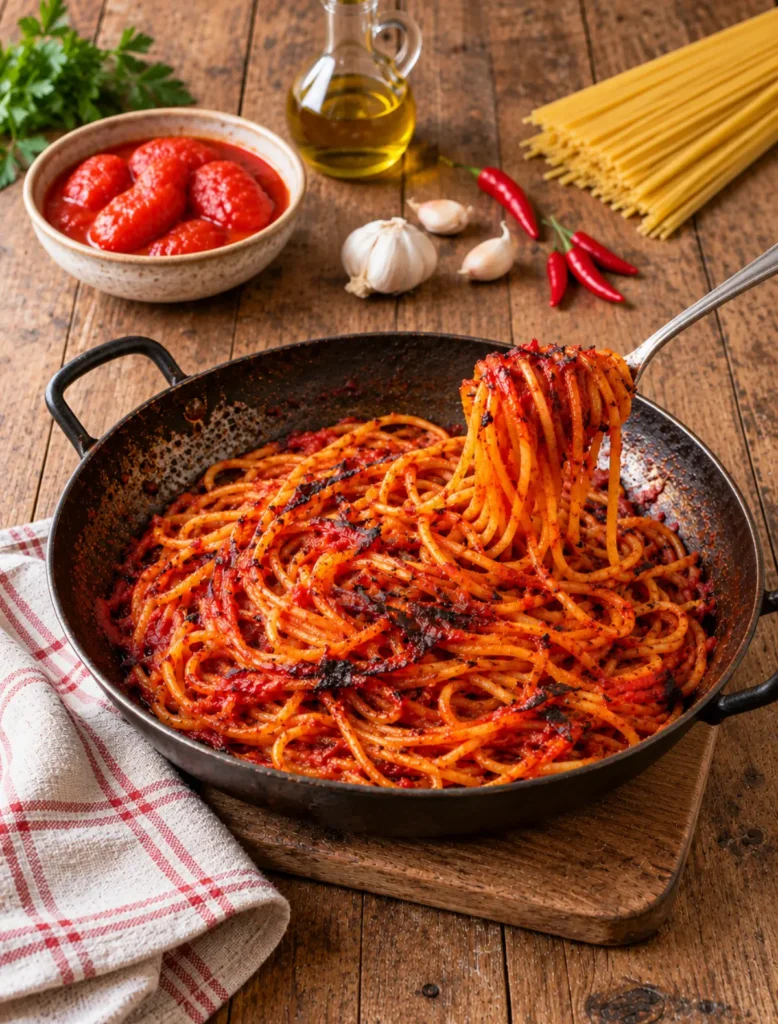
We start from the recipe recognized as a PAT (Traditional Agri-Food Product) of Puglia: spaghetti, peeled tomatoes, garlic, chilli and extra virgin olive oil. There are only a few ingredients, but you need an iron pan and a close eye on the cooking. The spaghetti finishes cooking in the tomato sauce and, as the bottom of the pan begins to dry, some strands are left in contact with the iron long enough to char.
This is when you need to resist the temptation to keep moving the spaghetti. Some strands will stay softer, some will brown and others will turn crisp. You want all three on the plate.
Spaghetti all’Assassina: Traditional Bari Recipe
Description
Spaghetti all’Assassina is a Bari speciality made with tomato, garlic and chilli. We follow the version recognized as a PAT of Puglia, finishing the spaghetti in an iron pan until some strands become charred and crisp.
Ingredients
Instructions
How to Make Spaghetti all’Assassina
-
Crush the tomatoes 🍅
Place the peeled tomatoes in a bowl and crush them with your hands until roughly broken down. Add a little salt and set aside.
-
Prepare the base in the iron pan 🌶️
Choose an iron pan wide enough to hold the spaghetti lengthways. Pour in enough extra virgin olive oil to coat the bottom with a generous layer, then add the garlic cloves and fresh chilli. Let them sizzle until the garlic becomes quite dark without burning, then remove the garlic.
-
Add the tomatoes 🍅
Lower the heat slightly and carefully add the crushed tomatoes to the pan. Stir and cook for a few minutes, until the tomato begins to reduce.
-
Soften the spaghetti 🍝
Bring plenty of water to the boil, then add the salt. Add the spaghetti, but do not wait for it to cook: it should stay in the water only until it becomes flexible enough to bend without breaking. Drain immediately and reserve the cooking water, as you may need some to finish cooking the spaghetti in the pan.
-
Finish cooking in the tomato 🔥
Transfer the spaghetti to the pan and spread it through the tomato. Continue cooking over high heat, turning the spaghetti so the sauce reaches all the strands. If the bottom becomes too dry, add a very small amount of the reserved cooking water at a time, waiting for it to be absorbed before adding more.
Taste a strand. When the spaghetti is cooked but still firmly al dente, stop adding water and allow the bottom of the pan to dry. The spaghetti will continue cooking for another few minutes while the charred sections form.
-
Let the spaghetti char 🍳
Once the bottom of the pan is dry, stop moving the spaghetti constantly. Leave it in contact with the pan long enough for some sections to char and become crisp, then turn it so other areas can do the same.
The spaghetti should not all char in the same way. Some strands should remain softer while others become deeply toasted and crisp. Serve immediately.
Nutrition Facts
Servings 4
- Amount Per Serving
- Calories 470kcal
- % Daily Value *
- Total Fat 12g19%
- Saturated Fat 2g10%
- Sodium 130mg6%
- Total Carbohydrate 77g26%
- Dietary Fiber 5g20%
- Sugars 6g
- Protein 14g29%
* Percent Daily Values are based on a 2,000 calorie diet. Your daily value may be higher or lower depending on your calorie needs.
Note
The amount of extra virgin olive oil is not fixed in the PAT recipe. Use enough to create a generous coating over the bottom of the pan without submerging the ingredients. For this reason, the stated calorie count is also an estimate and will vary according to the amount of oil used.
The iron pan is important for developing the characteristic char of Spaghetti all’Assassina. It should be wide enough to hold the spaghetti lengthways once softened. When the bottom begins to dry, do not rush to turn the pasta. Give some of the strands enough time in contact with the iron to brown before moving them.
Adjust the chilli to your taste, but do not leave it out entirely. The heat is part of the identity of the dish and is also tied to the story behind its unusual name.