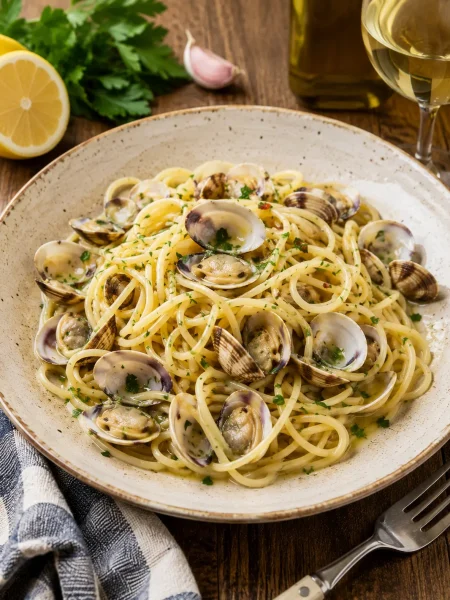
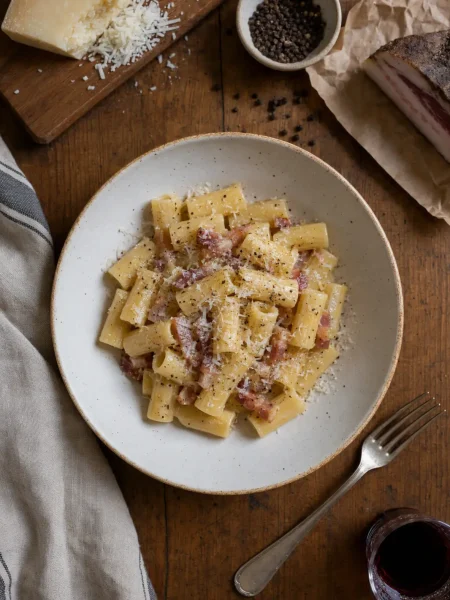
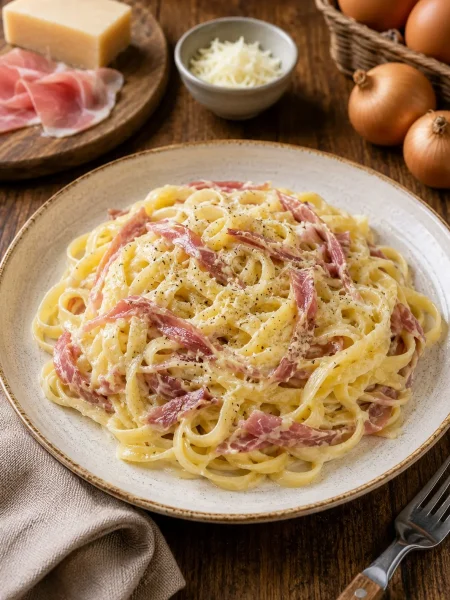
Pasta alla Carbonara is one of the great classics of Roman cuisine, made with just a handful of ingredients: pasta, guanciale, eggs, Pecorino Romano, and black pepper. There are only a few of them, which means there is nowhere for poor ingredients or technique to hide.
The guanciale should slowly render its fat and turn golden without drying out, while the eggs and Pecorino come together around the pasta to create that smooth, creamy coating that is sometimes mistaken for the result of adding cream. In fact, you don’t need cream at all.
Pecorino brings the salty, sharp edge, guanciale does much of the heavy lifting, and black pepper finishes the job. There really isn’t much else to add, and that’s probably for the best.
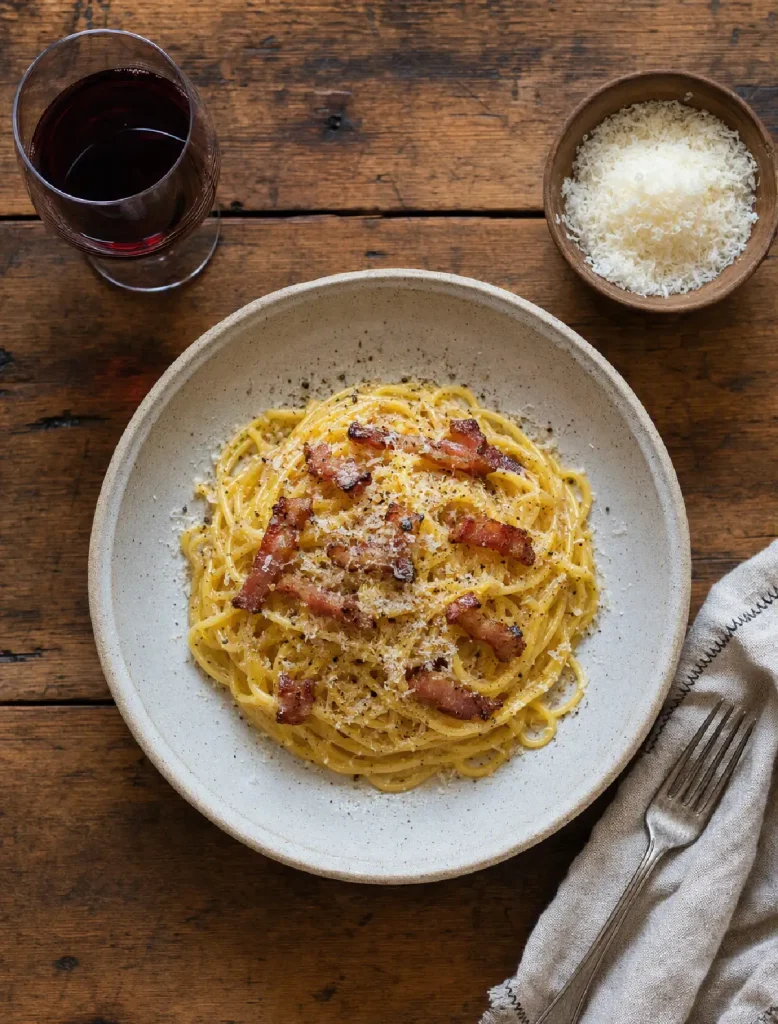
Pasta alla Carbonara: Traditional Roman Recipe
Description
Pasta alla Carbonara is a Roman classic made with pasta, guanciale, eggs, Pecorino Romano, and black pepper. The right technique turns these few ingredients into a rich, creamy sauce without adding any cream.
Ingredienti
Instructions
How to make Pasta alla Carbonara
-
Bring the Pasta Water to a Boil 💧
Fill a large pot with plenty of water and bring it to a boil. Once boiling, add just a little salt, as both the guanciale and Pecorino Romano will already bring plenty of saltiness to the dish.
-
Mix the Eggs and Pecorino 🥚
While the water is coming to a boil, crack the 3 eggs into a bowl large enough to hold the pasta later.
Gradually add the finely grated Pecorino Romano, using just enough to make the mixture fairly thick and creamy. Add a generous amount of freshly ground black pepper and mix vigorously until smooth and well combined.
Keep the remaining Pecorino aside: you can use it later if the sauce is too loose, as well as for finishing the dish.
-
Cook the Pasta Until Al Dente 🍝
Once the water is boiling, add the spaghetti and cook according to the package directions until al dente.
Before draining, reserve a cup of the pasta cooking water. You'll use it later if you need to loosen the sauce.
-
Cut and Slowly Cook the Guanciale 🥓
While the pasta cooks, remove the rind from the guanciale and cut it into strips or roughly 1 cm cubes, keeping the pieces about the same size so they cook evenly.
Place the guanciale in a cold frying pan with no oil or other fat, then set it over medium heat. Let it cook slowly so the fat has time to render and the outside turns golden without becoming completely dry inside.
Once ready, turn off the heat.
-
Add the Guanciale to the Egg and Pecorino Mixture 🥓
Let the guanciale sit briefly off the heat, then add it to the bowl with the eggs and Pecorino along with all of its rendered fat.
Mix well to incorporate everything. Don't add the guanciale while it is still piping hot, as too much heat could cause the eggs to scramble.
-
Toss the Pasta Directly in the Bowl 🧀
Drain the spaghetti al dente and immediately transfer it, while still hot, directly to the bowl with the egg, Pecorino, and guanciale mixture.
Toss vigorously until the mixture begins to turn into a smooth sauce that coats the spaghetti.
Check the consistency as you go. If the sauce is too thick, add a little reserved pasta water at a time and keep tossing. If it is too loose, add some of the reserved Pecorino Romano and continue mixing.
The Carbonara is ready when the sauce is smooth, creamy, and clings to the pasta without being runny or dry.
-
Finish and Serve the Carbonara Immediately 🍽️
Divide the Carbonara among the plates and finish, if you like, with some of the remaining Pecorino Romano and another grind of black pepper.
Serve immediately while the sauce is still soft and creamy.
Nutrition Facts
Servings 4
- Amount Per Serving
- Calories 794kcal
- % Daily Value *
- Total Fat 47.4g73%
- Saturated Fat 19g95%
- Sodium 1168mg49%
- Total Carbohydrate 61.1g21%
- Dietary Fiber 2.6g11%
- Sugars 2.5g
- Protein 27.9g56%
* Percent Daily Values are based on a 2,000 calorie diet. Your daily value may be higher or lower depending on your calorie needs.
Note
Choosing the pasta: spaghetti is one of the classic choices, but Carbonara also works beautifully with rigatoni or mezze maniche, whose shape catches both the sauce and the pieces of guanciale.
Bring the eggs to room temperature: if possible, take them out of the refrigerator 20-30 minutes before cooking. Eggs that aren't fridge-cold will combine more easily with the hot pasta.
Grate the Pecorino just before using it: finely grated fresh Pecorino blends more easily with the eggs and helps create a smooth sauce without lumps.
Pecorino and Parmigiano: if you prefer a slightly milder flavor, you can use half Pecorino Romano and half Parmigiano Reggiano. The more traditional Roman version, however, is made with Pecorino Romano.