Polenta taragna is immediately recognisable by its dark colour, which comes from mixing buckwheat flour with cornmeal. In Valtellina, in the Italian Alps, it is traditionally cooked slowly and stirred for a long time in a large pot until it becomes thick and substantial.
For our version, we use Valtellina Casera DOP, a local cheese with a mild yet distinctive flavour. As it melts into the hot polenta, it creates a soft, stretchy texture. Butter adds richness and creaminess, while buckwheat brings the rustic, slightly toasted flavour that sets polenta taragna apart from ordinary yellow polenta. It is best served immediately, while the cheese is still beautifully melted.
In Valtellina, polenta taragna often accompanies braised meats, stews and other meat dishes. With a generous amount of cheese and butter, however, it can also make a satisfying main course. It requires only a handful of ingredients and some patience at the stove, particularly towards the end, when everything needs to be stirred thoroughly to bring the polenta together.
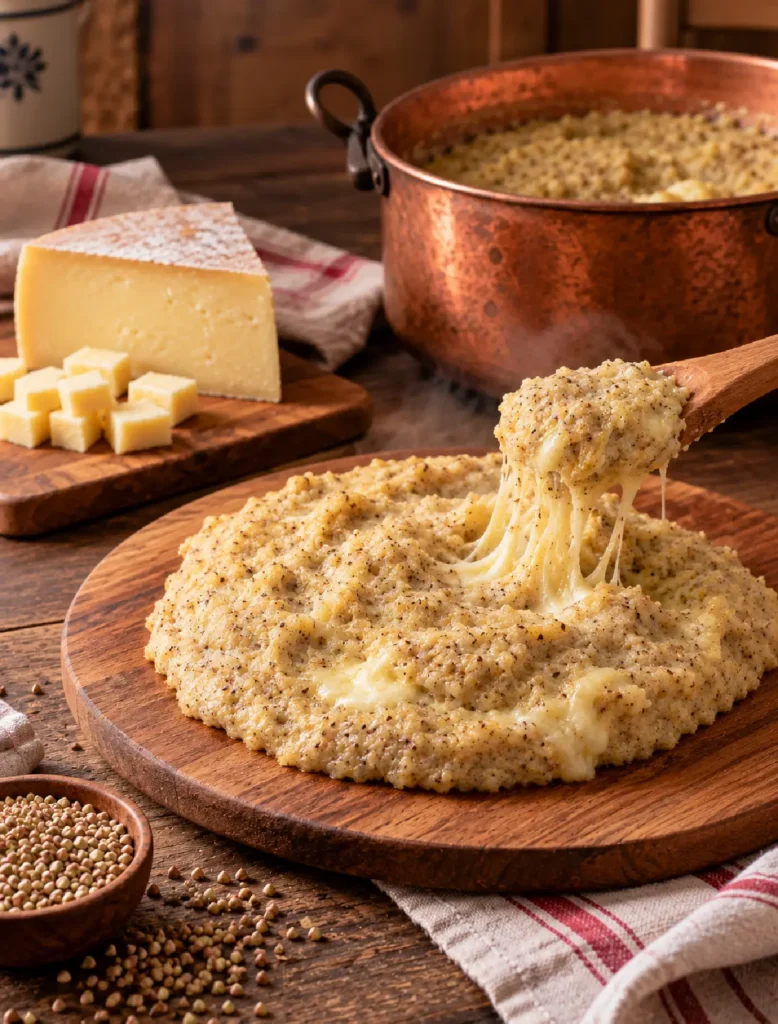
Polenta Taragna with Buckwheat and Cheese
Description
A rich, rustic polenta from Valtellina, made with buckwheat flour, cornmeal, butter and Valtellina Casera DOP cheese. Slow cooking gives it a thick, creamy texture, finished with beautifully melted cheese.
Ingredients
Instructions
How to Make Valtellina Polenta Taragna
-
Prepare the Flours and Cheese 🧀
Combine 330 g (11.6 oz) buckwheat flour and 150 g (5.3 oz) cornmeal in a bowl. Remove the rind from the Valtellina Casera DOP cheese and cut it into cubes. Cut the butter into small pieces and set everything aside.
-
Bring the Water to a Boil 💧
Pour 2 litres (67.6 fl oz) of water into a traditional copper or cast-iron polenta pot. Alternatively, use a large, heavy-bottomed stainless steel saucepan. Bring the water to a boil and add salt.
-
Gradually Add the Flours 🌽
Reduce the heat slightly and gradually sprinkle the flour mixture into the boiling water, whisking continuously to prevent lumps. Keep whisking until all the flour has been incorporated and the mixture is smooth.
-
Cook the Polenta Slowly 🥄
Once the mixture begins to thicken, replace the whisk with a sturdy wooden spoon. Cook over low heat for approximately 60 minutes, stirring frequently and making sure to scrape the bottom and sides of the pot.
The polenta should simmer gently without sticking or burning. If it becomes too thick before it is fully cooked, add a little hot water at a time and continue stirring.
-
Stir in the Butter 🧈
When the polenta is cooked and begins to pull away from the sides of the pot as you stir, keep the heat very low and add the 180 g (6.3 oz) butter in small pieces. Stir until completely melted and incorporated.
-
Add the Valtellina Casera DOP Cheese 🧀
Gradually add the 250 g (8.8 oz) Valtellina Casera DOP cheese, cut into cubes, stirring continuously. Allow the cheese to melt over very low heat without letting the polenta boil vigorously. Once the cheese is evenly distributed and the polenta is soft and stretchy, remove the pot from the heat.
-
Serve the Polenta Taragna 🍽️
Immediately transfer the polenta taragna to a food-safe wooden serving board or a warmed serving dish. Serve piping hot, before the melted cheese begins to firm up.
Nutrition Facts
Servings 4
- Amount Per Serving
- Calories 965kcal
- % Daily Value *
- Total Fat 59g91%
- Saturated Fat 36g180%
- Sodium 650mg28%
- Total Carbohydrate 87g29%
- Dietary Fiber 11g44%
- Sugars 2g
- Protein 29g58%
* Percent Daily Values are based on a 2,000 calorie diet. Your daily value may be higher or lower depending on your calorie needs.
Note
Choosing the right pot: A copper polenta pot is traditional, but you can also use a cast-iron pot or a large, heavy-bottomed stainless steel saucepan. Avoid thin-bottomed pots, as the polenta is more likely to stick and burn during the long cooking process.
Substituting Valtellina Casera DOP: If you cannot find this cheese, use a young, mild, semi-firm cow's milk cheese that melts well. Fontina DOP is another good alternative, although its higher fat content will make the polenta slightly richer. Avoid very mature, overly salty cheeses or varieties that do not melt smoothly.
Using ready-made polenta taragna flour: Pre-mixed buckwheat and cornmeal blends are available commercially, including instant varieties. They can be used as an alternative, but the proportions vary between brands. Check the ingredients and follow the package instructions for the amount of water and cooking time. The traditional flours used in our recipe require approximately one hour of cooking.
Adjusting the consistency: The amount of water needed may vary slightly depending on the grind and absorption of the flours. If the polenta becomes too thick during cooking, gradually add a little hot water, stirring thoroughly.
Storage: Store leftover polenta in an airtight container in the refrigerator for up to 2 days. Once cooled, it will become firmer and can be sliced and reheated in a pan or in the oven.