Roman chickpea and pasta soup, known in Italy as pasta e ceci alla romana, is a thick, comforting soup with tender chickpeas and small pasta cooked directly in their broth. The aroma of rosemary is immediately noticeable, while anchovies gently dissolved in olive oil with garlic give the soup a savoury depth without overpowering the other ingredients. Just a little tomato adds a subtle touch of colour.
Preparation begins the night before, when dried chickpeas are left to soak. The following day, they are simmered slowly with rosemary until tender. Meanwhile, garlic, extra virgin olive oil, anchovies and tomato are cooked together to make a simple flavourful base. The chickpeas and some of their cooking liquid are then added, followed by the pasta, which cooks in the same pot.
This is a dish rooted in Roman home cooking, where a handful of everyday ingredients can become a substantial meal. In Ada Boni’s version, anchovies are an essential part of the seasoning, distinguishing this soup from many other Italian pasta and chickpea recipes. As the pasta cooks, some of the chickpeas begin to break down and the starch released into the broth brings everything together. The soup continues to thicken even after it has been taken off the heat.
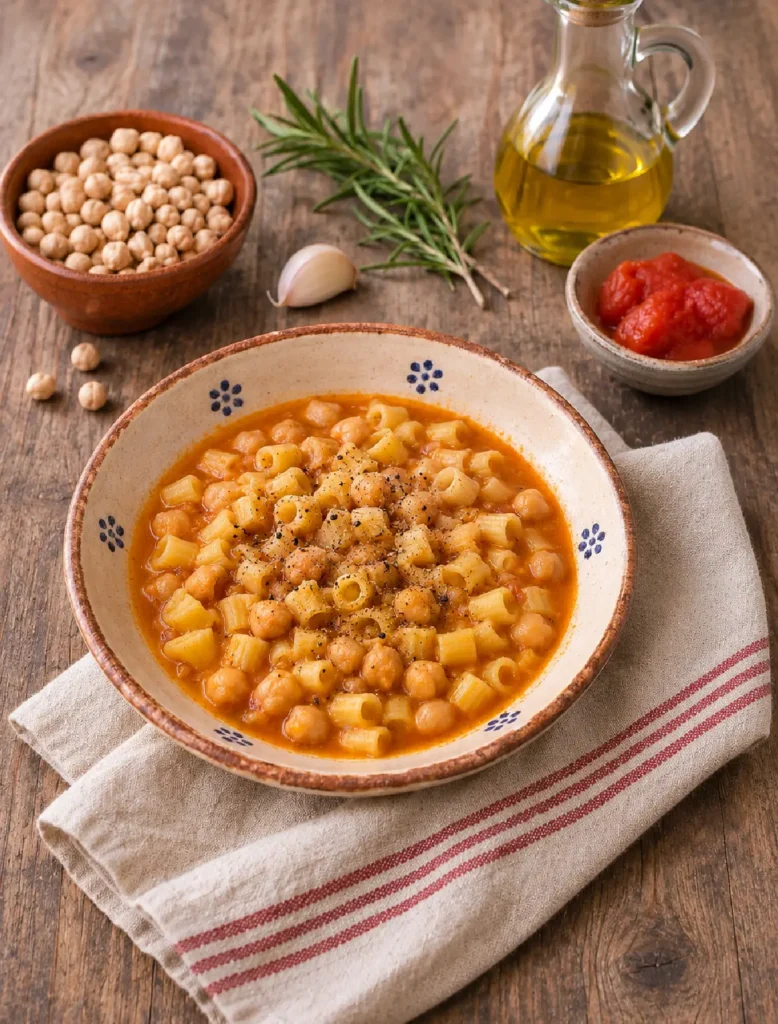
Roman Chickpea and Pasta Soup
Description
A traditional Roman soup made with dried chickpeas, small tubular pasta, rosemary and a simple garlic, anchovy and tomato base. The pasta cooks directly in the chickpea broth, creating a thick, satisfying dish inspired by Ada Boni's classic recipe.
Ingredients
Instructions
How to Make Roman Chickpea and Pasta Soup
-
Soak the Chickpeas 🫘
The night before, rinse the 300 g (10.6 oz) of dried chickpeas and place them in a large bowl. Cover generously with cold water and leave to soak for 12 hours. Drain and rinse again before cooking.
-
Cook the Chickpeas with Rosemary 🌿
Transfer the chickpeas to a large pot and cover with fresh water, allowing approximately 3–4 cm (1¼–1½ inches) above the chickpeas. Add the 2 rosemary sprigs and bring slowly to a boil. Reduce the heat and simmer gently, with the lid slightly ajar, for about 2 hours or until the chickpeas are tender. Add a little hot water if necessary. Reserve the cooking liquid and remove the rosemary sprigs.
-
Prepare the Garlic and Anchovy Base 🧄
In a large saucepan, warm enough extra virgin olive oil to lightly coat the bottom over low heat. Add the garlic clove and allow it to flavour the oil without browning. Add the 3 drained anchovy fillets and stir gently until they dissolve into the oil.
-
Add the Tomato 🍅
Add the 2 tablespoons of crushed peeled tomatoes and cook gently for 3–5 minutes, stirring occasionally. If the mixture starts to dry out, add a spoonful of the chickpea cooking liquid.
-
Combine the Chickpeas and Seasoning 🥄
Add the cooked chickpeas to the saucepan along with some of their cooking liquid. Stir and simmer gently for about 10 minutes to bring the flavours together. Add more hot chickpea cooking liquid as needed, making sure there is enough to cook the pasta without the soup becoming too thick.
-
Cook the Pasta 🍝
Bring the soup to a gentle boil and add the 150 g (5.3 oz) of cannolicchi or ditalini pasta. Cook according to the package instructions, stirring frequently to prevent sticking. If the soup thickens too much before the pasta is ready, gradually add a little hot water.
-
Season and Serve 🍲
Taste and adjust the salt, remembering that the anchovies already contribute some saltiness. Add freshly ground black pepper, turn off the heat and let the soup stand for 2–3 minutes before serving.
Nutrition Facts
Servings 4
- Amount Per Serving
- Calories 490kcal
- % Daily Value *
- Total Fat 13g20%
- Saturated Fat 2g10%
- Total Carbohydrate 75g25%
- Dietary Fiber 11g44%
- Sugars 10g
- Protein 21g42%
* Percent Daily Values are based on a 2,000 calorie diet. Your daily value may be higher or lower depending on your calorie needs.
Note
Using Canned Chickpeas
To save time, replace the 300 g (10.6 oz) of dried chickpeas with approximately 700–750 g (24.7–26.5 oz) of canned chickpeas, drained. Rinse them thoroughly, then simmer for 10–15 minutes in hot water with the rosemary before adding them to the garlic and anchovy base. This eliminates both the overnight soaking and the long cooking time.
Choosing the Pasta
Cannolicchi are the traditional pasta shape used in the reference recipe. If they are unavailable, ditalini are an excellent substitute and are easier to find in many countries, particularly in the United States. Cooking times will depend on the pasta shape and brand.
Adjusting the Consistency
This soup thickens quickly, especially after cooking. If you prefer a looser consistency, stir in a little hot water before serving. Add it gradually to avoid diluting the flavour.
Storage
Allow the soup to cool promptly, then refrigerate in an airtight container for up to 1–2 days. The pasta will continue absorbing liquid and become softer. Reheat thoroughly in a saucepan, adding a little water to loosen the soup.
If preparing ahead, it is better to store the cooked chickpeas and their seasoned broth separately, adding and cooking the pasta just before serving. The chickpea base, without pasta, can also be frozen for approximately 2–3 months.