Baccalà Mantecato

Servings: 4 Total Time: 55 mins Difficulty: Intermediate
Traditional Venetian whipped stockfish with oil

Baccalà Mantecato is one of the best-loved appetizers in Venetian cuisine. It’s made with cooked stockfish slowly whipped with oil until it becomes light and creamy, with a delicate flavor and a few small flakes of fish still giving it texture.

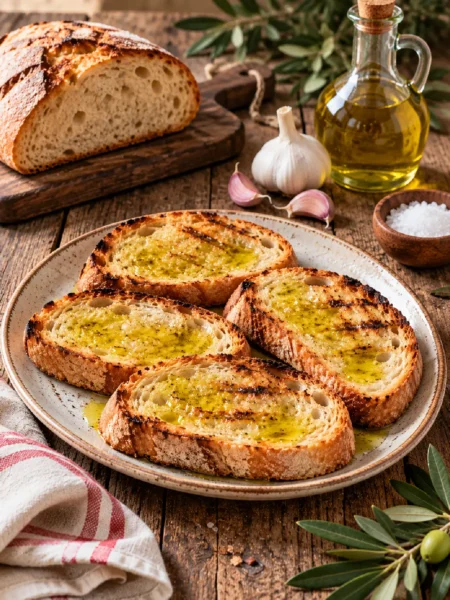
In Venice, you’ll often find it in bacari, the city’s traditional wine bars, served on toasted bread or slices of grilled polenta. It’s especially good this way: the soft, creamy fish and the crisp surface of the polenta work beautifully together.

The ingredients are few, but whipping the fish takes a little patience. The oil needs to be added slowly while the fish is worked until it becomes pale and fluffy. There’s no need for cream or butter: it’s the whipping process that gives Baccalà Mantecato its distinctive texture.
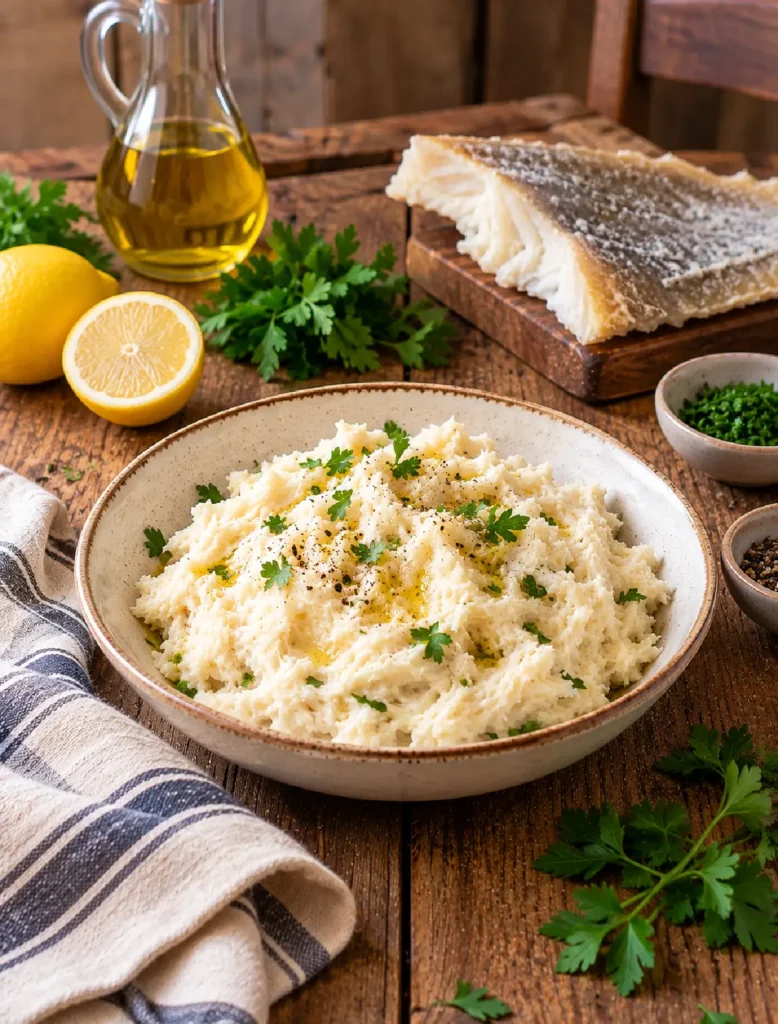
Venetian Baccalà Mantecato in a ceramic bowl topped with parsley and olive oil
0 Add to Favorites

Baccalà Mantecato

Difficulty: Intermediate Prep Time 25 mins Cook Time 30 mins Total Time 55 mins
Servings: 4 Calories: 655
Best Season: Suitable throughout the year

Description

A light, creamy mixture of stockfish and oil, prepared in the Venetian tradition and served with grilled polenta or toasted bread.

Ingredients

Cooking Mode Disabled

Instructions

How to Make Baccalà Mantecato

  1. Prepare the stockfish 🐟

    Rinse the pre-soaked stockfish under cold running water and check for any remaining bones, removing them with tweezers. Keep the skin on, as it helps give the mixture body during whipping. Cut the fish into large pieces.

  2. Cook the fish 🍋

    Place the stockfish in a saucepan and cover with cold water. Add the bay leaves and half a lemon. Bring gently to a boil, then reduce the heat and simmer for about 20–30 minutes, until the fish is tender and flakes easily with a fork. Skim off any foam that rises to the surface during cooking.

  3. Drain and prepare for whipping 🥣

    Drain the stockfish, discard the bay leaves and lemon, and reserve some of the cooking water. Transfer the fish, still warm and with the skin on, to the bowl of a stand mixer. Combine the sunflower oil and extra virgin olive oil in a separate container.

  4. Whip the stockfish 🫒

    Fit the stand mixer with the flat beater (paddle attachment) and begin mixing the stockfish at medium-low speed. Slowly drizzle in the oil, a little at a time, allowing each addition to be absorbed before adding more. Continue mixing until the mixture becomes pale, light and creamy, while retaining a few small flakes of fish. This may take around 10–15 minutes, but judge it mainly by its consistency.

  5. Adjust the texture and seasoning 🥄

    If the mixture becomes too glossy or the oil is difficult to incorporate, add a teaspoon of the reserved cooking water and continue mixing. You don't need to use all the oil if the stockfish has already reached a thick, creamy consistency. Taste and season with salt, only if necessary, and black pepper.

  6. Serve the Baccalà Mantecato 🌿

    Transfer the Baccalà Mantecato to a serving bowl or shape it into quenelles using two spoons. Finish with a little freshly chopped parsley and serve with toasted bread or slices of grilled polenta.

Nutrition Facts

Servings 4


Amount Per Serving
Calories 655kcal
% Daily Value *
Total Fat 69.4g107%
Saturated Fat 7.7g39%
Sodium 55mg3%
Total Carbohydrate 1.2g1%
Dietary Fiber 0.1g1%
Sugars 0.3g
Protein 13.5g27%

* Percent Daily Values are based on a 2,000 calorie diet. Your daily value may be higher or lower depending on your calorie needs.

Note

If using dried stockfish, soak it in plenty of cold water in the refrigerator for approximately 48–72 hours, changing the water every 8–12 hours. The exact soaking time depends on the thickness of the fish.

You can also whip the stockfish by hand using a wooden spoon, gradually incorporating the oil.
Avoid using an immersion blender, as it can make the mixture too smooth and pasty.

The amount of oil needed may vary slightly: stop adding it once the stockfish is light and creamy, with no oil separating on the surface.

Store in a sealed container in the refrigerator at 4°C (39°F) or below and preferably consume within 1–2 days.
Keywords: baccalà mantecato, Venetian baccalà mantecato, whipped stockfish, Venetian appetizer, Italian fish appetizer, traditional Venetian recipes
Rate this recipe

How Did Stockfish Arrive in Venice?

To understand how stockfish became part of Venetian cooking, we need to go back to the days of the Venetian Republic, when merchant ships travelled across Europe in search of new goods to trade.

One of the most interesting stories involves Pietro Querini, a Venetian merchant who was shipwrecked in 1432 while sailing towards Flanders. After a series of misfortunes, he and several surviving crew members were welcomed by the inhabitants of the Lofoten Islands in Norway. There, Querini discovered a fish preserved by drying it in the cold open air, without using salt: stockfish.

Querini described what he had seen in his account of the journey. Exactly who first thought of whipping stockfish with oil is another matter. The precise origins of Baccalà Mantecato aren't documented, although we know that stockfish found its place in Venetian cooking partly because it could be stored for long periods.

Baccalà or Stockfish? The Name Can Be Confusing

Order baccalà in Veneto and you might be served a dish made with stockfish. That's not a mistake: in this part of Italy, the word baccalà is traditionally used for dried cod as well.

The difference lies in how the fish is preserved. Salt cod is cured with salt, while stockfish is dried in the open air without salt.

Traditional Venetian Baccalà Mantecato is made with stockfish, either purchased already soaked or rehydrated in water for several days before cooking.

What Makes It So Creamy?

The most interesting part of the preparation begins once the fish has been cooked. The stockfish is worked for several minutes, adding the oil a little at a time, until its texture changes and it becomes pale, light and creamy.

Traditionally, this was done by hand with a wooden spoon. It takes patience, particularly because the oil needs to be incorporated gradually without separating from the fish. A stand mixer can achieve the same result with less effort.

The mixture shouldn't be completely smooth like a mousse: a few small flakes of stockfish should still be noticeable. There's no need for cream or butter. If the mixture becomes too thick, simply add a little of the water used to cook the fish.

In Venice's Bacari, with Cicchetti and Polenta

In Venice, Baccalà Mantecato is a familiar sight in bacari, the small traditional wine bars where people stop for an ombra, a small glass of wine, and a few cicchetti, the bite-sized snacks typical of Venice. It's served on toasted bread, although grilled polenta is perhaps its most characteristic accompaniment.

It's also a dish that works well for festive meals, particularly on Christmas Eve and New Year's Eve. Venetian Baccalà Mantecato is recognized as one of Veneto's PAT (Traditional Agri-food Products), a designation for foods with a long-established regional tradition.

What About Baccalà alla Vicentina?

The names are similar and both dishes start with the same ingredient, but one look at the finished preparations shows just how different they are.

Baccalà Mantecato is a creamy mixture of stockfish and oil, usually served as an appetizer. Baccalà alla Vicentina, on the other hand, is slowly cooked with onions, milk and oil. The fish remains in tender pieces surrounded by its sauce and is generally served as a main course.

Polenta accompanies both dishes, but with Baccalà alla Vicentina it's usually soft, while Baccalà Mantecato is often served with grilled slices.

Rate this recipe
Add a question