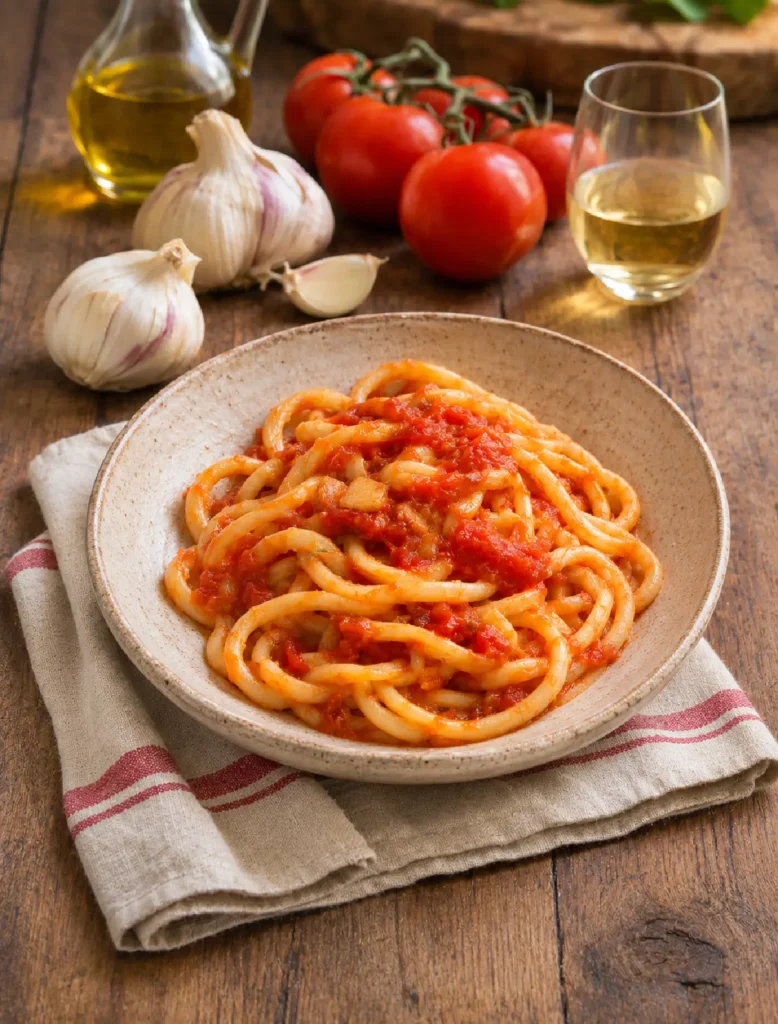
The sauce for Pici all’Aglione is rich, red and thick enough to cling to every strand of pasta. At first glance, it might look like an ordinary tomato and garlic sauce. But the first bite tells a different story. Aglione della Valdichiana has a sweeter, milder flavor than regular garlic, even though its cloves are considerably larger.
We cut the aglione into pieces and let it soften slowly in extra virgin olive oil with a little white wine. It should never fry or turn golden. Once the cloves are tender enough to crush with a fork, we add the tomatoes and let the sauce simmer until some of the liquid has evaporated. The result is thick enough to coat the pici without pooling at the bottom of the plate. Meanwhile, the aglione almost disappears into the tomatoes, although its delicate flavor remains.
If you feel like making everything from scratch, follow our Homemade Pici Pasta recipe and roll the pasta by hand, just as it is done in the Siena countryside. Otherwise, good-quality dried pici will work perfectly well. The aglione sauce is worth making either way.
Pici all’Aglione
Description
We prepare Pici all’Aglione with a tomato sauce made from Aglione della Valdichiana, slowly softened in extra virgin olive oil and white wine. A Tuscan pasta dish that can be made with fresh homemade or dried pici.
Ingredients
Instructions
How to Make Pici all’Aglione
-
Prepare the aglione 🧄
Peel the Aglione della Valdichiana cloves until you have 100 g (3.5 oz). Cut them into pieces and crush them lightly with the flat side of a knife or a fork. There is no need to mince them finely, as they will soften during cooking.
-
Gently soften the aglione 🍳
Pour 65 g (2.3 oz) of extra virgin olive oil into a large pan, add the aglione and immediately pour in 100 g (3.4 fl oz) of dry white wine. Cover and cook over low heat for approximately 15 minutes, checking occasionally that some liquid remains in the pan. If necessary, add a little water to prevent sticking. The aglione should soften without frying or turning golden.
-
Crush the softened aglione 🥄
Remove the lid and press a piece of aglione with a fork. If it breaks down easily, crush the remaining pieces directly in the pan until you have a soft, finely broken-down mixture. If the cloves are still firm, continue cooking for a few more minutes, adding a little water if necessary.
-
Add the tomatoes 🍅
Add 350 g (12.3 oz) of crushed tomatoes and season with salt. Stir to distribute the aglione throughout the sauce, then simmer gently, uncovered, for approximately 20–30 minutes. Stir occasionally until the sauce has thickened and is no longer watery.
-
Cook the pici 🍝
When the sauce is nearly ready, bring a large pot of salted water to a boil. Add 400 g (14.1 oz) of dried pici and cook according to the package instructions.
If using our Homemade Pici Pasta, gently lower the fresh pasta into the boiling water and cook for approximately 5–7 minutes, tasting to check that it is cooked through but still pleasantly firm.
Reserve some pasta cooking water before draining.
-
Toss the pici with the sauce 🍲
Drain the pici slightly before they are fully cooked and transfer them to the pan with the aglione sauce. Toss gently over low heat for approximately one minute, allowing the sauce to coat the pasta evenly. If it becomes too thick, add a little reserved pasta cooking water at a time.
-
Serve the Pici all’Aglione 🍽️
Divide the pici among four plates, spooning over any sauce left in the pan. Serve immediately while hot.
Nutrition Facts
Servings 4
- Amount Per Serving
- Calories 550kcal
- % Daily Value *
- Total Fat 18g28%
- Saturated Fat 2.8g14%
- Sodium 80mg4%
- Total Carbohydrate 79g27%
- Dietary Fiber 4g16%
- Sugars 6g
- Protein 15g30%
* Percent Daily Values are based on a 2,000 calorie diet. Your daily value may be higher or lower depending on your calorie needs.
Note
Alternative to Aglione della Valdichiana: if you cannot find it, you can use 2–3 cloves of regular garlic instead of the 100 g (3.5 oz) of aglione specified in the recipe, as suggested by Italian tomato producer Mutti. Choose fresh garlic with a relatively mild flavor and cook it gently. The resulting sauce will taste more pungent and will not have exactly the same flavor as traditional Pici all’Aglione, but it will still make a good pasta sauce.
Aglione weight: the 100 g (3.5 oz) refers to the peeled cloves. Their size can vary considerably, so weighing them is more reliable than counting them.
White wine: choose a dry white wine. If you prefer not to use wine, replace it with the same quantity of water, as permitted in the reference recipe.
Tomatoes: canned crushed tomatoes are convenient throughout the year. You can also use canned peeled tomatoes, crushed by hand or with a fork. Avoid products already seasoned with garlic, onion or herbs.
Cooking the aglione: keep the heat low and check the liquid during the first 15 minutes. If it evaporates too quickly, add a little water. The aglione should become tender without browning.
Fresh or dried pici: the 400 g (14.1 oz) specified in the ingredients refers to dried pasta. If making pici by hand, use the entire batch from our recipe for four servings. Cooking times vary depending on the pasta's thickness and whether it is fresh or dried.
Sauce consistency: the sauce should cling to the pici without becoming watery. If it thickens too much while tossing the pasta, add a little reserved cooking water.
Storage: the sauce can be prepared ahead and refrigerated in a sealed container for up to 2 days. Reheat thoroughly before using. For the best texture, cook and dress the pici just before serving.