Making a proper Cotoletta alla Milanese is not simply a matter of breading a thin slice of veal and frying it. It starts with a bone-in veal chop, cut from the rack and left fairly thick. That is the cut we will use, following the approach of Milan’s De.Co. recipe.
The ingredient list is short: eggs, breadcrumbs, butter and salt. No flour. The chop goes straight into the beaten egg, then into the breadcrumbs and finally into the butter. The coating needs enough time to turn golden without leaving the meat overcooked; beneath it, the veal should retain its tenderness.
And you can taste the butter. It is not simply the cooking fat we happen to be using, and we will not replace it with oil: it is part of the flavor of a Milanese cotoletta.
When it is time to serve, we can add a lemon wedge, as included in the De.Co. recipe, but leave it beside the meat. Whether to squeeze it over the cotoletta is best decided at the table: it should arrive just as it is, straight from the butter.
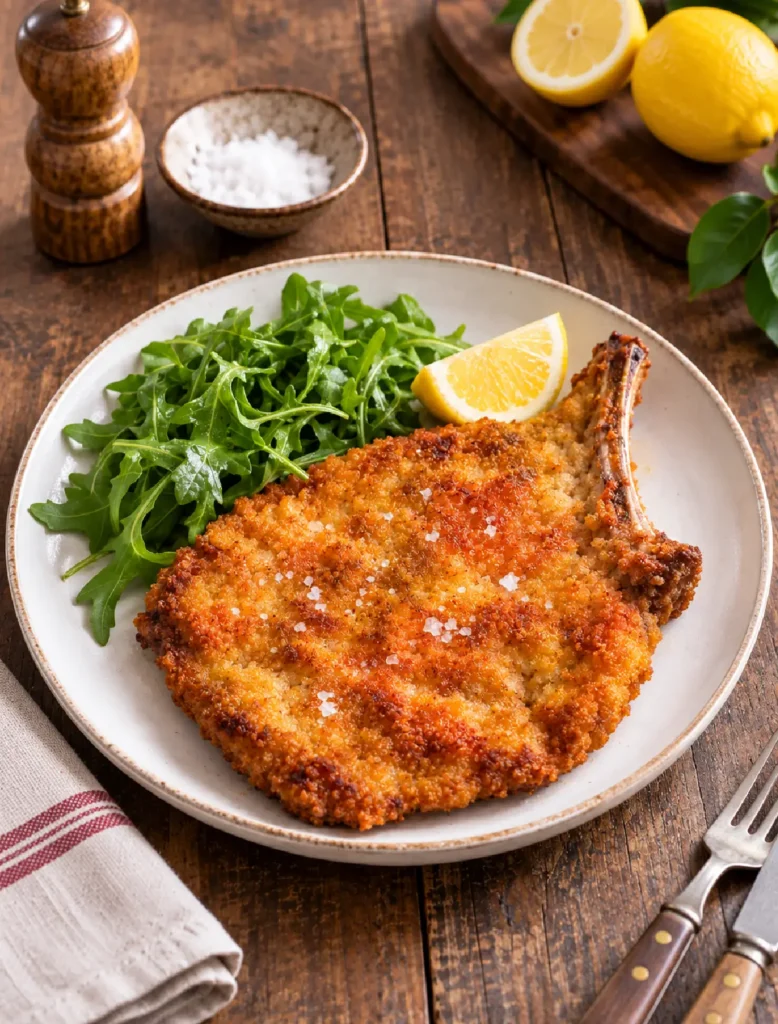
Cotoletta alla Milanese: Traditional Milanese Veal Cutlet
Description
Cotoletta alla Milanese is made with a bone-in veal chop, coated first in egg and then in breadcrumbs before being cooked in butter. A classic Milanese recipe with a golden coating and tender veal inside.
Ingredients
Instructions
How to Make Cotoletta alla Milanese
-
Prepare the veal chops 🔪
Trim away only the excess outer fat and make 2–3 small cuts around the edge of the meat, without cutting too deeply. This will help prevent the chops from curling during cooking. If the thickness is uneven, use a meat mallet only on the thicker areas, without flattening the chops.
-
Prepare the eggs and breadcrumbs 🥚
Break the eggs into a dish large enough to hold one chop and beat them with a fork, without adding salt. Place the breadcrumbs in a second dish.
-
Bread the veal chops 🍞
Hold each chop by the bone, dip it into the beaten egg and let the excess drip off for a few seconds. Place it in the breadcrumbs and press gently with your hands so that the coating adheres well on both sides. Keep the bone clean, without covering it in breadcrumbs.
-
Melt the butter 🧈
Put the butter in a large, heavy pan and let it melt over low heat, making sure it does not begin to brown before you add the meat. The pan should be large enough for the chops to cook without overlapping.
-
Cook the cotoletta 🍳
Place the chops in the butter and cook them for approximately 4–5 minutes per side. Cooking time may vary depending on the thickness of the chops. Turn them carefully once the coating is golden. As they cook, spoon some of the butter from the pan over the meat, paying particular attention to the area closest to the bone.
-
Check the veal 👀
The breadcrumb coating should be nicely golden, while the meat should remain slightly moist inside when cut, rather than becoming dry.
-
Drain and season 🧂
Remove the chops from the pan and let them drain briefly on a wire rack or kitchen paper. Season with salt only now, while they are still hot.
-
Serve the Cotoletta alla Milanese 🍋
Serve immediately with a lemon wedge on the side, allowing everyone to decide whether to squeeze it over the cotoletta.
Nutrition Facts
Servings 4
- Amount Per Serving
- Calories 650kcal
- % Daily Value *
- Total Fat 31g48%
- Saturated Fat 15g75%
- Sodium 600mg25%
- Total Carbohydrate 22g8%
- Dietary Fiber 1g4%
- Sugars 2g
- Protein 65g130%
* Percent Daily Values are based on a 2,000 calorie diet. Your daily value may be higher or lower depending on your calorie needs.
Note
The quantity of breadcrumbs gives you enough room to coat the chops properly; you will not necessarily use all of them.
The same applies to the butter left in the pan. For this reason, the nutritional values are necessarily estimates and will vary according to how much breadcrumb coating adheres to the meat and how much butter is absorbed during cooking.
If your chops are particularly thick, do not increase the heat to speed up the cooking. Give them a little more time instead, keeping an eye on the color of the breadcrumb coating.
Season the cotoletta after cooking. If serving it with lemon, bring the wedges to the table without squeezing them over the breadcrumb coating beforehand.