Ossobuco alla Milanese is one of the most representative dishes of Milanese cuisine. Its name comes from the Milanese oss bus, meaning “bone with a hole”, and describes the cut itself: a thick slice of veal shank, cut crosswise so that the bone and its marrow remain in the centre.
The marrow plays an important part during cooking. As the ossobuchi slowly cook in their sauce, it softens and contributes flavour and richness. The meat, meanwhile, should become tender enough to almost fall away from the bone without drying out.
We will prepare the ossobuco in bianco, without tomato, following the traditional Milanese approach. After lightly coating the meat with flour and browning it in butter, we will deglaze the pan with white wine and continue cooking slowly, adding stock whenever necessary.
The finishing touch is gremolata, the aromatic mixture that characterizes the dish. Parsley, garlic and lemon zest are finely chopped and added only towards the end, keeping their freshness and fragrance while balancing the richness of the meat and its cooking sauce.
In Milan, ossobuco is often served with Risotto alla Milanese: the saffron risotto absorbs some of the meat’s rich sauce, bringing two classics of Milanese cuisine together on the same plate.
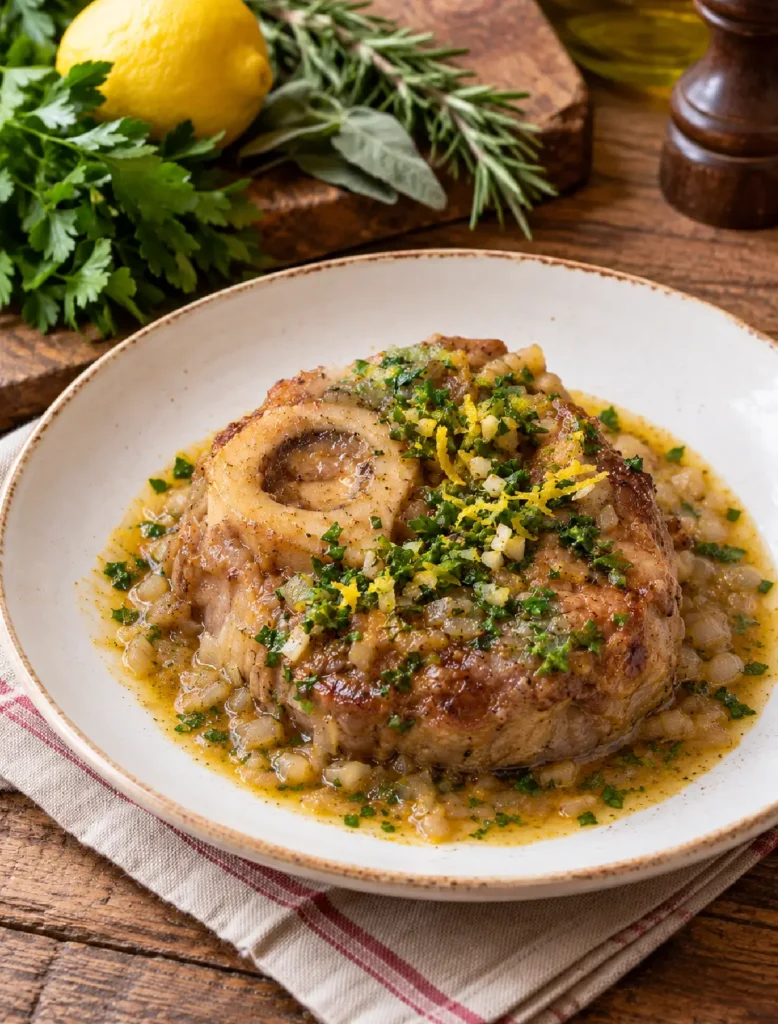
Ossobuco alla Milanese: Traditional Recipe with Gremolata
Description
Ossobuco alla Milanese is made with thick slices of veal shank slowly cooked with onion, butter, white wine and stock. Gremolata, added at the end, brings the fresh aromas of parsley, garlic, lemon, sage and rosemary to the cooking sauce.
Ingredients
For the ossobuco
For the gremolata
Instructions
How to Make Ossobuco alla Milanese
-
Prepare the ossobuchi 🔪
Pat the ossobuchi dry with kitchen paper and make 3–4 small cuts in the membrane surrounding each slice, without cutting into the meat. This will help them hold their shape during cooking. Lightly coat both sides with flour and gently shake off any excess.
-
Soften the onion 🧅
Finely chop the onion. Melt 20 g butter in a wide pan, large enough to hold the ossobuchi in a single layer, then add the onion. Cook gently until soft without letting it brown. If it starts to dry out, add a little hot stock or, alternatively, a little hot water.
-
Brown the ossobuchi 🥩
Place the ossobuchi in the pan with the onion and increase the heat slightly. Brown them well on both sides, turning them carefully so the marrow stays inside the bone. Season with salt and black pepper.
-
Deglaze with the wine 🍷
Pour in the white wine and let it evaporate with the pan uncovered. Once the alcohol has evaporated, add a little hot beef stock, without submerging the ossobuchi.
-
Slowly cook the ossobuchi 🍲
Cover the pan, reduce the heat and cook gently for about 1 hour and 30 minutes, carefully turning the ossobuchi occasionally. Add more hot stock a little at a time whenever the cooking sauce begins to dry out. When ready, the meat should be very tender and the sauce reduced and creamy rather than watery.
-
Prepare the gremolata 🌿
While the ossobuchi finish cooking, finely chop the parsley with part of the garlic clove, the lemon zest, sage and rosemary leaves. Take only the yellow part of the lemon zest, avoiding the bitter white pith underneath.
-
Finish with the gremolata 🍋
Shortly before serving, add the gremolata and the remaining 20 g butter to the pan. Gently mix them into the cooking sauce, allowing the butter to melt and the aromatics to release their fragrance without unnecessarily extending the cooking time.
-
Serve the Ossobuco alla Milanese 🍽️
Serve the ossobuchi hot with their cooking sauce. You can serve them on their own or alongside Risotto alla Milanese, one of the classic pairings of Milanese cuisine.
Nutrition Facts
Servings 4
- Amount Per Serving
- Calories 440kcal
- % Daily Value *
- Total Fat 20g31%
- Saturated Fat 9g45%
- Sodium 150mg7%
- Total Carbohydrate 10g4%
- Dietary Fiber 1g4%
- Sugars 2g
- Protein 50g100%
* Percent Daily Values are based on a 2,000 calorie diet. Your daily value may be higher or lower depending on your calorie needs.
Note
The outer membrane of the ossobuchi contracts when exposed to heat. Making a few small cuts before coating the meat with flour helps prevent the slices from curling during browning and slow cooking.
Use a pan wide enough to arrange the ossobuchi in a single layer. The cooking liquid should not completely cover them: add hot stock a little at a time and only when the sauce needs it. The aim is a concentrated cooking sauce rather than a broth.
The ossobuchi are ready when the meat is very tender and begins to pull easily away from the bone. Cooking time can vary slightly depending on the thickness of the slices. If the meat still offers resistance after 90 minutes, continue cooking, adding a little stock whenever necessary.
Prepare the gremolata only towards the end of cooking. When zesting the lemon, avoid the white pith underneath, which can be bitter. Adding the gremolata shortly before serving keeps its aromas fresher and more distinct.
If you serve the ossobuco with Risotto alla Milanese, treat the two preparations as a single dish: place the risotto alongside the meat and spoon the ossobuco cooking sauce over the meat.