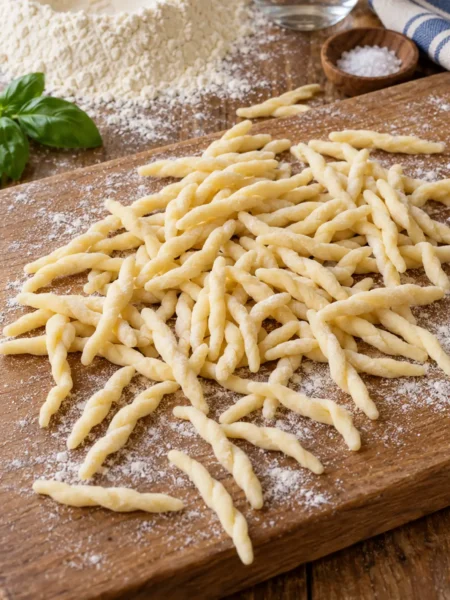
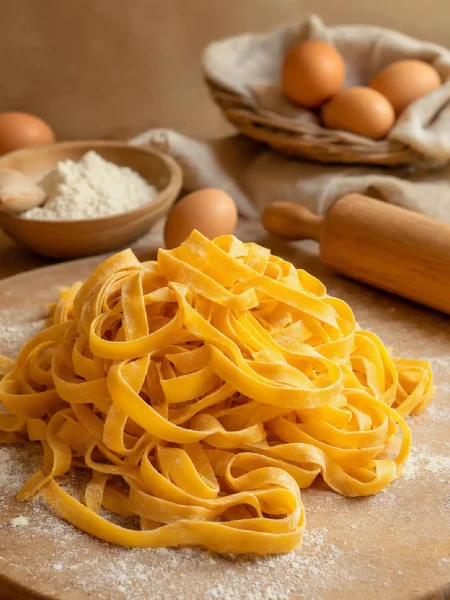
Green egg pasta is a traditional preparation from Emilia-Romagna made by adding spinach to a classic egg-and-flour pasta dough. In this recipe, the dough is rolled and cut specifically for making Bolognese Lasagna, but the same dough can also be used to make other types of fresh pasta.
The most important step is preparing the spinach correctly. After cooking, it needs to be squeezed very thoroughly before blending. Too much residual moisture will make the dough sticky and require additional flour, gradually changing its texture.
After resting, the dough can be rolled out by hand with a rolling pin or with a pasta machine. For lasagna, the goal is to obtain thin, even sheets that are dry enough to handle without sticking together.
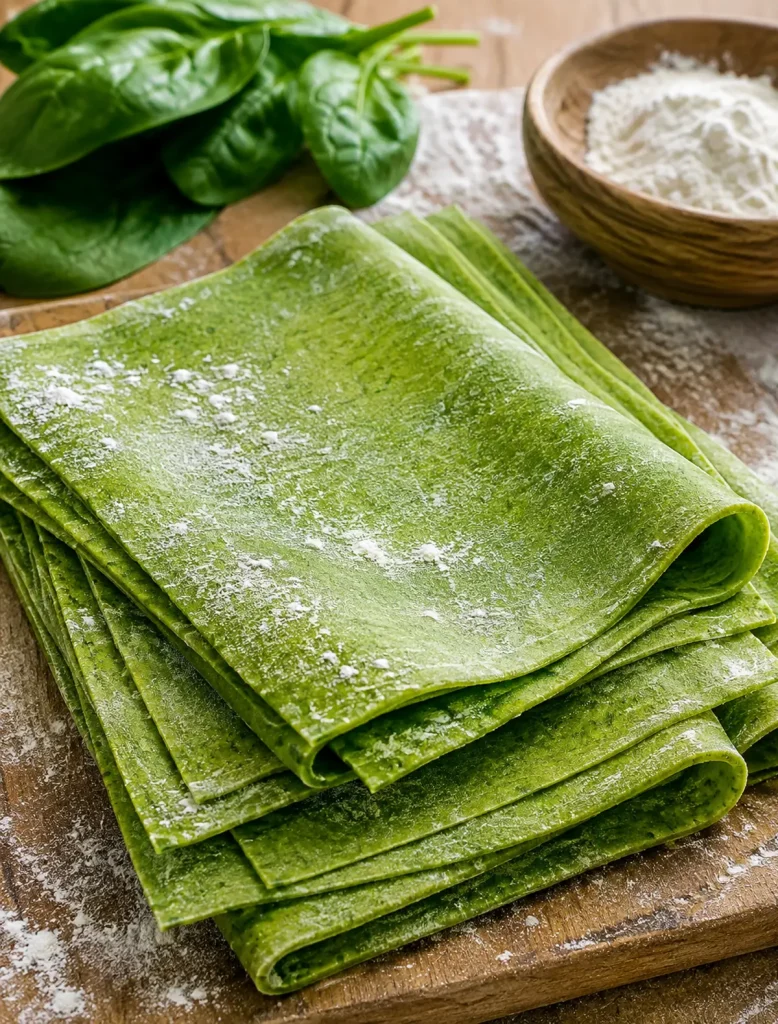
Green Egg Pasta Sheets for Lasagna
Description
Green egg pasta is a traditional spinach pasta from Emilia-Romagna. This recipe prepares the dough specifically for Bolognese Lasagna, but the same dough can also be rolled and cut into other fresh pasta shapes.
Ingredients for about 500 g (1.1 lb)
Instructions
How to Make Green Spinach Pasta Sheets for Lasagna
-
Cook, Squeeze, and Blend the Spinach 🌿
Place the fresh spinach in a saucepan with just a small amount of water. Cover and cook for about 5–6 minutes, until completely wilted and tender.
Drain and allow it to cool slightly, then squeeze it very thoroughly to remove as much water as possible. This step is essential: if the spinach retains too much moisture, the dough will become soft and sticky.
Blend the well-squeezed spinach until fine and smooth.
-
Knead the Flour, Eggs, and Spinach 🥣
Combine the flours and mound them on your work surface, making a well in the center. Add the eggs, blended spinach, and a pinch of salt.
Using a fork, gradually incorporate the flour from the edges of the well into the wet ingredients. Once the mixture begins to come together, continue working it with your hands.
Knead until the dough is smooth, elastic, and uniform.
If the dough remains excessively sticky, add a very small amount of flour at a time. Avoid adding too much: the dough should remain soft and easy to work with.
-
Rest the Pasta Dough ⏱️
Shape the dough into a ball and wrap it tightly in plastic wrap, or cover it well so that it is not exposed to the air.
Let it rest at room temperature for 30–40 minutes. Resting allows the dough to relax, making it easier to roll without springing back.
-
Divide the Dough and Roll Out the Pasta Sheets 🍝
Divide the dough into 7 portions to make the sheets needed for the seven layers of Bolognese Lasagna used in this recipe.
Keep any pieces you are not currently working with covered at all times to prevent their surface from drying out.
To roll the dough by hand, lightly flour the work surface and roll each portion with a rolling pin, rotating the dough as you work until it is thin and even.
If using a pasta machine, flatten one portion of dough slightly and pass it through the rollers at the widest setting. Gradually reduce the thickness one setting at a time until you have a thin pasta sheet.
Roll the pasta to approximately 0.5 mm thick.
Dividing the dough into seven portions is specifically intended for the lasagna prepared in this example. The same dough can be divided, rolled, and cut differently when making other types of fresh pasta.
-
Cut the Pasta Sheets for Lasagna 🔪
Cut the pasta into rectangles that fit the size of your lasagna pan.
Arrange the sheets on a lightly floured work surface or tray, making sure they are not stacked directly on top of one another without adequate separation.
The green pasta sheets are now ready to use for Bolognese Lasagna.
Note
The amount of water retained by the spinach can significantly affect the consistency of the dough. After cooking, squeeze the spinach especially well. If the dough feels very soft, wet, or sticky, excess moisture in the spinach is the most likely cause.
Use flour only as needed while rolling the dough. A light dusting helps prevent the pasta from sticking to the work surface, rolling pin, or pasta machine rollers, but repeatedly adding large amounts of flour can gradually make the sheets too dry.
Dividing the dough into seven portions is not a general rule for green pasta dough. In this recipe, it is done to prepare the sheets for the seven layers of Bolognese Lasagna. The same dough can be rolled and cut differently for other types of fresh pasta.
To freeze the pasta sheets, arrange them separately on a lightly floured tray and place them in the freezer. Once completely frozen and firm, transfer them to freezer-safe bags or containers, separating the sheets if necessary to prevent them from sticking together.
Frozen pasta sheets do not necessarily need to be thawed before use. If you add them directly to the lasagna, make sure the ragù and béchamel are moist enough to allow the pasta to cook properly in the oven.