There’s something instantly recognisable about the aroma of freshly crushed basil. Pesto alla Genovese is one of Liguria’s best-loved specialties and a perfect example of how just a handful of ingredients can capture the flavours of an entire region.
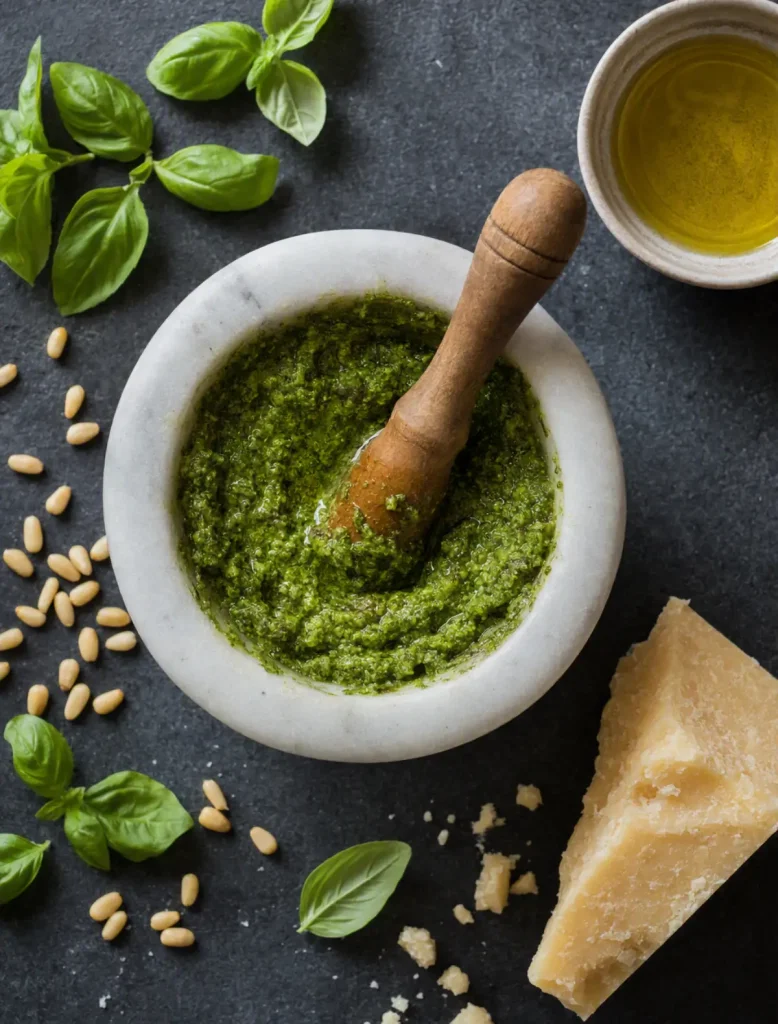
The traditional recipe brings together Genovese basil, pine nuts, garlic, salt, cheese and extra virgin olive oil. Everything is prepared raw, without cooking, to preserve the fresh aromas and flavours of the ingredients.
Traditionally, pesto is made with a mortar and pestle, but a blender can be a practical alternative when making it at home. And once it’s ready, don’t stop at pasta: pesto is incredibly versatile. Spoon it over warm focaccia, stir a little into minestrone, or serve it alongside a fresh Caprese salad.
Pesto alla Genovese: The Traditional Ligurian Recipe
Description
A quick recipe made with just a few ingredients, although a little care goes a long way when you want a creamy, well-balanced pesto with a beautiful green colour. Here you’ll find both the traditional mortar-and-pestle method and the quicker blender version.
Ingredients for about 170 g
Instructions
How to Make Pesto alla Genovese with a Mortar and Pestle
-
Crush the Garlic with the Salt 🧄
Place the garlic clove and a pinch of coarse sea salt in a marble mortar. Crush them with a wooden pestle until you have a smooth, creamy paste.
-
Add and Crush the Pine Nuts 🌰
Add the pine nuts and continue crushing until they are completely incorporated and the mixture is smooth and even.
-
Add and Work in the Basil 🌿
Gradually add the Genovese basil leaves, previously washed and carefully dried. Using the pestle, work the leaves against the sides of the mortar with gentle circular motions. The coarse salt already in the mixture will help break down the basil leaves without being too aggressive.
The salt acts as a natural abrasive, helping release the basil’s essential oils and giving the pesto its characteristic aroma. Work gently and avoid crushing the basil for longer than necessary, as this helps preserve both its fresh fragrance and vibrant green colour.
Continue until the mixture is soft, well blended and intensely aromatic.
-
Incorporate the Cheese 🧀
Gradually add the Parmigiano Reggiano and Pecorino Fiore Sardo, continuing to work the mixture gently with the pestle until the cheese is fully incorporated.
-
Finish the Pesto with the Olive Oil 🫒
Slowly drizzle in the extra virgin olive oil, continuing to mix with gentle movements.
Keep working the pesto until you have a creamy, well-blended sauce that still has a slightly textured consistency.
Your traditional Pesto alla Genovese made with a mortar and pestle is ready to use.
How to Make Pesto alla Genovese with a Blender
-
Chill the Blender and Prepare the Basil 🧊
To keep your pesto bright green, it’s important to prevent the basil from heating up while you blend it. If possible, place the blender jug and blades in the freezer for about 15–20 minutes before you begin.
Wash the Genovese basil leaves and dry them thoroughly, gently patting them with a clean kitchen towel. Make sure no water remains on the leaves, as excess moisture can encourage oxidation and cause the basil to darken.
-
Blend the Garlic, Pine Nuts and Basil 🌿
Place the garlic clove, pine nuts and coarse sea salt in the blender. Add half of the extra virgin olive oil and some of the basil leaves.
Blend using short pulses of just a few seconds at a time, pausing between each one. Gradually add the remaining basil and continue pulsing until you have a creamy, fragrant green mixture.
Avoid running the blender continuously. The heat generated by the blades can encourage oxidation, causing the basil to lose its characteristic bright green colour.
-
Gradually Add the Olive Oil 🫒
Slowly drizzle in the remaining extra virgin olive oil, continuing to blend in short pulses.
Stop as soon as the pesto becomes creamy while still retaining a slightly textured consistency.
-
Incorporate the Cheese 🧀
With the blender switched off, add the finely grated Parmigiano Reggiano and Pecorino Fiore Sardo.
Stir them in with a spoon until completely incorporated. If necessary, give the pesto one final, very quick pulse, just enough to bring everything together without warming it up.
-
Adjust the Consistency and Toss with the Pasta 🍝
Taste the pesto and adjust the salt if necessary, remembering that both Parmigiano Reggiano and Pecorino are naturally quite salty.
Your Pesto alla Genovese is ready. If you’re using it for pasta, transfer the pesto to a bowl and loosen it with one or two tablespoons of pasta cooking water. Add the drained pasta and toss until evenly coated.
Never heat pesto directly in the pan. Too much heat can affect its colour, aroma and fresh flavour.
Note
Never heat pesto directly over the stove. When using it to dress pasta, transfer it to a bowl and loosen it with a little pasta cooking water. This will make it creamier and help it coat the pasta more evenly.
If you’re not using the pesto straight away, transfer it to a clean glass jar, smooth the surface and cover it with a thin layer of extra virgin olive oil to reduce contact with the air and help prevent it from darkening. Store it in the refrigerator and use within 4–5 days.
For longer storage, you can freeze the pesto in individual portions using small containers or cups. It will keep in the freezer for about 6 months. When you’re ready to use it, allow it to thaw slowly in the refrigerator.
When making pesto with a mortar and pestle, don’t pound the basil too aggressively. Use gentle circular movements, working the pestle along the sides of the mortar. This helps release the basil’s aromas without tearing or crushing the leaves more than necessary.
The basil should be completely dry before you begin. Water left on the leaves can encourage oxidation and affect the pesto’s colour.
You can adjust the amount of garlic to suit your taste, but leaving it out completely takes the recipe away from the character of traditional Pesto alla Genovese.
The DOP ingredients listed in the recipe contribute to its traditional flavour, but if you can’t find them, choose the best-quality alternatives available. With a recipe this simple, the quality of the ingredients really does make a difference.