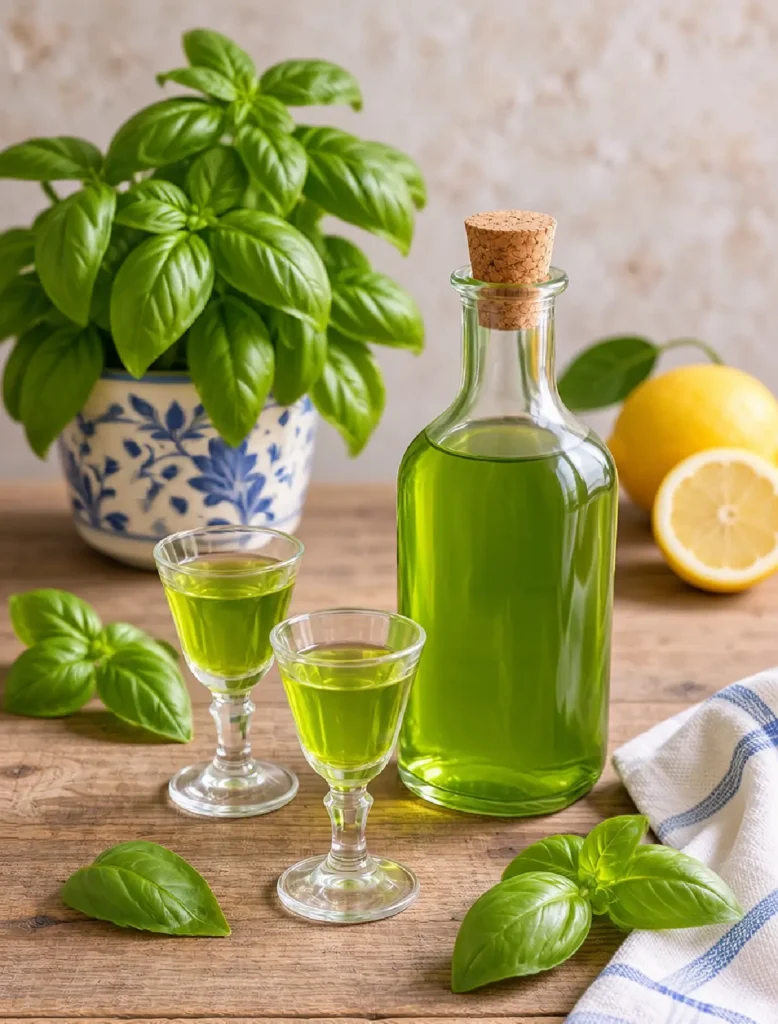
Homemade basil liqueur is particularly striking for its aroma. As soon as we open the bottle, we recognise the scent of fresh basil leaves, although in the glass the herb reveals a rather different character from the one we know in cooking. The sweetness of the sugar balances the herbal notes, while the alcohol leaves a lingering warmth. Its colour is distinctive too: initially a deep green, it may gradually become paler over time. This is a natural change influenced by light and storage conditions.
In Liguria, basil is closely associated with pesto, yet old homemade liqueur recipes from the region’s inland valleys show another side of this familiar herb. Some preparations combine basil with lemon zest, while others use the leaves alone. We prefer the latter approach, allowing the basil’s fragrance to take centre stage.
The recipe calls for very few ingredients, but plenty of patience. We select fresh, fragrant leaves, dry them carefully and immerse them in alcohol for around twenty days, keeping the jar away from light. During this time, we only need to give it a gentle shake now and then. Once the infusion is ready, we strain the liquid and combine it with a syrup made from water and sugar, which we allow to cool completely beforehand.
We don’t taste it straight away. Instead, we give the liqueur a few more days to rest in the bottle, allowing the sweetness and herbal flavours to come together. Then we serve it well chilled, in small glasses, at the end of a meal.
Liquore al Basilico, Homemade Italian Basil Liqueur
Description
An Italian herbal liqueur made with fresh basil leaves, alcohol, water and sugar. After 20 days of infusion and a further resting period, we obtain approximately 1 litre (34 US fl oz) of fragrant basil liqueur, best served well chilled.
Yield: Approximately 1 litre (34 US fl oz)
Istruzioni
How to Make Homemade Basil Liqueur
-
Prepare the basil leaves 🌿
Remove 100 fresh basil leaves from their stems, choosing healthy leaves without damaged or discoloured areas. Rinse them gently under cold running water and dry them thoroughly, patting them with a clean kitchen towel or paper towels. Avoid crushing the leaves unnecessarily.
-
Immerse the basil in alcohol 🫙
Place the leaves in a clean, dry glass jar with an airtight lid. Pour in 200 g (7.1 oz) of food-grade alcohol at 90–95% ABV, gently pressing the basil towards the bottom so that all the leaves remain submerged. Close the jar securely.
-
Infuse for 20 days 🌱
Keep the jar in a cool, dry place away from light. Leave the basil to infuse for 20 days, gently shaking the container once a day. During this time, the alcohol will gradually take on the colour and fragrance of the leaves.
-
Prepare the sugar syrup 🍯
Once the infusion period is complete, pour 400 g (14.1 oz) of water into a saucepan and add 600 g (21.2 oz) of granulated sugar. Heat over medium-low heat, stirring until the sugar has completely dissolved. There is no need to boil the syrup for an extended period. Remove from the heat and allow it to cool completely.
-
Strain the infusion and combine with the syrup 🥄
Strain the basil-infused alcohol through a fine-mesh sieve, removing the leaves. If necessary, strain it a second time through clean food-safe cheesecloth to remove smaller particles. Pour the filtered infusion into the completely cooled syrup and stir thoroughly until evenly combined.
-
Bottle the liqueur 🍾
Using a funnel, transfer the liqueur into thoroughly cleaned and dried glass bottles, preferably dark-coloured ones to protect it from light. Seal with closures suitable for alcoholic beverages and store the bottles in a cool, dark place.
-
Rest and serve 🥃
Allow the liqueur to rest for at least 10 days before tasting, giving the flavours time to become more balanced. Before serving, place the bottle in the refrigerator for a few hours. Pour the chilled basil liqueur into small glasses, allowing approximately 50 ml (1.7 US fl oz) per serving.
Note
Storage
Store the basil liqueur in clean, tightly sealed glass bottles away from light. We prefer to keep it refrigerated and recommend consuming it within approximately three months to enjoy the basil aroma at its best. This is a quality recommendation rather than a scientifically established safety shelf life. Always close the bottle securely after opening.
Choosing the Right Basil
Choose fresh, fragrant basil with healthy, fleshy leaves, preferably grown without pesticide treatments. Basilico Genovese DOP (Genoese Basil PDO) is particularly suitable, but other sweet basil varieties also work well. Avoid yellowing, blackened or damaged leaves, which may affect the finished liqueur.
Preserving the Green Colour
The colour of the liqueur depends partly on the freshness of the leaves and the storage conditions. To slow colour changes, protect both the infusion and the finished bottles from direct light and heat. Over time, the green may become less vivid or develop yellowish tones.
Flavour Variations
For a slightly citrusy version, add a few thin strips of unwaxed lemon zest during infusion, avoiding the white pith, which can introduce bitterness. Alternatively, add a few fresh mint leaves, taking care not to overpower the basil.
Serving Suggestions
Serve the liqueur well chilled, straight from the refrigerator, preferably in small glasses that have been chilled beforehand. For a different aperitif, try combining a small amount with gin and freshly squeezed lemon juice, adjusting the proportions to taste.