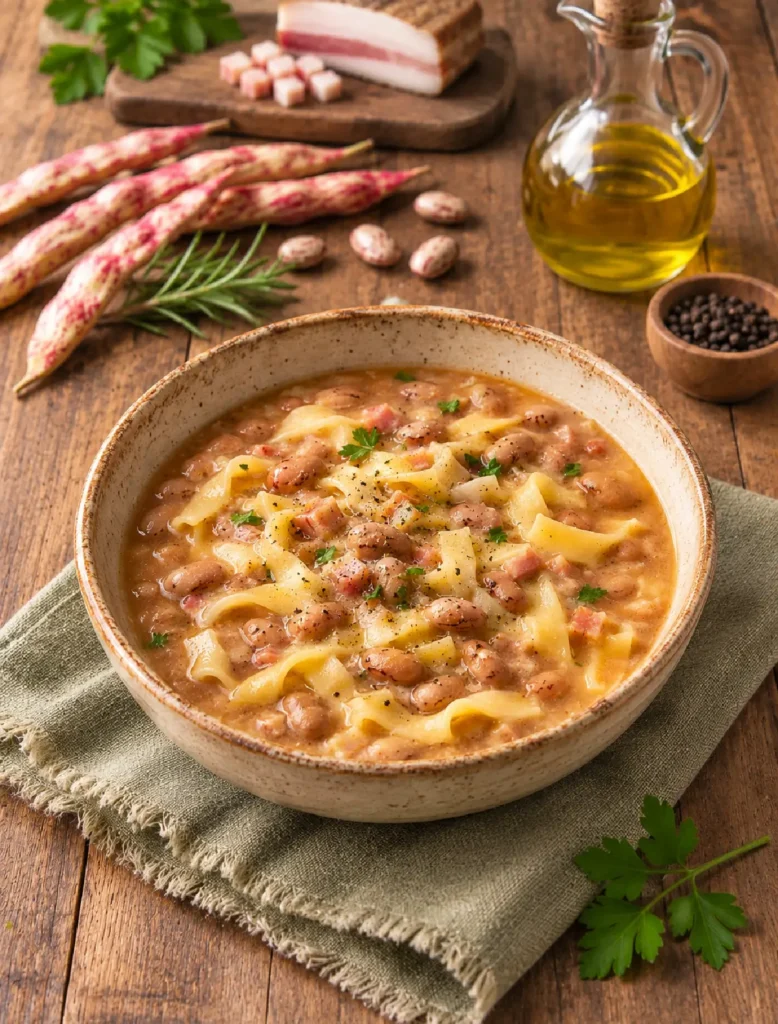
Pasta e fasioi is a thick, creamy Venetian soup in which beans and egg pasta come together with a soffritto of onion, pancetta or lardo, and aromatic herbs. As the beans cook, they soften and give the broth a rich, velvety texture. Rosemary adds a distinctive aroma, while the flavour of the beans remains at the heart of the dish.
The preparation begins with Lamon beans, a variety closely associated with the culinary traditions of the Belluno area in northern Veneto. Once the beans have cooked, we combine them with the soffritto and allow the flavours to develop. The pasta goes in towards the end, cooking directly in the soup and absorbing some of the liquid. The finished dish should be soft and creamy, thick enough to coat the pasta without becoming dry.
Across Veneto, pasta e fasioi is prepared with small differences from one area to another. Some versions include potatoes for a thicker soup, while others are enriched with pork rind. The pasta can vary too, from broken egg tagliolini to maltagliati and other homemade shapes. Once removed from the heat, the soup continues to thicken as it cools. If there are leftovers to reheat the following day, a little water may be needed to bring it back to the desired consistency.
Pasta e Fasioi Venetian Pasta and Bean Soup
Description
A creamy Venetian pasta and bean soup made with Lamon beans, fresh egg pasta, and a fragrant soffritto of pancetta or lardo, onion, and herbs.
Ingredients
Instructions
How to Make Venetian Pasta and Bean Soup
-
Soak the Beans 🫘
If using dried beans, place them in a large bowl, cover generously with cold water, and leave to soak for about 12 hours. The following day, drain and rinse them. Freshly shelled beans do not need soaking.
-
Cook the Beans 🍲
Transfer the beans to a large pot and cover them with plenty of lightly salted water. Bring to a boil, then reduce the heat and simmer gently until the beans begin to soften. Dried beans generally take longer to cook than fresh ones. During cooking, make sure the beans remain submerged, adding more hot water if necessary. To check whether they are ready, remove one bean and gently press it with a fork: it should yield easily, with no hard or chalky centre, while still holding its shape. The beans should not be completely mushy, as they will continue cooking with the other ingredients.
-
Prepare the Aromatics 🔪
Peel the onion and garlic, trim the celery if using, and finely chop everything together with the rosemary and parsley. Finely chop the lardo or pancetta as well. If including the optional potatoes, peel and cut them into small pieces.
-
Make the Soffritto 🥄
In a second large pot, heat the extra virgin olive oil and/or butter. Add the lardo or pancetta and the chopped aromatics. Cook gently over low heat, stirring occasionally, until the onion softens and the mixture becomes fragrant without browning too much.
-
Combine the Beans and Soffritto 🫕
Pour a little boiling water into the soffritto, then transfer the beans from the first pot, draining off their cooking liquid. Add the potatoes at this stage if using. Simmer gently until the beans are completely tender and the soup becomes thick and creamy. Add more boiling water as needed to maintain a soft consistency. Adjust the salt to taste.
-
Add the Egg Pasta 🍝
Once the beans are ready, bring the soup back to a gentle boil and add the homemade egg pasta, cut into small pieces. Alternatively, use fresh egg tagliatelle, broken into shorter lengths before adding them to the pot. Stir gently to distribute the pasta and prevent it from sticking to the bottom.
-
Let the Soup Cool Slightly and Serve 🍽️
Remove the pot from the heat and allow the soup to cool slightly so that the fresh pasta finishes cooking in the residual heat. Stir occasionally and check the consistency. Finish with freshly ground black pepper and serve the pasta e fasioi warm. If desired, add a few drops of wine vinegar directly to each bowl.
Nutrition Facts
Servings 6
- Amount Per Serving
- Calories 455kcal
- % Daily Value *
- Total Fat 19g30%
- Saturated Fat 5g25%
- Sodium 570mg24%
- Total Carbohydrate 51g17%
- Dietary Fiber 12g48%
- Sugars 5g
- Protein 20g40%
* Percent Daily Values are based on a 2,000 calorie diet. Your daily value may be higher or lower depending on your calorie needs.
Note
Fresh or dried beans
fresh beans are shelled directly from their pods and are still raw, so they do not need soaking. Dried beans should be soaked for approximately 12 hours. If Lamon beans are unavailable, ordinary borlotti beans (cranberry beans) are a suitable alternative.
Egg pasta
homemade pasta sheets can be cut into small irregular pieces or diamond shapes. Fresh egg tagliatelle, broken into shorter lengths, also work well. If using dried pasta, adjust the cooking time and make sure it is fully cooked before serving.
Potatoes and celery
both are optional in the traditional regional recipe. Potatoes help thicken the soup, while celery adds depth to the aromatic base.
Traditional seasoning
the regional recipe uses salted pancetta or lardo and mentions cured ham fat as a preferred choice for the soffritto. Some traditional versions also include strips of pork rind or a little raw butter added to the soup.
Consistency
pasta e fasioi should be creamy but not dry. If it becomes too thick while resting or reheating, stir in a little hot water.
Storage
cool the soup promptly and refrigerate in a sealed container within two hours of cooking. Preferably consume within 2 days, reheating thoroughly before serving.
Freezing
for the best texture, freeze the bean soup before adding the pasta. Thaw in the refrigerator, reheat, and finish the recipe with fresh pasta.