In risotto al tastasal, small pieces of pork are scattered throughout the rice. The dish comes from the plains around Verona, where Vialone Nano rice is traditionally used. Unlike many creamy risottos, this one can be relatively firm and less fluid, with distinct grains coated in the juices released by the meat. Black pepper and browned pork provide most of the flavour, without the need for many other ingredients.
Tastasal is a mixture of minced pork, salt and pepper, similar to the filling used to make fresh sausages. In the past, when families prepared cured meats, they would cook a small portion of the mixture to check the seasoning before stuffing the sausages. This practice gave tastasal its name, which means “taste the salt” in the local Veronese dialect. The same freshly seasoned pork was also used to flavour risotto.
We cook the tastasal separately in butter with onion, breaking it into small pieces as it browns. Meanwhile, we cook the Vialone Nano rice in hot meat stock, then add the pork and its cooking juices partway through. Finally, we stir in some grated cheese, keeping the quantity moderate so that the pepper and the savoury flavour of the pork remain noticeable.
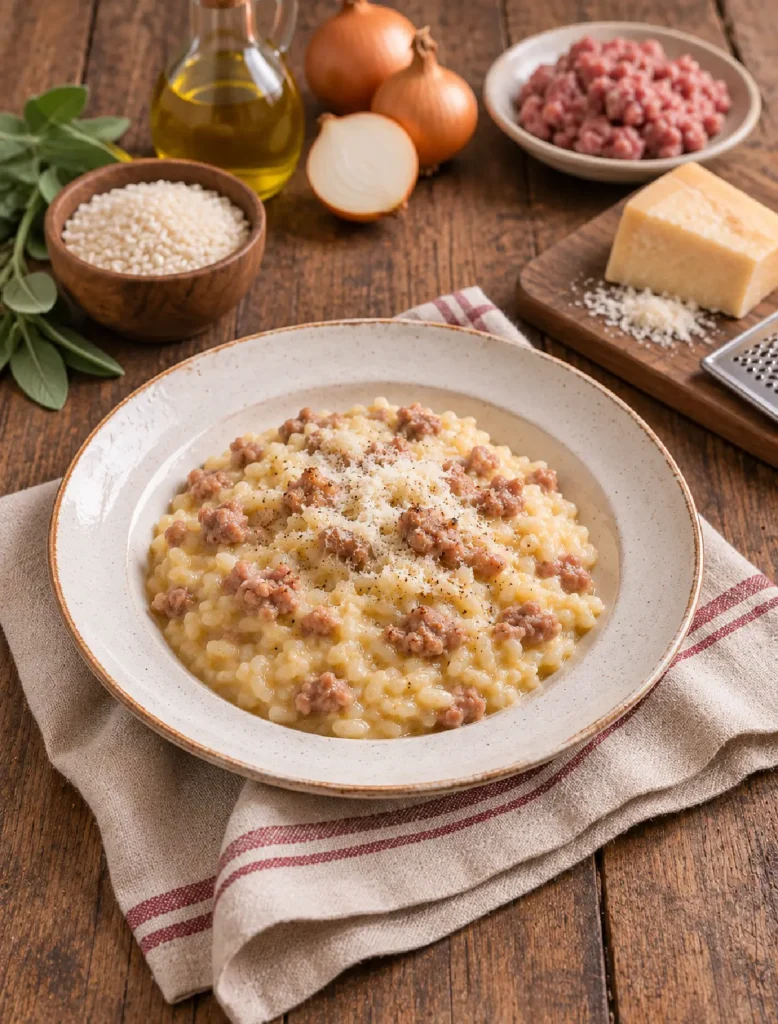
Risotto al Tastasal – Veronese Pork Sausage Risotto
Description
A traditional risotto from the province of Verona, made with Vialone Nano rice, seasoned minced pork, onion, butter, meat stock and grated cheese.
Ingredients
Instructions
How to Make Risotto al Tastasal
-
Prepare the Onion 🧅
Peel the onion and slice it finely. Melt the butter in a large frying pan over medium-low heat, add the onion and cook for about 5 minutes, stirring occasionally, until soft and lightly golden.
-
Brown the Tastasal 🥩
Add the tastasal, breaking it into smaller pieces with your hands. Increase the heat slightly and cook for about 8–10 minutes, breaking up the meat with a fork or wooden spoon. Try to keep the pieces small and separate, allowing them to brown before turning them again. Once the pork is fully cooked and lightly browned, turn off the heat and set it aside with all its cooking juices.
-
Cook the Rice 🍚
Bring the meat stock to a boil in a saucepan. Reserve about 200 ml (6.8 US fl oz), keeping it hot, and add the Vialone Nano rice to the remaining 800 ml (27 US fl oz). Stir gently, reduce the heat and simmer, adding more hot stock only when needed. The rice should remain surrounded by liquid rather than drying out completely.
-
Add the Tastasal 🥄
After about 8 minutes, check the rice and add the cooked tastasal along with all its cooking juices. Stir gently and continue cooking over low heat for another 5–8 minutes, depending on the cooking time indicated on the rice package. Add more stock if necessary, until the risotto is moist but not overly loose, with the grains still slightly firm to the bite.
-
Finish and Serve 🧀
Remove the saucepan from the heat and taste before adding any salt, as tastasal is already seasoned. Stir in the grated cheese, some freshly ground black pepper and a little freshly grated nutmeg. Mix gently to distribute the seasoning and serve immediately, preferably on warmed plates.
Nutrition Facts
Servings 4
- Amount Per Serving
- Calories 710kcal
- % Daily Value *
- Total Fat 38g59%
- Saturated Fat 19g95%
- Sodium 1050mg44%
- Total Carbohydrate 65g22%
- Dietary Fiber 2g8%
- Sugars 3g
- Protein 27g54%
* Percent Daily Values are based on a 2,000 calorie diet. Your daily value may be higher or lower depending on your calorie needs.
Note
How to substitute tastasal
If tastasal is unavailable, use the same quantity of fresh pork sausage meat. Remove the casing, if present, and break the meat into small pieces before cooking. Choose a mildly seasoned sausage, preferably containing only salt and pepper. Avoid smoked, spicy or fennel-flavoured sausages, as these would noticeably change the flavour of the risotto. Alternatively, use ground pork (US) or minced pork (UK), seasoned with salt and black pepper.
Choosing the rice
Vialone Nano Veronese PGI rice is the variety traditionally associated with this part of Veneto. If you cannot find it, Arborio rice is a suitable alternative. Follow the cooking time indicated on the package. When using Arborio, you may need to add the tastasal a few minutes later.
Adjusting the stock
The amount of stock needed depends on the rice variety, the saucepan and the heat. Keep some stock hot and add it as necessary to prevent the risotto from becoming too dry. You may not need the full quantity.
Check the seasoning
Tastasal is already seasoned and can be quite salty. If your stock also contains salt, taste the risotto before adding more.
Storage
Risotto al tastasal is best eaten immediately. If you have leftovers, cool them quickly and refrigerate in a sealed container, preferably eating them within 24 hours. Reheat thoroughly only once, until piping hot throughout. Do not leave cooked rice at room temperature for extended periods.