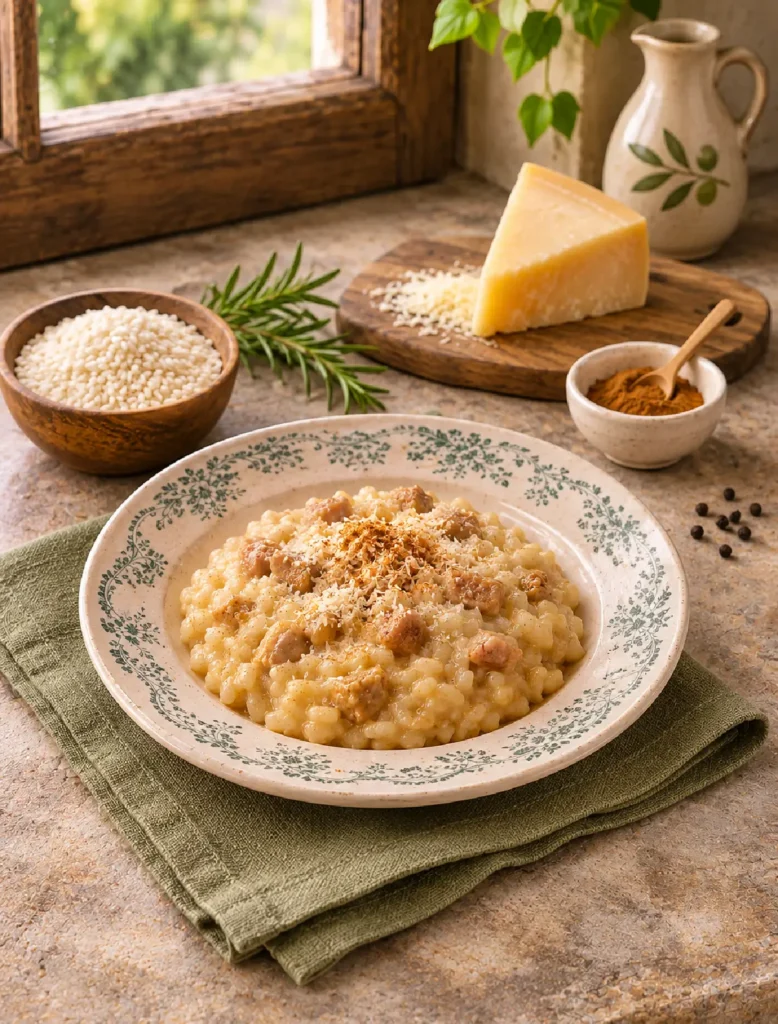
In risotto all’isolana, the grains of Vialone Nano rice are mixed with small cubes of pork and veal, browned in butter with rosemary. The dish is rich, but the flavours remain distinct: first the meat, followed by Grana Padano cheese and, at the end, a subtle hint of cinnamon. This risotto comes from Isola della Scala, a town in the Verona countryside where rice has been cultivated for centuries.
Unlike risotto al tastasal, the difference is immediately noticeable in how the meat is prepared. Instead of using a mixture of minced pork, we cut two different meats into small cubes. After seasoning them with salt and pepper, we leave them to rest for an hour before cooking them slowly in butter with a sprig of rosemary. As the meat browns, it releases flavourful cooking juices that we later add to the rice.
The Vialone Nano rice cooks directly in boiling stock, without being toasted first. Towards the end, we add the pork and veal along with their cooking juices, followed by grated Grana Padano and cinnamon. We stir for a few more moments as the cheese melts and the aroma of rosemary mingles with the spices.
Risotto all’Isolana – Italian Pork and Veal Risotto
Description
A traditional risotto from Isola della Scala, near Verona, made with Vialone Nano rice, diced pork and veal, butter, Grana Padano cheese and a touch of cinnamon.
Ingredients
Instructions
How to Make Risotto all'Isolana
-
Cut and Season the Meat 🔪
Cut the veal and pork loin into small, evenly sized cubes, approximately 1 cm (⅜ inch) on each side. Place them in a bowl, season with salt and freshly ground black pepper, and mix well. Cover and refrigerate for 1 hour to allow the meat to absorb the seasoning.
-
Brown the Meat with Rosemary 🥩
Melt the butter in a large pan, add a sprig of rosemary and then the diced meat. Cook over medium-low heat, stirring occasionally, until the meat is browned on all sides. Reduce the heat and continue cooking for approximately 15–20 minutes. If the cooking juices begin to dry out, add 1–2 tablespoons of hot stock at a time. Once the meat is cooked, remove the rosemary and set the meat aside, keeping all the cooking juices.
-
Cook the Vialone Nano Rice 🍚
Bring 800 ml (27.1 US fl oz) of stock to a boil in a sufficiently large saucepan, keeping the remaining stock hot. Add the rice directly to the boiling liquid, without toasting it first, and stir gently. Reduce the heat and cook at a gentle simmer for approximately 17–18 minutes, or according to the cooking time indicated on the package, stirring occasionally to prevent the rice from sticking to the bottom. The rice will gradually absorb the stock. If necessary, add a little of the reserved hot stock at a time. Check the rice during the final minutes: it should be cooked but still slightly firm in the centre.
-
Add the Meat and Cooking Juices 🥄
When the rice is ready, add the pork and veal along with all their cooking juices. Stir gently to distribute the meat evenly throughout the rice and allow everything to cook together for a few moments over low heat. If the risotto seems too dry, add a little more hot stock.
-
Finish with Grana Padano and Cinnamon 🧀
Turn off the heat and add the grated Grana Padano PDO cheese, previously mixed with a small pinch of ground cinnamon. Stir gently until the cheese is evenly incorporated into the risotto. Taste and adjust the salt only if necessary, then serve immediately on warm plates.
Nutrition Facts
Servings 4
- Amount Per Serving
- Calories 640kcal
- % Daily Value *
- Total Fat 22.5g35%
- Saturated Fat 12.5g63%
- Sodium 520mg22%
- Total Carbohydrate 79g27%
- Dietary Fiber 1.3g6%
- Sugars 0.8g
- Protein 29g58%
* Percent Daily Values are based on a 2,000 calorie diet. Your daily value may be higher or lower depending on your calorie needs.
Note
Choosing the Right Rice
Riso Nano Vialone Veronese IGP is the traditional choice for risotto all'isolana. Its grains absorb stock well while maintaining a pleasant texture during cooking. If it is unavailable, Arborio rice is a practical alternative that is easier to find internationally. Check the cooking instructions on the package and adjust the amount of stock if necessary.
Choosing the Meat
For this version, we use pork loin and lean veal in the proportions specified by the Fiera del Riso di Isola della Scala recipe. Remove any tough connective tissue before cutting the meat, and keep the cubes small and evenly sized to ensure consistent cooking.
Adjusting the Stock
The traditional recipe uses 800 ml of stock for 400 g of rice. We prepare 1 litre so that the additional 200 ml can be used if the meat's cooking juices begin to dry out or if the rice needs more liquid. Always keep the stock hot to avoid interrupting the cooking process.
How Much Cinnamon to Use
The cinnamon should be barely noticeable and should not overpower the flavour of the meat or cheese. Start with a small pinch, mixing it into the grated Grana Padano before adding it to the risotto. You can increase the amount slightly according to your taste.
Storage and Reheating
Risotto all'isolana is best enjoyed immediately after cooking. If you have leftovers, cool them quickly and store them in a sealed container in the refrigerator for no longer than 24 hours. To reheat, transfer the risotto to a pan with a little hot stock and stir until thoroughly heated throughout. Do not reheat more than once.
Can You Freeze It?
We do not recommend freezing the finished risotto, as the rice tends to lose its texture after thawing. However, you can prepare the meat mixture in advance, cool it quickly and freeze it in a suitable container for approximately 2 months. Thaw it in the refrigerator and reheat thoroughly before using.