In Rome, arzilla is the local name for skate, a fish that was once inexpensive and often found its way into homemade soups. In pasta e broccoli in skate broth, the fish is used for more than just making stock. Its tender flesh is also added to the soup, together with Romanesco broccoli and fresh maltagliati pasta.
The preparation begins with the skate, gently simmered with celery, carrot and onion. Meanwhile, the broccoli is divided into florets and cooked with garlic, anchovies and tomatoes. The strained fish stock is then added, allowing the broccoli to soften. The maltagliati cook directly in the same pot, absorbing some of the broth while a few florets break down and give the soup a thicker consistency.
This dish was traditionally associated with days when meat was avoided, particularly Fridays. Skate provided a flavourful broth without the expense of more highly prized fish, while Romanesco broccoli and a little pasta made the soup substantial enough for a family meal. There was no need for many additional ingredients, although preparing the stock required time.
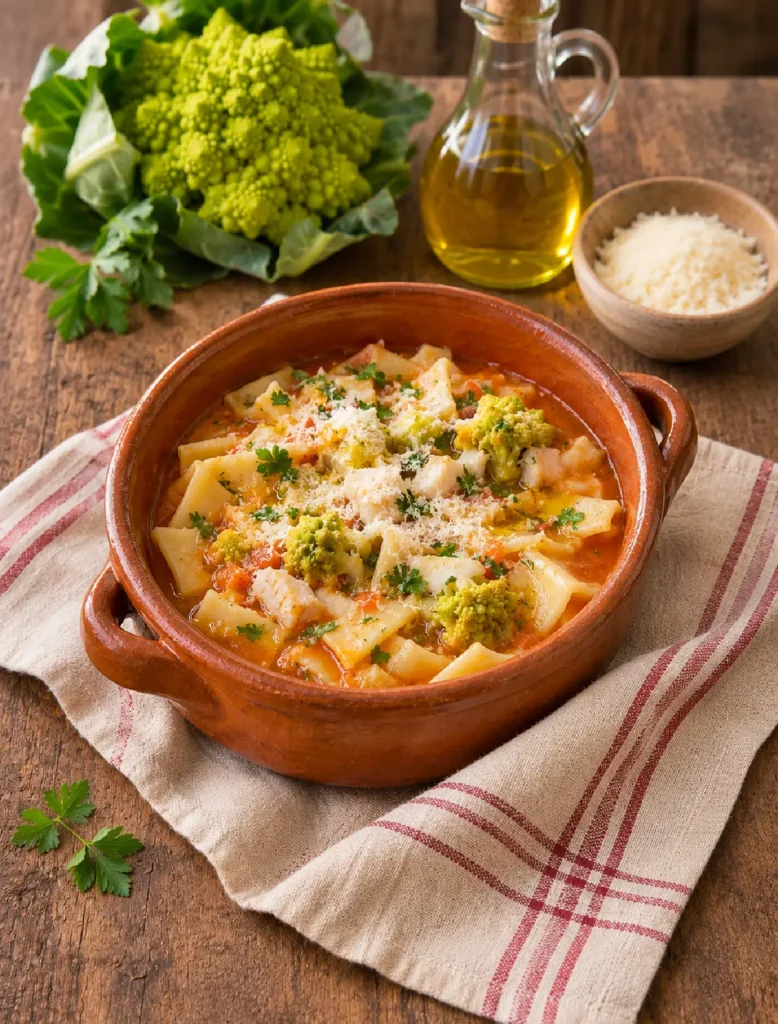
Roman Pasta and Broccoli Soup with Skate
Description
A traditional Roman soup made with skate fish stock, Romanesco broccoli, tomatoes and fresh maltagliati pasta. Sora Lella's family version also includes the tender fish flesh, Pecorino Romano and a resting period before the pasta is cooked.
Ingredients
Instructions
How to Make Pasta e Broccoli in Skate Broth
-
Prepare the Skate Broth 🐟
Place the cleaned and skinned skate in a large pot with the celery, carrot, onion, bay leaf and cloves. Add a pinch of salt and enough cold water to cover the fish. Bring gently to a simmer and cook over medium-low heat for about 20 minutes, skimming off any foam that rises to the surface.
-
Prepare the Tomato Base 🍅
Meanwhile, slice the garlic and gently sauté it in a large saucepan with a little extra virgin olive oil. Turn off the heat, add the anchovy fillet and chilli, and stir until the anchovy dissolves. Return the pan to low heat, add the crushed peeled tomatoes and a small ladle of skate broth. Cook for about 5 minutes.
-
Add the Romanesco Broccoli 🥦
Remove the leaves and tough parts of the Romanesco broccoli stem. Cut the larger florets lengthwise into two or three pieces and add them to the tomato base. Bring back to a gentle simmer and cook for about 15 minutes with the lid slightly ajar, adding a little more broth if the mixture begins to dry out.
-
Remove the Skate Flesh and Strain the Broth 🍲
When the skate flesh has turned completely white, remove the fish from the broth and allow it to cool until it can be handled safely. Carefully separate the flesh from the cartilage and set it aside. Return the cartilage to the pot and simmer for another 10 minutes. Strain the stock through a fine-mesh sieve, gently pressing the solids to extract the liquid without allowing any pieces of cartilage through.
-
Finish the Soup 🌿
Add the skate flesh to the saucepan containing the broccoli and tomatoes. Cook over a fairly high heat for about 3 minutes, then season with salt and add some parsley, torn by hand. Adjust the chilli to taste, pour in the strained fish stock and simmer for another 3 minutes. Turn off the heat and leave the soup to rest for at least 2 hours. Cool it rapidly and refrigerate during the resting period.
-
Cook the Maltagliati 🍝
Bring the soup back to a boil and add the fresh maltagliati. Cook them directly in the broth until tender, stirring gently. During cooking, add some grated Pecorino Romano and more parsley. If the soup becomes too thick, add a little hot fish stock.
-
Serve in Earthenware Bowls 🧀
Ladle the hot pasta and broccoli soup into deep bowls, preferably earthenware ones. Finish with more parsley, a drizzle of extra virgin olive oil and a little grated Pecorino Romano. Serve immediately.
Nutrition Facts
Servings 6
- Amount Per Serving
- Calories 300kcal
- % Daily Value *
- Total Fat 11g17%
- Saturated Fat 2.5g13%
- Sodium 650mg28%
- Total Carbohydrate 30g10%
- Dietary Fiber 4g16%
- Sugars 5g
- Protein 22g44%
* Percent Daily Values are based on a 2,000 calorie diet. Your daily value may be higher or lower depending on your calorie needs.
Note
Choosing the Skate
Skate is a type of ray traditionally used in Roman cooking. Ask your fishmonger to clean and skin it, keeping the cartilage for the stock. Most of the edible flesh comes from the wings.
In English-speaking countries, skate wings are often sold separately rather than as a whole fish. They can also be used for this recipe, provided the cartilage is retained for preparing the broth.
Getting the Right Soup Consistency
The finished soup should be brothy enough to eat with a spoon, but not watery. Add more hot stock while the maltagliati cook if the liquid reduces too much. Remember that the pasta will continue absorbing broth after cooking.
Alternatives to Maltagliati
Sora Lella's family recipe uses fresh maltagliati, irregularly shaped pieces of pasta traditionally made from rolled pasta dough.
If maltagliati are unavailable, use fresh egg pasta cut into uneven pieces. Broken spaghetti are another option and appear in many traditional Roman versions of this soup. Adjust the cooking time according to the pasta you choose.
If You Cannot Find Romanesco Broccoli
Romanesco broccoli has a distinctive pointed shape and a delicate, slightly nutty flavour.
If it is unavailable, ordinary green broccoli is a practical substitute and is widely available internationally. The flavour and texture will be slightly different, but the soup can still be prepared successfully.
For the traditional Roman version, Romanesco remains the preferred choice.
Resting and Storage
Renato Trabalza's version includes a resting period of at least 2 hours before cooking the pasta.
For food safety, cool the soup rapidly and refrigerate it during this period. Bring it back to a boil before adding the maltagliati.
Refrigerate leftovers promptly and preferably eat them within 24 hours, reheating thoroughly. Cooked pasta will continue to absorb the stock and soften, so storing the soup without the pasta is preferable whenever possible.