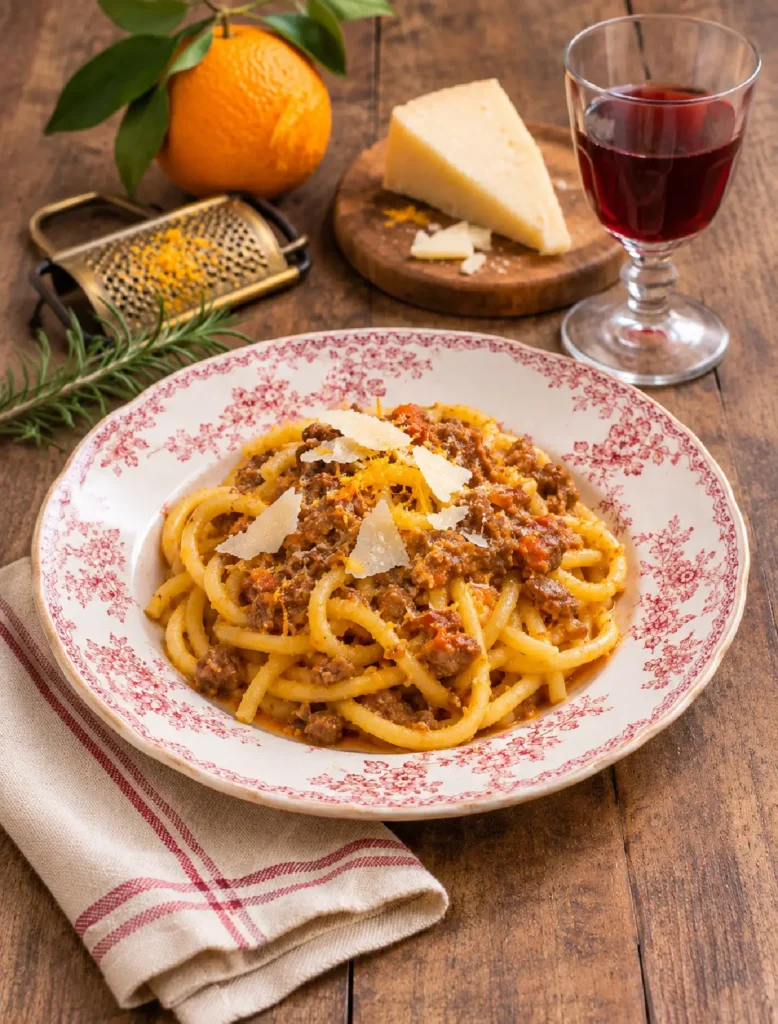
Bigoli with duck ragù is a traditional pasta dish from Veneto, particularly associated with the cuisine of Vicenza. Unlike spaghetti, bigoli are thicker and have a rough surface created by the traditional pasta press. When we toss them with the ragù, small pieces of duck cling to the pasta, while the sauce settles between the strands. Duck has a richer, more distinctive flavour than chicken and releases some of its fat during cooking, adding body to the sauce.
We begin by gently cooking shallot, carrot and celery, then add the duck meat, finely chopped by hand. We let it brown lightly before pouring in the Recioto, a sweet, fruity wine from Veneto that gives the ragù a distinctive flavour without overpowering the meat. From this point on, patience matters more than anything else. We lower the heat and let everything simmer slowly, adding stock whenever the sauce begins to dry out. After about two hours, the duck is tender and the vegetables have almost melted into the sauce.
We drain the bigoli while still al dente and transfer them directly to the pan. After tossing them with the ragù for a couple of minutes, we add a little pasta cooking water if needed. We finish each serving with freshly grated orange zest and shavings of aged Monte Veronese, which bring a citrus note and a pleasantly savoury finish. Serve immediately, while the pasta is still hot, with freshly ground black pepper for anyone who prefers a little extra bite.
Bigoli Pasta with Duck Ragù
Description
Thick Venetian pasta served with a slow-cooked duck ragù made with vegetables, Recioto wine and meat stock, finished with orange zest and aged Monte Veronese cheese.
Ingredients
Instructions
How to Make Bigoli with Duck Ragù
-
Prepare the Duck Meat 🔪
Remove the skin and any excess fat from the duck meat. Using a sharp knife, cut the meat into strips, then chop it into small pieces to create a coarse mince. Avoid chopping it too finely, as the pieces should remain distinguishable in the ragù after the long cooking time.
-
Gently Cook the Vegetables 🥕
Peel the shallot and carrot, trim the celery and finely chop all three vegetables. Heat a drizzle of extra virgin olive oil in a heavy-bottomed saucepan and add the vegetables. Cook over medium-low heat for a few minutes, stirring regularly, until softened without browning. Reduce the heat if they begin to stick.
-
Brown the Duck with the Herbs 🍖
Add the chopped duck to the vegetables, together with the bay leaf and rosemary sprig. Increase the heat slightly and stir to distribute the meat evenly. Cook until the duck changes colour and begins to brown lightly. Avoid adding the stock at this stage, as the meat needs time to develop flavour.
-
Deglaze with the Wine 🍷
Pour in the Recioto wine, or the alternative listed in the ingredients. Keep the heat at medium-high and allow the wine to reduce for a few minutes. Add the tomato paste and stir thoroughly until it is evenly distributed through the meat and vegetables.
-
Slowly Simmer the Ragù 🍲
Reduce the heat and pour in some of the warm meat stock. Cook gently for approximately 2 hours, with the lid slightly ajar, stirring occasionally. Add more stock whenever the sauce begins to dry out rather than pouring it all in at once. The ragù should simmer gently, without boiling vigorously.
Towards the end of cooking, check the texture. The duck should be tender and the sauce reduced, but still moist enough to coat the pasta. If too much liquid remains, remove the lid and let it reduce for a few minutes. Season with salt and black pepper only towards the end.
-
Cook the Bigoli 🍝
When the ragù is almost ready, bring a large pot of salted water to a boil. Add the bigoli and cook according to the package instructions, as cooking times can vary considerably between fresh and dried pasta. Reserve some of the pasta cooking water before draining.
-
Toss the Pasta with the Ragù 🥄
Remove the bay leaf and rosemary sprig from the saucepan. Transfer the bigoli, drained while still al dente, directly into the ragù. Toss gently over low heat for 1–2 minutes. If the sauce seems too dry, add a little reserved pasta cooking water at a time until the ragù coats the pasta evenly.
-
Finish with Orange Zest and Monte Veronese 🍊
Divide the bigoli among serving plates and grate a small amount of orange zest over each portion, using only the coloured outer layer and avoiding the bitter white pith. Finish with thin shavings of aged Monte Veronese, or aged Grana Padano, and serve immediately while the pasta is still hot.
Nutrition Facts
Servings 4
- Amount Per Serving
- Calories 780kcal
- % Daily Value *
- Total Fat 30g47%
- Saturated Fat 12g60%
- Sodium 650mg28%
- Total Carbohydrate 75g25%
- Dietary Fiber 4g16%
- Sugars 9g
- Protein 45g90%
* Percent Daily Values are based on a 2,000 calorie diet. Your daily value may be higher or lower depending on your calorie needs.
Note
Choosing the Right Duck Meat
For this ragù, we can use boneless duck leg meat, which stays tender during the long cooking process. Duck breast is another option, although its leaner texture requires more attention to prevent it from drying out. Remove the skin before chopping the meat in either case.
Alternatives to Bigoli Pasta
If bigoli are unavailable, spaghetti alla chitarra or thick spaghetti are suitable substitutes. Their texture will be slightly different, but both work well with a meat ragù. Outside Italy, bigoli can sometimes be found in specialist Italian food shops.
Choosing the Wine
Recioto adds a sweet, fruity note to the ragù. If it is unavailable, we can use a smooth, slightly sweet red wine, as indicated in the ingredient list. Avoid highly tannic wines, which may develop a bitter edge as the sauce reduces.
Stock and Ragù Consistency
Use a meat stock that is not overly salty, as the liquid reduces during cooking and its flavours become more concentrated. There is no need to add all 400 g (13.5 fl oz) of stock at once. Pour it in gradually, keeping the duck moist without completely submerging the meat.
Storage
We can prepare the duck ragù in advance and keep it refrigerated in a sealed container for up to 2 days, after cooling it promptly. Reheat thoroughly before serving, adding a little stock if necessary.
The ragù can also be frozen separately from the pasta for approximately 2–3 months in suitable airtight containers. Thaw it in the refrigerator before reheating. Bigoli already mixed with the sauce are best enjoyed freshly prepared.