In Bigoli in Salsa, the onions are almost more important than the pasta itself. They need to cook slowly until they become so soft that they practically fall apart when stirred. We don’t want them to brown: too much colour changes their flavour, taking away the sweetness that balances the salt-cured sardines. Together, these two ingredients create a thick sauce that works its way between the strands of bigoli and clings to their rough surface.
We slice the white onions very thinly and let them cook gently in olive oil, adding a little water whenever the pan begins to dry out. Only when the onions are thoroughly softened do we add the sardines, which have already been rinsed and cleaned. As they warm through, they gradually break down and blend into the onions.
Then we cook the bigoli and toss them with the sauce. If the mixture seems too dry, a few tablespoons of pasta cooking water help loosen it without adding more oil. The finished pasta should be evenly coated, with no separate pool of oil at the bottom of the plate.
In Venice, Bigoli in Salsa was traditionally served on meatless days, when religious customs called for abstaining from meat. It was particularly associated with Lent, Good Friday and Christmas Eve, making use of ingredients that could be stored for long periods. The recipe has remained part of Venetian home cooking and the menus of traditional local osterias. Since 2025, Bigoli in Salsa has been recognised as a Traditional Agri-Food Product (PAT) of the Veneto region.
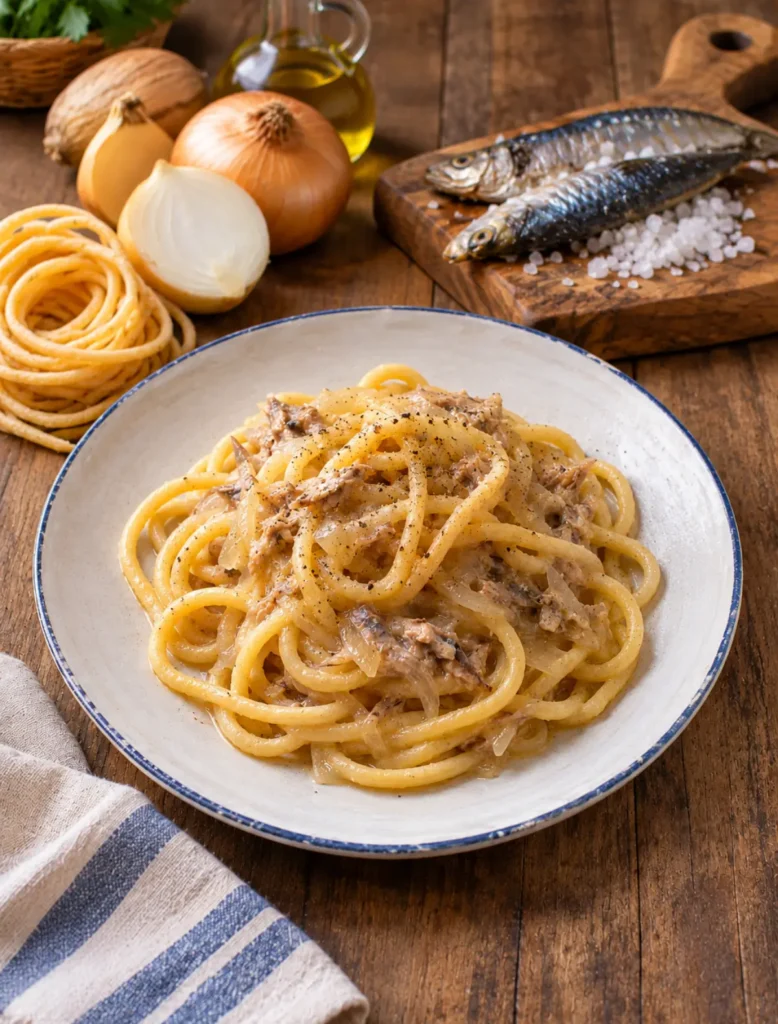
Bigoli with Sardine and Onion Sauce
Description
A traditional Venetian pasta dish made with thick bigoli, slowly softened white onions and salt-cured sardines. The ingredients come together in a rich, savoury sauce that coats the pasta without the need for cream.
Ingredients
Instructions
How to Make Bigoli with Sardine and Onion Sauce
-
Slice the Onions 🧅
Peel the 2 white onions, cut them in half and slice them very thinly, trying to keep the slices roughly the same thickness. This will help them cook evenly and soften without leaving any pieces that are still too firm.
-
Clean the Sardines 🐟
Rinse the 8 salt-cured sardines under cold running water to remove excess salt. Carefully open them and remove the heads, innards and central backbones, checking for any remaining small bones. Pat them dry with kitchen paper and roughly break them into pieces.
-
Slowly Cook the Onions 🥄
Pour the olive oil into a wide pan, add the onions and cook over very low heat for approximately 35–45 minutes, stirring occasionally. If the pan begins to dry out, add a few tablespoons of hot water. The onions should become translucent, very soft and almost creamy, without taking on any colour.
-
Prepare the Sauce 🍳
Once the onions are thoroughly softened, add the sardines and continue cooking gently for approximately 5–10 minutes, stirring with a wooden spoon. The fish should break down and blend into the onions. If necessary, add a little hot water to keep the sauce moist. Finish with some freshly ground black pepper, without adding salt.
-
Cook the Bigoli 🍝
Bring a large pot of water to the boil and salt it lightly, as the sardines already give the sauce plenty of flavour. Add the 400 g (14.1 oz) of bigoli and cook according to the package instructions until al dente. Before draining, reserve some of the pasta cooking water.
-
Toss and Serve 🍽️
Transfer the bigoli to the pan with the sauce and toss gently over low heat for about one minute. Add a little reserved pasta cooking water at a time, just enough to distribute the sauce and help it cling to the pasta. Taste and adjust the salt and pepper if necessary. Serve immediately while hot.
Nutrition Facts
Servings 4
- Amount Per Serving
- Calories 485kcal
- % Daily Value *
- Total Fat 13g20%
- Saturated Fat 2.5g13%
- Total Carbohydrate 77g26%
- Dietary Fiber 4g16%
- Sugars 6g
- Protein 17g34%
* Percent Daily Values are based on a 2,000 calorie diet. Your daily value may be higher or lower depending on your calorie needs.
Note
Choosing the bigoli
We can use either fresh or dried bigoli for this recipe. If bigoli are unavailable, thick spaghetti alla chitarra make a reasonable substitute, although the texture will be slightly different.
White onions
White onions from Chioggia are particularly associated with the local culinary tradition. Ordinary white onions are a suitable alternative and are widely available outside Italy.
Salt-cured sardines
These are the traditional ingredient used in the recipe we have chosen to follow. If they are difficult to find, salt-cured anchovies can be substituted, adjusting the quantity according to their size and saltiness. Anchovy fillets packed in oil are another convenient option, although they produce a slightly different flavour.
Sauce consistency
If the onions become too dry during cooking, add a little hot water at a time. There is no need to blend the sauce. The onions should soften gradually until they combine with the fish to form a smooth, cohesive mixture.
Salt and cheese
Always taste the sauce before adding salt, as the sardines are already salty. Grated cheese is not traditionally added to Bigoli in Salsa.
Storage
Bigoli in Salsa is best enjoyed immediately after preparation. The sauce can be stored separately in an airtight container in the refrigerator for 1–2 days, provided it is cooled promptly after cooking. Reheat it thoroughly, adding a little water to restore its consistency. For the best result, cook the pasta just before serving.