Gnocchi di malga arrive at the table piping hot, with warm butter pooling at the bottom of the plate and the cheese beginning to soften. They are large, irregular and slightly different from one another. Cut one open and you’ll find a firm yet tender centre. Aged Monte Veronese brings a savoury flavour that blends with the lightly toasted notes of the butter. This dish comes from Lessinia, the mountainous area north of Verona, where the dumplings are also known as gnochi sbatùi.
Unlike potato gnocchi, these contain neither potatoes nor eggs. We pour water heated to approximately 75°C (167°F) over the flour, add salt and work the mixture vigorously with a wooden spoon. The dough gradually thickens and takes some effort to mix. The dialect name sbatùi, meaning “beaten”, refers to this vigorous mixing. Once the dough is ready, we don’t turn it out onto a work surface. Instead, we scoop up small portions with a spoon and drop them directly into boiling water, where they cook for approximately ten minutes.
Meanwhile, we melt the butter in a small saucepan and continue heating it until it turns amber, taking care not to burn it. We lift the dumplings out with a slotted spoon and arrange them in layers with grated hard cheese and aged Monte Veronese. Finally, we pour the hot brown butter over the top, allowing it to reach the lower layers and partially melt the cheese. Serve immediately, before the butter begins to cool.
Officially known as Gnocchi della Lessinia, this speciality was added to Veneto’s list of Traditional Agri-Food Products (Prodotti Agroalimentari Tradizionali, or PAT) in 2022. The designation recognises a preparation passed down through the mountain dairies and kitchens of the Verona highlands, where it remains a familiar dish in local trattorias.
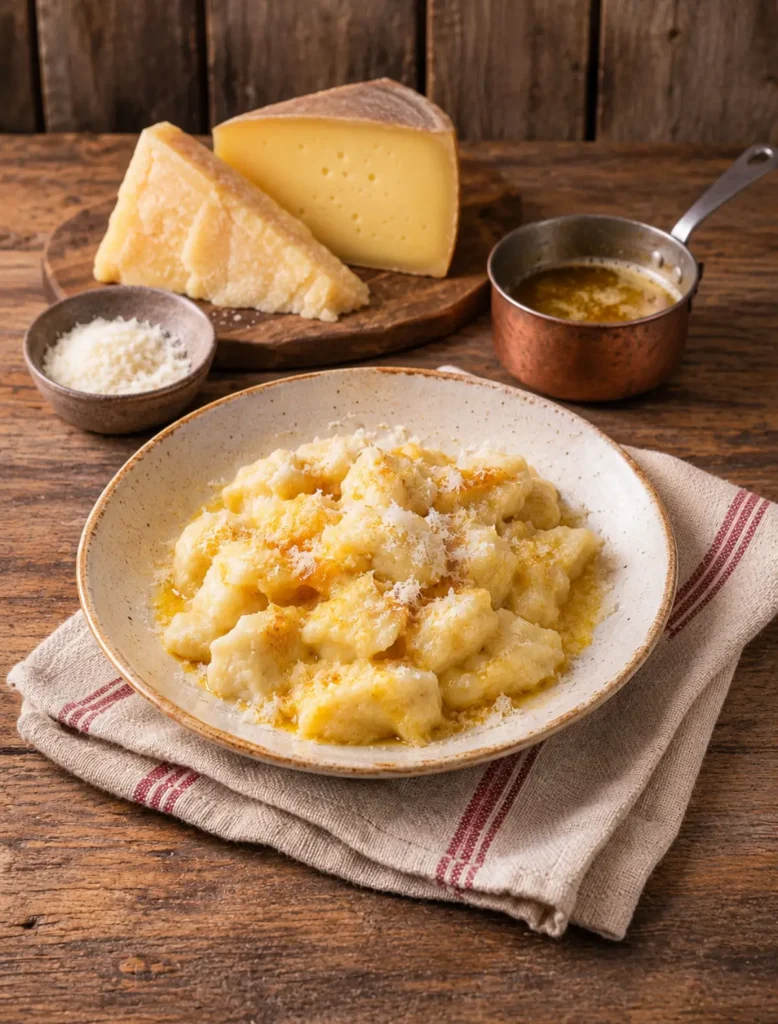
Gnocchi di Malga, Italian Flour Dumplings
Description
Traditional flour-and-water dumplings from the Lessinia mountains, shaped with a spoon and served in layers with grated cheese and fragrant brown butter.
Ingredients
Instructions
How to Make Gnocchi di Malga
-
Heat the Water and Prepare the Flour 🌡️
Pour the water into a small saucepan and heat it to approximately 75°C (167°F), checking the temperature with a kitchen thermometer. If we don't have one, we can use the first small bubbles appearing on the bottom and sides of the pan as a rough guide, before the water reaches a boil. Remove the saucepan from the heat.
Meanwhile, sift the flour into a large mixing bowl and add the salt.
-
Beat the Dough Vigorously 🥣
Gradually pour the hot water over the flour, stirring continuously with a wooden spoon to prevent lumps from forming. Once all the water has been incorporated, continue working the dough vigorously with the wooden spoon, lifting and beating it against the sides of the bowl until smooth and free of lumps.
The dough should be thick and sticky, firm enough to scoop with a spoon without running off like a thin batter, but not as stiff as traditional potato gnocchi dough. If necessary, adjust the consistency by adding a very small amount of water or flour at a time.
-
Shape the Dumplings in Boiling Water 🥄
Bring a large pot of salted water to a boil. Transfer some of the dough onto a flat plate and dip a spoon into the hot water to moisten it.
Scoop up small portions of dough and slide them directly into the boiling water, using the edge of the plate or a second spoon to help release them. Try to keep the dumplings approximately the same size, although their shapes will naturally be irregular.
Work in batches to avoid overcrowding the pot.
-
Cook the Dumplings 🍲
Cook the dumplings for approximately 10 minutes after the water returns to a boil, keeping it at a gentle, steady boil.
Cooking time depends on their size. Before removing them, cut one in half to check that the centre is cooked through and evenly textured, with no raw or floury dough remaining. If necessary, continue cooking for a few more minutes.
-
Prepare the Brown Butter 🧈
While the dumplings cook, place the butter in a small, light-coloured saucepan and melt it over medium-low heat.
Continue heating it carefully. A layer of foam will form on the surface, then the milk solids at the bottom will gradually begin to brown. Once the butter turns amber and develops a nutty aroma, remove the saucepan from the heat immediately to prevent it from burning.
-
Layer the Dumplings with Cheese 🧀
Grate the Grana Padano and aged Monte Veronese, then combine them in a bowl.
Scatter some of the grated cheese over the bottom of a large, slightly deep serving dish. Lift the cooked dumplings from the water with a slotted spoon, allowing the excess water to drain, and arrange the first layer over the cheese.
Add more grated cheese and continue alternating layers of dumplings and cheese until all the ingredients have been used.
-
Finish with Brown Butter and Serve 🍽️
Pour the hot brown butter evenly over the dumplings, allowing it to run between the layers.
Wait just a few moments for the heat to soften the cheese, then serve immediately. Gnocchi di malga are best enjoyed piping hot.
Nutrition Facts
Servings 4
- Amount Per Serving
- Calories 850kcal
- % Daily Value *
- Total Fat 40g62%
- Saturated Fat 25g125%
- Sodium 480mg20%
- Total Carbohydrate 97g33%
- Dietary Fiber 4g16%
- Sugars 2g
- Protein 23g46%
* Percent Daily Values are based on a 2,000 calorie diet. Your daily value may be higher or lower depending on your calorie needs.
Note
Choosing the Right Flour
For gnocchi di malga, we can use Italian type 00 or type 0 wheat flour. Outside Italy, all-purpose flour is a practical alternative, preferably one that is finely milled.
Different flours absorb water differently, so the dough may need a slight adjustment. Start with the quantities listed and add only a little extra flour or water if necessary.
How to Check the Dough Consistency
The dough should remain soft and sticky but hold an irregular shape when scooped with a spoon. If it runs off immediately, it is too thin. If it forms a stiff mass that is difficult to work, it is too firm.
Make any adjustments gradually, using very small amounts of flour or water.
Alternatives to Aged Monte Veronese
Aged Monte Veronese is one of the characteristic ingredients of this traditional preparation. If it is unavailable, we can use another mature cow's milk cheese with a pronounced flavour, such as aged Asiago.
The result will differ from the traditional Lessinia recipe, but the cheese will still provide a rich, savoury finish.
For the hard grating cheese, Grana Padano is a suitable choice. Other aged hard cheeses can be used if necessary, although they will slightly change the flavour.
Variations on the Traditional Dressing
Some versions of gnocchi di malga include sage leaves cooked in the butter. Others use smoked ricotta, which adds a more pronounced flavour.
These variations are not part of the reference recipe used here, which follows the documented preparation associated with the PAT recognition.
How to Prevent Brown Butter from Burning
A light-coloured saucepan makes it easier to monitor the milk solids as they brown.
When they turn golden and the butter develops a toasted, nutty aroma, remove the pan from the heat. If the solids become very dark or smell acrid, the butter has burned and should be prepared again.
Making Ahead and Storage
Gnocchi di malga are best served immediately, while the dumplings are hot and the butter and cheese are still soft.
We can grate the cheeses in advance and keep them refrigerated until needed. The dough is best prepared and cooked without a long resting period.
If any cooked and dressed dumplings remain, cool them promptly and refrigerate them in a sealed container for no longer than 1–2 days. Reheat thoroughly before serving, bearing in mind that the texture will be different from freshly prepared gnocchi.