Anyone who has visited Palermo probably remembers the smell of freshly baked sfincione. You’ll find it in bakeries, traditional takeaway shops and on the streets, where it’s sold by the slice, often still warm.
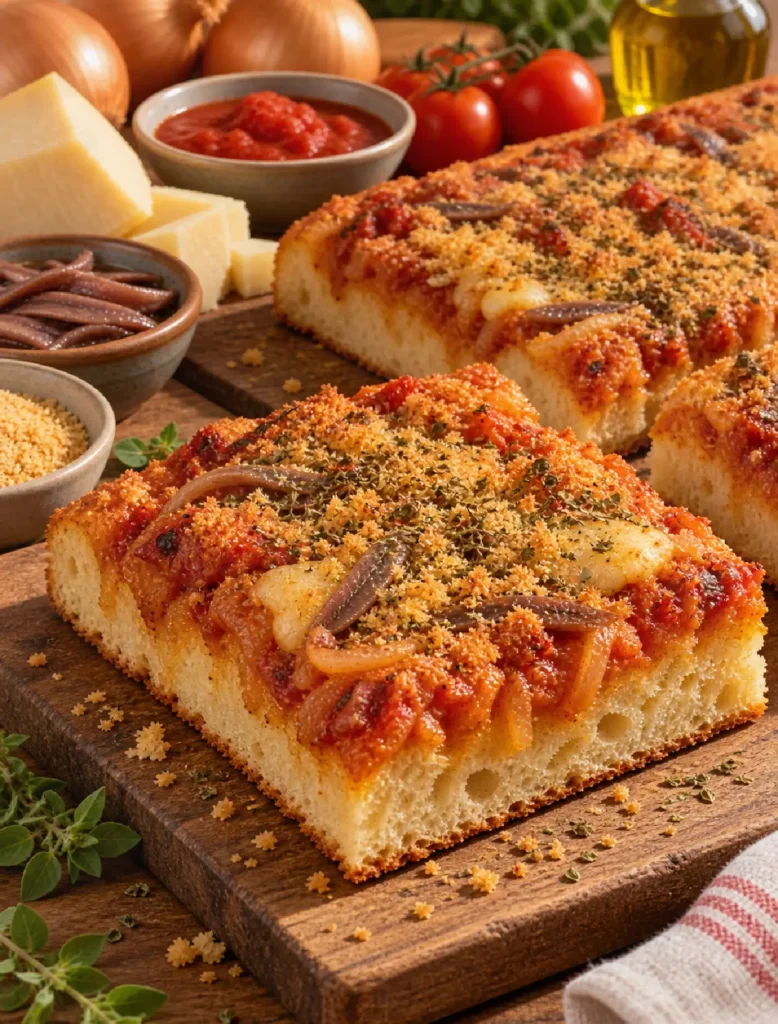
At first glance, it might look like a thick pizza, but one bite tells you it’s something different. The dough is soft and almost sponge-like, soaking up some of the tomato and onion sauce without becoming soggy. The breadcrumbs toast in the oven, leaving a thin, slightly crisp crust on top. Then come the distinctive flavour of caciocavallo, the saltiness of the anchovies and the aroma of oregano.
In Palermo, sfincione is eaten at almost any time of day, even at room temperature. Some people pick up a slice for a snack; others take a few pieces home for dinner, perhaps alongside other favourites from the city’s traditional takeaway shops.
Palermo Sfincione
Description
Homemade Palermo sfincione with a thick, fluffy dough, slow-cooked tomato and onion sauce, anchovies, Sicilian caciocavallo cheese and toasted breadcrumbs.
Ingredients Baking Tray: 30 × 40 cm (approximately 12 × 16 inches)
For the Dough
For the Topping
Instructions
How to Make Palermo Sfincione
-
Prepare the dough 🥣
Combine the all-purpose flour and finely milled semolina in a large bowl. Dissolve the fresh yeast in the water, then gradually pour it into the flour mixture, stirring until fully incorporated. Knead for a few minutes, then add the extra virgin olive oil a little at a time, followed by the salt. Continue kneading for about 10–15 minutes, until the dough is smooth, elastic and soft, but still slightly sticky.
-
Let the dough rise ⏳
Shape the dough into a ball, place it in a bowl lightly greased with a little extra virgin olive oil and cover. Leave to rise at room temperature for approximately 3–4 hours, or until doubled in size.
The oil used to grease the bowl should be a small additional amount, separate from the 25 g specified for the dough.
-
Cook the onions 🧅
Thinly slice the onions. Heat 40 g of extra virgin olive oil in a large pan, then add the onions and half of the anchovy fillets. Cook over medium-low heat for about 15 minutes, stirring frequently, until the onions begin to soften and the anchovies dissolve into the oil.
-
Make the tomato sauce 🍅
Crush the peeled tomatoes and add them to the onions. Reduce the heat and simmer gently for approximately 45–60 minutes, stirring occasionally. The onions should become very tender and the sauce should thicken, with no excess liquid remaining. Remove from the heat and allow to cool completely.
-
Stretch the dough in the baking tray 🫒
Lightly oil a 30 × 40 cm (12 × 16 inch) baking tray and transfer the risen dough into it. Gently stretch it towards the corners using your fingertips, keeping the thickness as even as possible without pressing out too much air. If the dough springs back, leave it to rest for 10 minutes before continuing.
-
Add the topping 🧀
Arrange the remaining anchovy fillets, broken into smaller pieces, over the dough, followed by the Sicilian caciocavallo cheese cut into small pieces. Spoon the completely cooled tomato and onion sauce over the surface, spreading it gently and evenly. Finish with the breadcrumbs and dried oregano.
-
Let the sfincione rise again ⏳
Cover the baking tray without allowing the covering to touch the topping. Leave to rise at room temperature for approximately 60–90 minutes. The dough should become visibly puffier, especially around the edges.
-
Bake the sfincione 🔥
Preheat the oven to 230°C (445°F), conventional setting. Place the tray on a lower oven shelf and bake for approximately 15 minutes to help the base cook through. Move it to the middle shelf and continue baking for another 10–15 minutes, until the edges are golden, the breadcrumbs are lightly toasted and the underside is fully cooked.
-
Rest and serve 🍽️
Remove the sfincione from the oven and leave it to rest for about 10 minutes before cutting it into pieces. Serve warm or at room temperature.
Nutrition Facts
Servings 8
- Amount Per Serving
- Calories 590kcal
- % Daily Value *
- Total Fat 22g34%
- Saturated Fat 6g30%
- Sodium 1100mg46%
- Total Carbohydrate 79g27%
- Dietary Fiber 5g20%
- Sugars 9g
- Protein 20g40%
* Percent Daily Values are based on a 2,000 calorie diet. Your daily value may be higher or lower depending on your calorie needs.
Note
Sfincione dough is naturally soft and slightly sticky. Avoid adding extra flour while kneading, as this can make the finished base too dense. Lightly oiling your hands will make it easier to stretch the dough in the baking tray.
The tomato and onion sauce should be thick and completely cool before being spread over the dough. Excess moisture can leave the base soggy and prevent it from baking properly.
Rising times are approximate and depend on room temperature. Pay attention to how much the dough has expanded rather than relying entirely on the clock.
Store leftover sfincione in an airtight container in the refrigerator for up to 2 days. Before serving, warm it in the oven for a few minutes to help restore some of the base's original texture.