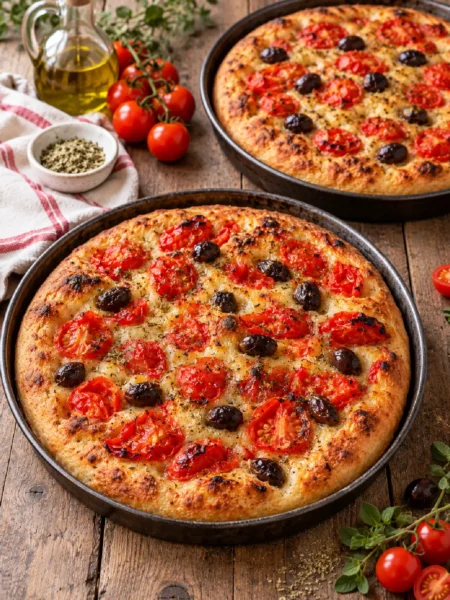
The hardest part about making Puglian panzerotti is waiting for them to cool down. Fresh from the oil, with their puffed-up crust still piping hot, they’re almost impossible to resist. Break one open and you’ll find tomato, melted mozzarella and the unmistakable aroma of oregano. In Bari, panzerotti are a familiar sight in takeaway shops and specialist panzerotto shops, but they’re just as popular at home, especially for an informal dinner when everyone is waiting for the next batch to come out of the oil.
For our dough, we combine wheat flour and finely milled durum wheat semolina, leaving it to rise before rolling it into small discs. The filling is the classic combination of peeled tomatoes and well-drained fior di latte mozzarella. Removing excess moisture is important: a watery filling can soften the dough and cause the panzerotti to split during frying. We seal the edges carefully and fry a few at a time until they’re puffed up and golden.
This tomato and mozzarella version is closely associated with the traditional panzerotto fritto, recognised as a Traditional Agri-Food Product (PAT) of Puglia. Fillings vary from one family to another, but we prefer to start with the classic.

Puglian Panzerotti with Tomato and Mozzarella
Description
Traditional Puglian panzerotti made with a risen wheat and semolina dough, filled with tomato, fior di latte mozzarella and oregano, then fried until golden.
Ingredients
For the dough
For the filling
For frying
Instructions
How to Make Puglian Panzerotti
-
Dissolve the yeast 🥣
Pour the lukewarm water into a bowl, add the crumbled fresh yeast and sugar, and stir until dissolved.
-
Knead the dough 🌾
Combine the finely milled durum wheat semolina and type 0 flour in a large bowl. Gradually pour in the water and yeast mixture, stirring until the ingredients begin to come together.
Transfer the dough to a work surface, incorporate the salt and then the extra virgin olive oil. Knead by hand for approximately 10 minutes, until the dough becomes smooth, elastic and free of lumps.
-
Let the dough rise ⏳
Shape the dough into a ball and place it in a lightly oiled bowl. Cover with cling film and leave in a warm place, away from draughts, for approximately 2 hours, or until doubled in size.
-
Divide and shape the dough 👐
Transfer the risen dough to a work surface and divide it into portions weighing approximately 80 g (2.8 oz) each.
Roll each portion into a smooth ball, keeping the surface slightly taut. Arrange the balls on a baking tray lined with baking parchment, leaving some space between them. Cover and leave to rise for another hour.
-
Prepare the filling 🍅
While the dough balls are rising, roughly chop the peeled tomatoes and leave them in a sieve to drain off some of their liquid.
Cut the fior di latte mozzarella into small cubes and place them in a separate sieve to remove excess whey.
Combine the drained tomatoes and mozzarella in a bowl. Season with salt, dried oregano and a drizzle of extra virgin olive oil. Mix gently and set aside.
-
Roll out the dough 🫓
Take one dough ball at a time and roll it out on a lightly floured surface into a round disc.
The dough should be thin enough to fold easily, but not so thin that it risks tearing during frying. Keep the remaining dough balls covered while you work.
-
Fill and seal the panzerotti 🥟
Place some filling in the centre of each disc, leaving a border of approximately 2 cm (0.8 in) around the edge.
Lightly moisten the edges with a little water and fold the dough over the filling to form a half-moon shape.
Before sealing completely, gently press around the filling to release any trapped air. Press the edges firmly together with your fingers, then trim them with a pastry wheel.
Prepare only a few panzerotti at a time so they can be fried shortly after being filled.
-
Fry until golden 🍳
Pour plenty of peanut oil into a deep, heavy-based pan and heat it to 175°C (347°F).
If you don't have a kitchen thermometer, dip the tip of a dry wooden skewer into the oil. When small, steady bubbles form around the wood, the oil is likely hot enough to begin frying. This is only an approximate test. If the oil starts smoking, it is too hot and the heat should be reduced.
Carefully lower one or two panzerotti into the oil, depending on the size of the pan.
While they fry, use a spoon to gently pour some hot oil over their upper surfaces. This helps the dough puff up. Turn the panzerotti carefully and continue frying until golden on both sides.
The oil should bubble steadily, and the panzerotti should colour gradually rather than darkening immediately. Allow the oil to return to the correct temperature before frying the next batch.
-
Drain and serve 🍽️
Remove the panzerotti with a slotted spoon and transfer them to absorbent kitchen paper to drain off excess oil.
Leave them to rest for a few minutes before serving. The tomato and mozzarella filling retains heat and can remain extremely hot even when the crust is ready to eat.
Nutrition Facts
Servings 6
- Amount Per Serving
- Calories 675kcal
- % Daily Value *
- Total Fat 29g45%
- Saturated Fat 11g56%
- Sodium 1400mg59%
- Total Carbohydrate 79g27%
- Dietary Fiber 4g16%
- Sugars 6g
- Protein 23g46%
* Percent Daily Values are based on a 2,000 calorie diet. Your daily value may be higher or lower depending on your calorie needs.
Note
Alternative Fillings
Alongside the classic tomato and mozzarella filling, we can prepare panzerotti with cooked ham and scamorza cheese, ricotta and salami, or vegetables such as courgettes, aubergines and turnip greens.
Cook the vegetables beforehand and allow them to cool, removing any excess cooking liquid before using them as a filling.
Alternative Flours
If finely milled durum wheat semolina is unavailable, we can use Italian type 0 flour or plain flour instead.
The dough will have a slightly different texture and may require a different amount of water. Add the water gradually, adjusting the quantity until the dough reaches the right consistency.
Oven-Baked Panzerotti
For an alternative to frying, arrange the panzerotti on a baking tray lined with baking parchment and brush lightly with extra virgin olive oil.
Bake in a preheated conventional oven at 200°C (392°F) for approximately 15–20 minutes, checking the colour as they cook.
The finished crust will be different from that of fried panzerotti, more similar to a small baked calzone.
Air Fryer Panzerotti
Lightly brush the panzerotti with oil and arrange them in the air fryer basket without overlapping.
Cook at 190°C (374°F) for approximately 10–14 minutes, checking during cooking and extending the time if necessary.
Cooking times may vary depending on the size of the panzerotti and the air fryer model.
Storage
Panzerotti are best eaten freshly fried. If there are leftovers, allow them to cool and refrigerate in a sealed container for up to 1–2 days.
Reheat in an oven at 180°C (356°F) for approximately 8–10 minutes, or until thoroughly heated in the centre. Reheating in a microwave tends to soften the crust.
Freezing
Uncooked panzerotti can be frozen after filling and sealing. Arrange them separately on a tray lined with baking parchment and place them in the freezer.
Once firm, transfer them to freezer-safe bags. For best quality, use within 1–2 months.
For medium-sized panzerotti, we recommend thawing them in the refrigerator, keeping them separated, then frying them as soon as they have thawed. Check that the dough has not become excessively damp.
Do not thaw at room temperature.