Pasta with beans and mussels is a classic of Neapolitan cuisine, eaten with a spoon even when it is so thick that very little broth remains. It is made with mixed pasta and cannellini beans, some of which remain whole while others break down during cooking, creating a creamy base dotted with pieces of tomato and shelled mussels.
Much of the flavour comes from the cooking liquid released by the mussels. Once they have opened, we remove them from the pan and strain the liquid, taking care to remove any traces of sand. Meanwhile, we gently fry garlic and chilli, add the cherry tomatoes and let the beans absorb their flavours. We gradually add the mussel cooking liquid, in which the pasta will cook directly, tasting before adding any salt. Sometimes none is needed at all.
In Naples, this dish is also enjoyed lukewarm, especially during the summer months. When we turn off the heat, it is best to leave it slightly looser than we would like it to be when served. As it rests, the pasta continues to absorb some of the liquid and the sauce becomes thicker.
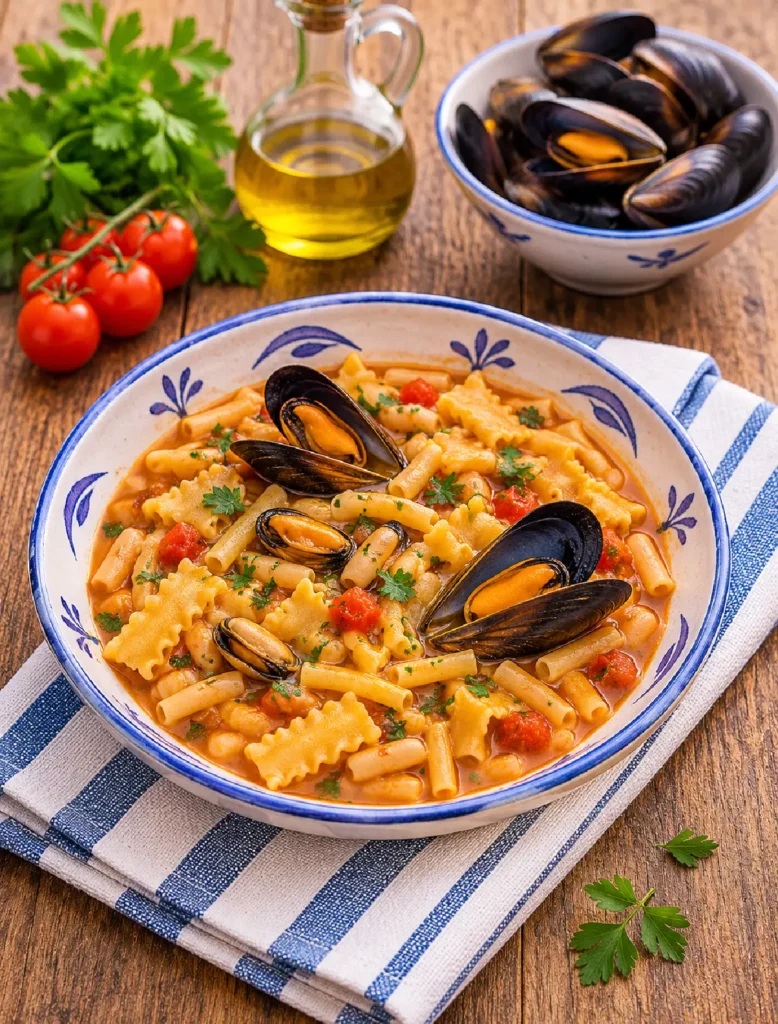
Neapolitan Pasta with Beans and Mussels
Description
A traditional Neapolitan first course in which mixed pasta is cooked directly with cannellini beans and strained mussel cooking liquid, creating a thick, creamy sauce finished with fresh parsley and extra virgin olive oil.
Ingredients
Instructions
How to Make Neapolitan Pasta with Beans and Mussels
-
Clean the mussels 🦪
Check the mussels one by one, discarding any with broken shells and any open mussels that do not close when tapped. Remove any deposits by scrubbing the shells with a clean scouring pad or a stiff brush. Remove the beard, the fibrous threads protruding from the shells, by pulling it towards the narrower end of the shell. Rinse the mussels thoroughly under cold running water.
-
Cook the mussels until they open 🔥
Heat a little extra virgin olive oil in a large pan with one garlic clove and a few parsley stalks, reserving the leaves for later. Add the mussels, increase the heat and cover with a lid.
Cook for approximately 3-5 minutes, shaking the pan occasionally. Remove the mussels as they open to prevent them from becoming tough and rubbery. Discard any that remain closed.
-
Remove the mussels from their shells and strain the liquid 🥣
Remove the mussels from their shells, reserving a few on the half shell to garnish the finished dish.
Strain the liquid remaining in the pan through a very fine-mesh sieve, lined with food-grade cheesecloth if necessary, to remove any traces of sand or shell fragments.
Set the shelled mussels aside in a bowl with a little of their strained cooking liquid to prevent them from drying out.
-
Prepare the flavour base 🍅
Wash the cherry tomatoes and cut them into quarters. Heat some more extra virgin olive oil in a large saucepan with the second garlic clove and the finely chopped hot red chilli pepper.
Gently fry over low heat, without allowing the garlic to brown. Add the cherry tomatoes and cook for approximately 5-7 minutes, stirring occasionally, until they have softened and released some of their juices.
-
Add the beans 🫘
Drain the cannellini beans and add them to the tomatoes. Cook for approximately 5 minutes over medium-low heat, stirring gently to allow the flavours to develop.
Remove the garlic clove and pour in some of the strained mussel cooking liquid. If necessary, add enough hot water to provide sufficient liquid for cooking the pasta. Bring to the boil.
-
Cook the pasta 🍝
Add the mixed pasta directly to the saucepan with the beans and cook over medium heat, following the cooking times indicated on the packet.
Stir frequently, especially towards the end of cooking, when the sauce becomes thicker and the pasta is more likely to stick to the bottom of the pan. Keep the remaining mussel cooking liquid and a small saucepan of hot water nearby, adding them gradually as needed.
Do not add too much liquid at once: the pasta should absorb it gradually as it cooks, while the starch released during cooking helps thicken the sauce.
Taste before adding any salt, as the mussel cooking liquid may already provide enough seasoning.
-
Add the mussels and finish the dish 🌿
When the pasta has 1-2 minutes of cooking time remaining, add the shelled mussels together with the liquid in which they have been resting. Stir gently and finish cooking, keeping the sauce slightly loose.
Turn off the heat, add the chopped fresh parsley leaves and a drizzle of extra virgin olive oil. Taste and adjust the seasoning only if necessary.
-
Allow to rest and serve 🍽️
Let the pasta with beans and mussels rest for 2-3 minutes before serving. The sauce will continue to thicken as it rests. If it becomes too dry, add a little hot water and stir gently.
Divide between serving bowls and garnish with the mussels reserved in their shells.
Nutrition Facts
Servings 4
- Amount Per Serving
- Calories 575kcal
- % Daily Value *
- Total Fat 14g22%
- Saturated Fat 2.2g12%
- Sodium 650mg28%
- Total Carbohydrate 84g29%
- Dietary Fiber 9g36%
- Sugars 4g
- Protein 28g57%
* Percent Daily Values are based on a 2,000 calorie diet. Your daily value may be higher or lower depending on your calorie needs.
Note
Storage
pasta with beans and mussels is best enjoyed freshly prepared. Leftovers can be stored in an airtight container in the refrigerator for up to 24 hours, provided they are cooled quickly. Reheat only once, adding a little water to restore the creamy consistency. Freezing the finished dish is not recommended.
Dried beans
canned cannellini beans can be replaced with approximately 160-180 g (5.6-6.3 oz) of dried cannellini beans. Soak them for 8-12 hours, then drain and cook in fresh water until tender. The final weight may vary depending on the variety of beans and how much water they absorb.
Mixed pasta
if ready-made Italian mixed pasta, known as pasta mista, is unavailable, we can make our own by combining leftover dried pasta shapes, such as broken spaghetti, small pasta tubes, short macaroni and mafaldine. Choose shapes with similar cooking times. Alternatively, ditalini can be used.
Chilli pepper
adjust the amount according to personal preference or leave it out entirely for a milder dish.
Choosing mussels
buy fresh mussels from authorised seafood retailers, checking their labels and origin. Keep them refrigerated until ready to prepare. Straining the cooking liquid removes solid particles but does not eliminate any marine toxins that may be present.