In pasta con le sarde, wild fennel is almost as important as the fish itself. Once it starts boiling, its fragrance fills the kitchen, and it would be a shame to throw away the cooking water. We can use it to cook the bucatini too. The sardines, on the other hand, need relatively little time in the pan. They should soften and become part of the sauce without drying out.
In Bagheria, near Palermo, pasta con le sarde is also made with tomato extract, known in Sicily as ‘u strattu. This is the version we have chosen for DishToHub, using the recipe published by the Sicilian regional government in its Traditional Agri-Food Products (PAT) documentation as our reference. Other Palermo-style preparations leave out the tomato and use saffron instead.
The tomato extract gives the sauce a deeper colour and is dissolved into the softened onions before the fennel and sardines are added. Raisins and pine nuts come next, two ingredients often paired with fish in Sicilian cooking. The raisins should be noticeable without making the whole dish sweet. That is why it is worth tasting the sauce before mixing it with the pasta.
The breadcrumbs are toasted separately with a little olive oil and a pinch of sugar, a distinctive feature of the Bagheria recipe that does not appear in every version of pasta con le sarde.
Once the bucatini are ready, they are tossed with the warm sauce. The toasted breadcrumbs go on at the very end. Some absorb the sauce, while those left on top retain their crunch.
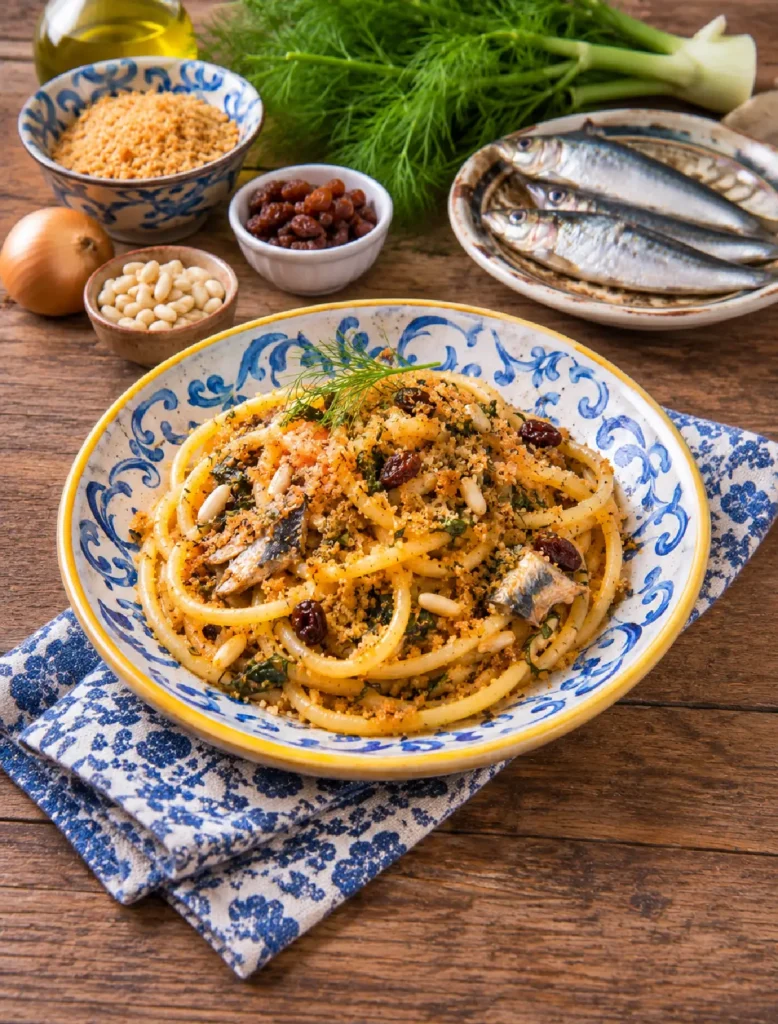
Pasta con le Sarde Sicilian Sardine Pasta
Description
A Sicilian pasta dish featuring fresh sardines, wild fennel, raisins, pine nuts and concentrated tomato extract. The bucatini are tossed with the sauce and finished with golden toasted breadcrumbs.
Ingredients
For the Sauce
For the Pasta
For the Toasted Breadcrumbs
Instructions
How to Make Pasta con le Sarde
-
Boil the Wild Fennel 🌿
Remove the toughest stalks from the wild fennel and wash it thoroughly. Boil in plenty of lightly salted water for 10–15 minutes, until the tender parts have softened. Lift it out with a slotted spoon, reserving all the cooking water for the bucatini. Allow the fennel to cool slightly, squeeze it gently and chop it roughly.
-
Soak the Raisins 🍇
Place the raisins in a small bowl of warm water and leave them to soak for 10–15 minutes. Drain and gently squeeze out the excess water.
-
Soften the Onion 🧅
Finely chop the onion and place it in a large pan with a drizzle of extra virgin olive oil. Cook over low heat for about 5 minutes, stirring occasionally, until soft but not deeply browned.
-
Dissolve the Tomato Extract 🍅
Add the Sicilian tomato extract to the onion and loosen it with a small ladleful of the reserved fennel cooking water. Stir until completely dissolved and the base of the sauce is smooth.
-
Add the Fennel and Sardines 🐟
Add the chopped fennel and the cleaned sardines, cut into large pieces. Stir gently to distribute the fish throughout the sauce.
-
Finish the Sauce with Raisins and Pine Nuts 🥄
Immediately add the pine nuts and drained raisins. Season with salt and black pepper, then cook the sauce over medium-low heat for about 10 minutes in total, stirring gently. Add a little reserved fennel water if the sauce begins to dry out. The sardines should be cooked through and tender, without becoming dry.
-
Cook the Bucatini 🍝
Bring the reserved fennel cooking water back to a boil, adding more water if necessary. Taste it before adding any extra salt. Cook the bucatini according to the package instructions until al dente. Drain, reserving a little of the pasta cooking water.
-
Toast the Breadcrumbs 🍞
While the bucatini cook, place the crumbled fresh bread crumbs in a frying pan with a small drizzle of extra virgin olive oil and a pinch of sugar. Toast over medium-low heat, stirring frequently, until golden and crisp. Transfer immediately to a bowl to stop the cooking.
If using 80 g (2.8 oz) dried breadcrumbs instead of fresh bread crumbs, follow the same method but watch them closely, as the finer crumbs can brown more quickly.
-
Toss the Pasta and Serve 🍽️
Transfer the bucatini to the pan with the sardine sauce and toss gently, adding a little reserved pasta cooking water if needed. Divide among serving plates and finish with the toasted breadcrumbs, adding them only just before serving.
Nutrition Facts
Servings 4
- Amount Per Serving
- Calories 850kcal
- % Daily Value *
- Total Fat 22g34%
- Saturated Fat 4g20%
- Sodium 200mg9%
- Total Carbohydrate 125g42%
- Dietary Fiber 8g32%
- Sugars 10g
- Protein 42g84%
* Percent Daily Values are based on a 2,000 calorie diet. Your daily value may be higher or lower depending on your calorie needs.
Note
Fresh sardines: The 500 g (1.1 lb) refers to the cleaned fish, with heads, innards and backbones removed. If buying whole sardines, you will need a larger quantity to allow for trimming.
Wild fennel: Use the tender, fragrant parts and discard the toughest stalks. Cultivated fennel has a milder flavour.
Alternative to wild fennel: If wild fennel is difficult to find, particularly outside Italy, you can use the green fronds of fresh fennel bulbs, known as fennel fronds. The flavour will be milder and will not exactly match the traditional preparation. Use the tender green leaves rather than the bulb itself. There is no need to match the original 250 g (8.8 oz) weight; use a suitable amount depending on how many fronds are available and how aromatic they are.
Sicilian tomato extract: Traditional 'u strattu is a highly concentrated tomato preparation. If it is unavailable, double-concentrated tomato paste is a practical substitute, although the flavour and colour may differ slightly.
Fresh bread crumbs or dried breadcrumbs: The PAT recipe specifies 150 g (5.3 oz) of fresh bread crumbs. You can substitute 80 g (2.8 oz) of dried breadcrumbs. This is a practical adaptation rather than an officially established conversion.
Sugar: The PAT preparation includes sugar when toasting the bread crumbs but does not specify a quantity. We use just one pinch to keep the sweetness subtle.
Olive oil: Use enough to soften the onion and toast the bread without making the dish excessively oily.
Sauce consistency: If the sauce becomes too dry, add a little reserved fennel cooking water. Avoid cooking the sardines longer than necessary.
Storage: This dish is best eaten freshly prepared. Cool any leftovers promptly, refrigerate at 4°C (39°F) or below and eat within 24 hours, reheating thoroughly.