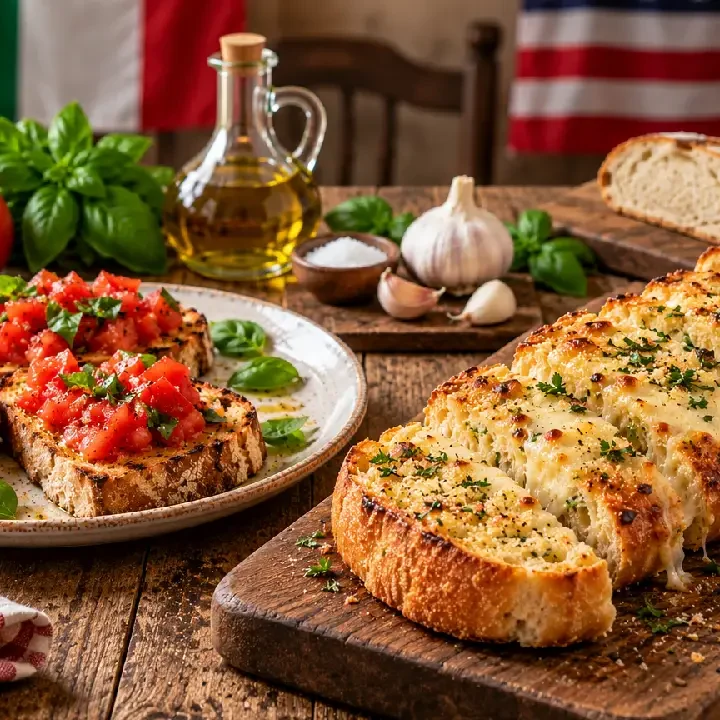
A plate of spaghetti with tomato sauce, a generous serving of baked pasta and, on the side, a few slices of warm garlic bread. In the United States, it’s a perfectly familiar sight. The bread often arrives already sliced, soaked in garlic butter, sprinkled with parsley and sometimes covered with a layer of melted mozzarella.
In Italy, however, that combination might raise a few eyebrows. Not because of the garlic, which is certainly no stranger to Italian cooking, but because of the butter-covered bread served alongside pasta. And yet, garlic bread has something unmistakably Italian about it. Remove the cheese, replace the butter with extra virgin olive oil, and look at what’s left.
An Italian Idea That Took a Different Direction in America
American garlic bread is generally made with a white loaf, often sold as Italian bread or French bread. The loaf is sliced lengthwise or cut into individual slices that remain attached at the bottom, then spread with a mixture of butter, chopped garlic and parsley. It goes into the oven, where the butter melts and soaks into the soft bread.
Some prefer it soft and generously coated in butter, while others toast it until the surface becomes crisp. In American restaurants and pizzerias, versions topped with mozzarella or other melted cheeses are also common. Supermarkets sell ready-made garlic bread in refrigerated and frozen sections, ready to heat in just a few minutes.
It’s quite a contrast with a slice of rustic bread rubbed with garlic and drizzled with olive oil. But those simple Italian preparations help explain where the connection began.
Between the late nineteenth and early twentieth centuries, millions of Italians emigrated to the United States. Their eating habits gradually changed as they adapted to the ingredients available in their new home. Butter was widely used in many parts of the country, while olive oil was not yet as readily available as it is today. Bread was different too. Instead of the rustic loaves they had known in Italy, Italian immigrants often encountered softer white loaves that were easier to find.
That doesn’t mean someone simply took a bruschetta and decided to replace the olive oil with butter. Italian-American cooking developed through countless adaptations, both in immigrant households and in restaurants serving an increasingly diverse public. Garlic bread belongs to that history, although there is no reliably documented inventor or exact date for the recipe we know today.
Long Before Garlic Bread, Italians Were Eating Bread with Garlic and Olive Oil
In Rome, a slice of toasted bread rubbed with garlic and dressed with extra virgin olive oil is already a bruschetta. Tomatoes, which many people now consider essential, are just one of the possible toppings.
The word bruschetta is generally traced to the Roman dialect verb bruscare, meaning to toast or roast. The bread is grilled over hot coals or on a grill, then seasoned while still warm. A clove of garlic is rubbed directly over its crisp surface, leaving its flavour behind without any need to chop it or mix it with other ingredients.
In Tuscany, a very similar preparation is called fettunta, literally meaning “oiled slice”. Here, olive oil takes centre stage. Fettunta is closely associated with the olive harvest and the arrival of freshly pressed oil, when its intense, peppery flavour can be appreciated on a simple piece of warm bread. A little garlic and a generous drizzle of olive oil are all it needs.
But garlic-rubbed bread isn’t limited to central Italy.
In the Langhe and Asti areas of Piedmont, there’s a speciality called sòma d’aj, a name that evokes a “load of garlic”. Slices of bread are rubbed generously with raw garlic, seasoned with olive oil and salt and, following a custom also associated with the grape harvest, sometimes eaten with a bunch of grapes.
Garlic bread with grapes might sound surprising to anyone familiar only with the American version. Yet it shows how closely these foods were connected to local ingredients and everyday eating habits.
Some variations of sòma d’aj also include thin slices of lardo, an Italian cured pork fat, placed between two slices of bread. Garlic-rubbed bread already had a remarkable variety of regional forms long before it became a familiar feature of American restaurant meals.
How Did Garlic Bread End Up Next to Spaghetti?
In many Italian restaurants across the United States, garlic bread is served alongside spaghetti, lasagne and other dishes covered in generous amounts of tomato sauce. It has become one of the most recognisable accompaniments to Italian-American red sauce cooking, with its large portions of pasta, meatballs in tomato sauce and baked dishes topped with cheese.
Bread at the Italian table is hardly unusual. In fact, using a piece of bread to mop up the sauce left on a plate is a familiar habit, even if it isn’t always considered appropriate in more formal settings. Italians call it fare la scarpetta.
What you’re unlikely to find in a traditional Italian trattoria, however, is a whole loaf spread with garlic butter, cut into portions and automatically served with a pasta course.
In Italian-American restaurants, garlic bread was convenient to prepare and easy to share. It could be served warm alongside generous dishes with plenty of sauce. Over time, it became part of the experience many customers expected when dining at an Italian restaurant.
Its popularity has grown so much that garlic bread now appears on menus at establishments with little connection to Italian cooking at all.
What About Cheesy Garlic Bread?
The version covered in melted mozzarella, often called cheesy garlic bread, is probably the furthest removed from the Italian preparations made with bread, garlic and olive oil.
The bread is spread with garlic butter, covered with cheese and baked until the surface becomes golden and the cheese melts. Some versions contain so much cheese that the bread underneath is barely visible.
That doesn’t mean Italians never combine bread, garlic and cheese. Italy has an enormous variety of crostini, bruschette and other toasted breads with different toppings. But cheesy garlic bread, as it’s commonly prepared and served in the United States, has developed an identity of its own.
Something similar happened with Fettuccine Alfredo. The original dish was created in Rome using butter and Parmigiano Reggiano, while in America it became especially famous in a richer, creamier version, often made with heavy cream.
With garlic bread, however, the Italian connection doesn’t lead back to a famous restaurant or a chef whose name we know. It lies in a much older and more widespread habit: toasting bread, rubbing it with garlic and adding a little oil.
So, Is Garlic Bread Actually Italian?
The garlic bread commonly served in American restaurants is primarily an Italian-American speciality. Garlic butter, soft oven-baked bread and cheese-covered variations distinguish it from the preparations traditionally found in Italy.
But it would be just as misleading to consider it an invention with no connection to Italian food. Roman bruschetta, Tuscan fettunta and Piedmontese sòma d’aj all show how familiar the combination of bread and garlic was in different parts of Italy.
The next time you find a basket of American garlic bread beside a plate of spaghetti, you’ll be looking at two culinary histories meeting on the same table: the Italian tradition of toasted bread with garlic and olive oil, and the American version that developed into something quite different.
👉 Want to try the Italian versions? Discover our recipes for Fettunta Toscana and Tomato Bruschetta.