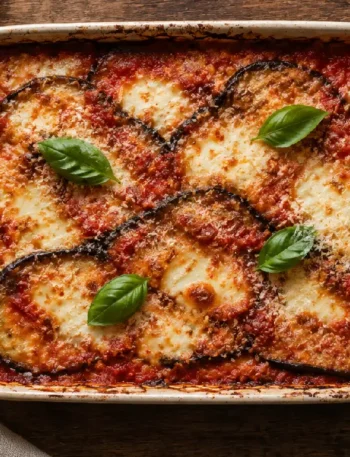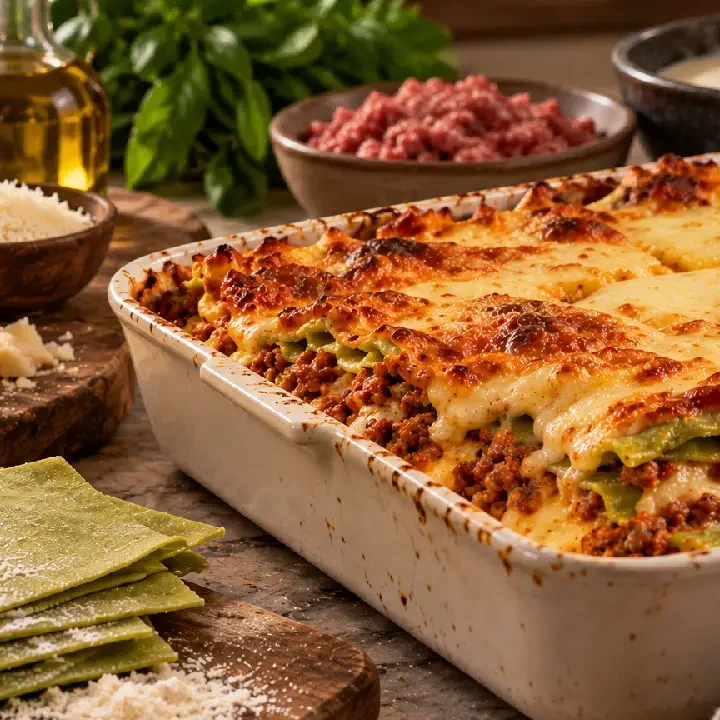
Ask someone to describe lasagna today, and they will probably picture a baking dish filled with layers of pasta, meat ragù, béchamel sauce and Parmesan. Others might mention mozzarella, ricotta or little meatballs, depending on the region and the recipes passed down through their families.
Seven hundred years ago, however, lasagne were something quite different. The pasta sheets were boiled in water or broth, dressed with grated cheese and spices, and did not necessarily go anywhere near an oven. Tomatoes had yet to reach Europe, and béchamel sauce was not part of the recipe.
For centuries, the word lasagne referred to a variety of preparations. Some were remarkably simple, while others were so elaborate that they resembled a savoury pie more than a pasta dish.
Did Lasagna Exist in Ancient Rome?
The search for its origins often leads to Horace. In his Satires, written during the first century BC, the Roman poet describes a modest meal of leeks, chickpeas and lagane. The passage is frequently mentioned in discussions about the history of lasagna.
The difficulty lies in understanding exactly what those lagane were.
No complete recipe has survived. Ancient accounts describe thin sheets of dough that could be baked or fried. Softer preparations also appear to have existed: the Roman physician Aulus Cornelius Celsus mentions lagane among foods suitable for people who had difficulty chewing.
The collection of Roman recipes traditionally attributed to Apicius also contains dishes in which thin layers are alternated with meat, fish and other ingredients. The arrangement may sound familiar, although no surviving Roman recipe corresponds to the baked lasagna we know today.
The thirteenth-century Franciscan chronicler Salimbene de Adam tells the story of a fellow friar, Giovanni da Ravenna, who was particularly fond of lasagne with cheese. Apparently, his appetite for the dish was memorable enough to find its way into the chronicle.
Those lasagne must have tasted rather different from ours.
When Lasagne Were Served with Cheese and Spices
The Liber de coquina, a cookbook compiled in Naples in the early fourteenth century, contains a recipe called De lasanis. The dough was rolled very thin, cut into squares and boiled in salted water. Once cooked, the sheets were arranged in a dish, alternating with grated cheese and, if desired, ground spices.
The practice of layering pasta with other ingredients was already there, but without ragù, béchamel or tomatoes.
The text also uses an intriguing expression, pastam fermentatam, which appears to refer to fermented dough. Its exact composition is uncertain, as is its resemblance to modern fresh egg pasta.
Another fourteenth-century cookbook, the Libro de la cocina, describes lasagne made with white flour and warm water. The dough was rolled thin, left to dry and cooked in capon broth or another rich meat broth before being dressed with cheese.
Cooking pasta in broth was hardly unusual. The distinction between pasta served dry and pasta served in broth was less rigid than it is today, and the same pasta shape could be prepared in different ways.
Not all medieval lasagne, though, were simple dishes of pasta and cheese.
Some cookbooks describe an elaborate lasagne pie, made with pasta sheets, eggs, ravioli, lard, cheese and spices. One fifteenth-century version even suggests decorating the surface with figures shaped from dough, including a serpent and a dove.
Renaissance court kitchens offered still more variations. Bartolomeo Scappi, one of the most influential Italian cooks of the sixteenth century, described lasagne and pappardelle cooked in milk and served with cheese, sugar and cinnamon.
Sugar on pasta might seem strange today, but Renaissance cooking did not draw such a firm line between sweet and savoury flavours. Cheese, spices and sugar could appear together in the same dish without raising an eyebrow.
A Name That May Have Travelled a Long Way
The word lasagna has a rather unexpected history of its own.
The traditional explanation traces it to the Latin lasanum, a word associated with a cooking vessel. According to this interpretation, the name eventually passed from the pot to the food prepared in it.
Historical linguists have since questioned that explanation.
Another etymology, supported by important modern linguistic research, connects the word to the Arabic-Persian lawzīnaǧ, the name of a sweet made with thin layers of pastry and an almond filling.
The connection becomes more understandable when we consider its shape. The sweet was cut into geometric pieces, often diamond-shaped, and the same linguistic history is connected to the Italian word losanga, meaning a diamond or lozenge shape.
Baked Lasagne Before Bolognese Ragù
Layered pasta dishes had existed for centuries, but the ingredients placed between the sheets varied considerably from one place and period to another.
An interesting example appears in Naples in La lucerna de’ corteggiani, published by Giovan Battista Crisci in 1634. Among its recipes are lasagne di monache stufate, prepared with cheeses, including mozzarella, and finished in the oven.
Neapolitan lasagne gradually became richer, particularly when prepared for special occasions. Carnival lasagna is perhaps the best-known example of this tradition.
In his cookbook published in 1837, Ippolito Cavalcanti describes a preparation involving meat sauce, small meatballs, mozzarella or provola, and grated cheese. Sugar and cinnamon also appear, ingredients that had not entirely disappeared from the pasta dishes of the period.
Tomatoes, meanwhile, were relatively late arrivals in Italian cooking. Introduced to Europe from the Americas during the sixteenth century, they took considerable time to become familiar ingredients in savoury sauces. Medieval lasagne could not have contained tomatoes, and even the earliest modern versions did not necessarily include them.
Tomato-based recipes became more common during the nineteenth century, while Neapolitan lasagne retained their distinctive combination of rich meat sauces, cheeses and generous fillings.
When Spinach Was in the Filling, Not the Pasta
Among the documents that reveal how Bolognese lasagne developed, one is particularly interesting. It is neither the work of a famous chef nor an officially registered recipe.
It is a handwritten kitchen notebook.
The notebook belonged to Adele Clemente and bears the date 1882 on its title page. It was studied as part of the R.A.GU. project, dedicated to collecting and preserving historical household recipe books.
Her lasagne recipe calls for layers of pasta dressed with butter, cheese and ragù, alternating with spinach that has also been flavoured with ragù.
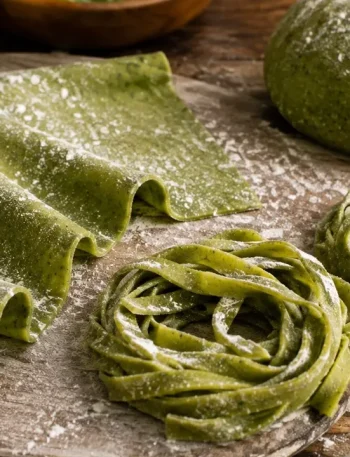
The pasta itself was not yet green. The spinach went between the layers.
Then, beside the recipe, there is a note, probably added later. Adele observes that the lasagne turn out better when the spinach is incorporated directly into the pasta dough rather than used in the filling.
The Lasagne alla Bolognese described in the Codice gastrologico of 1841 were also quite different from the modern version. Spinach played a prominent role in the filling. In the meat-based preparation, it was cooked with meat juices; in the meat-free version, it was flavoured with butter, onions, herbs and spices.
Ragù and béchamel, in the combination we recognise today, were not yet the defining features of the dish.
How Lasagne Verdi alla Bolognese Developed
Green pasta sheets did not become established overnight. During the nineteenth century, spinach gradually moved from the filling into the dough, while ragù became increasingly important.
By the beginning of the twentieth century, the recipe was taking a recognisable form. Cento specialità di cucina italiane ed estere, published in 1908, already included a combination of green pasta, ragù, béchamel and cheese that closely resembled modern Bolognese lasagne.
Yet Pellegrino Artusi had not included a dedicated recipe for lasagne alla bolognese in Science in the Kitchen and the Art of Eating Well, first published in 1891. A curious omission, considering how famous the dish would eventually become.
In 1935, Paolo Monelli wrote about green Bolognese lasagne in Il ghiottone errante, helping establish their reputation as a speciality of Bologna.
The recipe now regarded as a reference for the city’s culinary tradition was officially deposited by the Accademia Italiana della Cucina with the Bologna Chamber of Commerce on 4 July 2003.
It calls for green spinach pasta sheets, classic Bolognese ragù, béchamel sauce, Parmigiano Reggiano and butter. Making it takes time, from rolling the pasta thinly and slowly cooking the ragù to assembling the layers and baking the finished dish.
In Liguria, lasagne are also prepared with pesto and other local sauces. In the Marche region, vincisgrassi have preserved their own distinct history while belonging to the wider family of layered baked pasta dishes.
Today, lasagna is one of the world’s most recognisable Italian dishes. It can be made with vegetables, seafood, different meat sauces or white sauces, and it continues to change according to local tastes and family traditions.
Its name, meanwhile, has travelled through the centuries. We find it in medieval manuscripts, Renaissance cookbooks, nineteenth-century household notebooks and on tables today. The pasta sheets, the fillings and even the way the dish is understood have all changed along the way.
👉 If you would like to make the Bolognese version, explore our Lasagne Verdi alla Bolognese recipe on DishToHub, with spinach pasta sheets, ragù, béchamel and Parmigiano Reggiano.