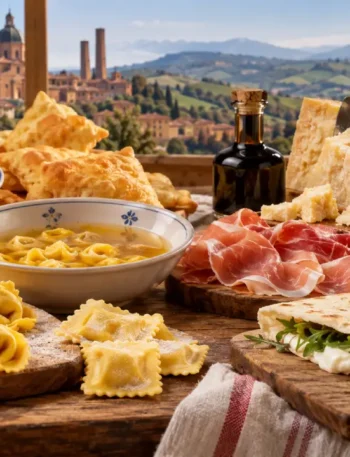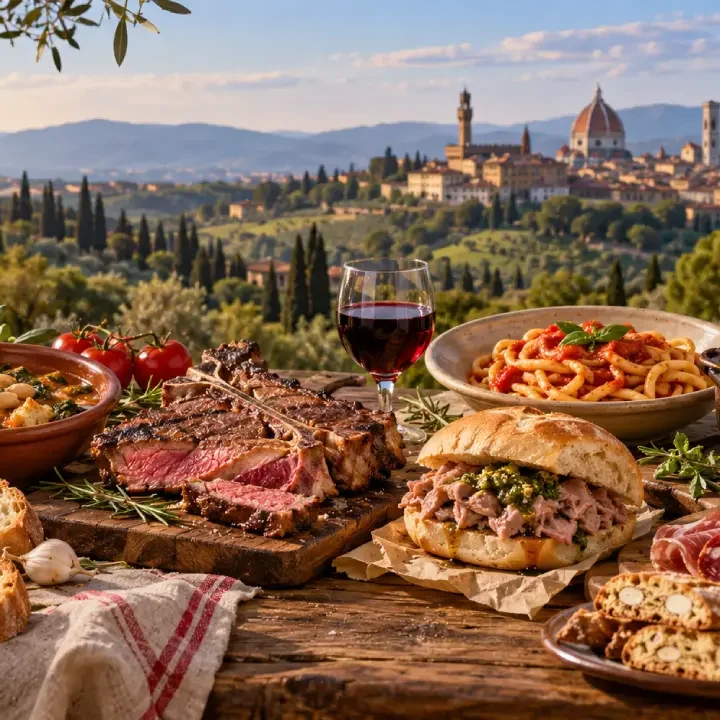
Tuscan cuisine has a curious way of making combinations that look almost too simple on paper seem inevitable. Bread and tomatoes. Bread and olive oil. Beans and cavolo nero. A slice of bread underneath a seafood stew.
The bread itself, incidentally, contains no salt. In Tuscany it is called sciocco, and put a slice of finocchiona or Pecorino beside it and you quickly realise that nothing is missing.
Things become even more interesting when that bread is no longer fresh.
A loaf did not stop being useful when it went stale
In Pappa al Pomodoro, the bread almost disappears. It absorbs the tomatoes, olive oil and other flavours until it loses its shape and becomes part of the texture of the dish itself.
Something different happens in Ribollita. Beans, cavolo nero and other vegetables go into the soup along with the bread, and the following day everything returns to the heat. The name is quite literal: ribollita refers to the act of boiling it again.
With panzanella, we are already in summer. The bread is soaked and squeezed, then tomatoes, onion, basil and olive oil join it. Toast the bread instead, rub it with garlic and wait for the new season’s olive oil, and you have fettunta.
Four preparations, with the same loaf appearing at different stages of its life.
This is not simply about using up leftovers. Tuscan bread also works because it contains no salt, so it can sit beside strongly flavoured ingredients without competing with them.
In Florence, the grill is only half the story
Bistecca alla Fiorentina needs little introduction: a thick bone-in steak cooked so that the centre remains decidedly rare. It has become one of the most recognizable foods associated with Florence.
Walk up to a trippaio, however, and you encounter a completely different side of the city’s cooking.
Lampredotto is made from the cow’s abomasum, one of its four stomach compartments. It is simmered in broth and can be served on a plate or inside a semelle, traditionally seasoned with salt, pepper, salsa verde or chilli oil. The banchini dei trippai, Florence’s tripe stalls, are still part of the city and belong to a much less ceremonial food culture than the great Florentine steak.
Crostini neri fit comfortably into this more robust side of local cooking too. Chicken livers are cooked and turned into a deeply savoury spread for bread, often served at the beginning of a meal alongside cured meats and cheeses.
Pici have very little in common with cacciucco
Around Siena, the Val d’Orcia and the Val di Chiana, pici are rolled by hand into thick, irregular strands of pasta from a remarkably simple dough. One of the area’s characteristic pairings is aglione from the Val di Chiana, cooked with tomatoes to make the sauce for pici all’aglione.
Acquacotta takes us into the Maremma. It was never tied to one immutable formula: the vegetables depended on the season and what was available, while bread, egg and Pecorino gave the dish substance. Tortelli maremmani are another matter entirely, large pieces of filled fresh pasta, generally with a ricotta and vegetable filling.
And then there is Livorno.
Cacciucco brings together several kinds of fish, including catches that once had little market value, in an intense seafood stew served over toasted bread rubbed with garlic.
Putting a plate of pici beside a bowl of cacciucco says more about the variety of Tuscan cooking than many definitions could.
Testi, chestnuts and farro
The testaroli of Lunigiana begin with a batter of flour, water and salt, traditionally cooked in testi, the cooking vessels that gave the dish its name. The resulting disc is cut into pieces, which are then briefly passed through hot water before being dressed.
In the mountains, farro and chestnuts have played a role that is easy to forget when looking only at the cooking of Tuscany’s cities. Chestnut flour went into many preparations, including necci, thin rounds traditionally cooked in testi and often eaten with ricotta.
Ingredients and techniques in these areas do not stop neatly at the edge of a town. Buccellato di Lucca, enriched with raisins and scented with anise, already belongs to another repertoire, yet it takes remarkably little travelling to move from one food tradition to another.
Unsalted bread is in good company
Extra virgin olive oil, Pecorino and cured meats explain a great deal about the Tuscan table without needing to turn them into a catalogue of protected designations.
Finocchiona carries the aroma that defines it in its very name. Pecorino may be fresh or aged, while freshly pressed olive oil finds one of its simplest uses drizzled over toasted bread.
Towards the Apuan Alps, pork even meets marble. Lardo di Colonnata is aged in basins carved from local marble with salt and aromatics.
With flavours like these beside it, unsalted bread starts to seem perfectly reasonable.
And finally, something sweet
Siena alone could fill a good part of the dessert table. Panforte and ricciarelli already give us two very different textures: the first dense and rich with dried fruit, candied fruit and spices; the second soft almond biscuits with a pale, cracked surface.
Where chestnut trees grow, there is also castagnaccio, made with chestnut flour and olive oil, with other ingredients varying according to the area and recipe.
And then come the Tuscan Cantucci.
They begin as logs of dough. After the first bake, the logs are sliced diagonally and returned to the oven until the biscuits are dry and crisp, with whole almonds clearly visible inside. The word cantuccio has been documented for centuries, although the biscuit it described in the past was not necessarily the almond version we associate with the name today.
On the table beside them, there may well be a glass of Vin Santo.
Some people dip their cantuccio into it. Others would never dream of doing so.